
SaaSの指標とKPI
What is SaaS Revenue Segmentation?
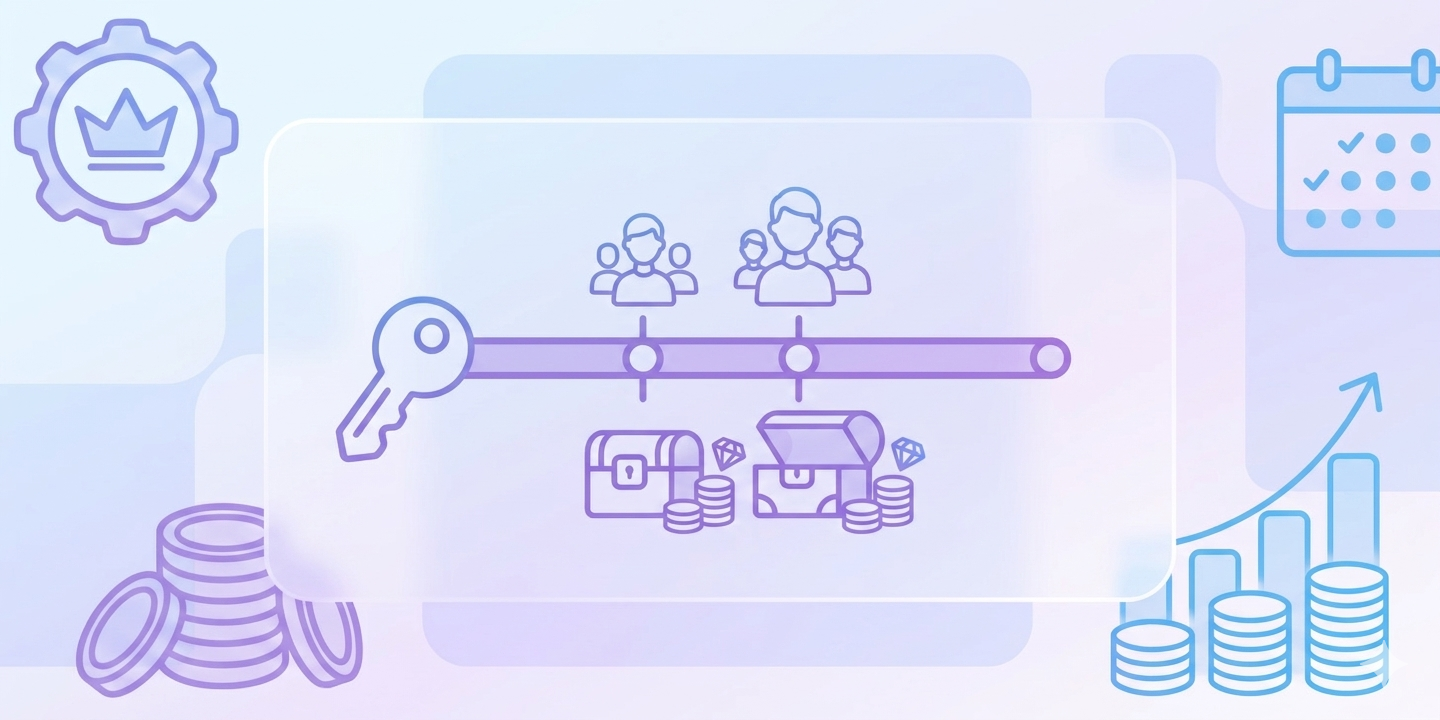
What is SaaS Revenue Segmentation?
SaaS revenue segmentation is the process of categorizing a company’s total earnings into distinct groups based on shared characteristics. This approach enables software leaders to examine details beyond summary data in order to determine which areas of the business support growth and which areas may need adjustment.
Examining the contribution of different customer groups to overall revenue is necessary for achieving “efficient growth”.
By analyzing revenue in this way, organizations can assign resources to selected segments, allowing marketing budgets and product development activities to relate to particular customer categories.
What Are the Dimensions of Revenue Segmentation?
In the SaaS industry, revenue is rarely monolithic; it can be divided into several dimensions to show performance by group. Companies commonly segment income by the following categories:
- Customer Size: Grouping revenue by SMB (Small/Medium Business), Mid-Market, and Enterprise tiers to compare sales cycles and support requirements.
- Product or Tier: Dividing income based on specific software modules or subscription levels (e.g., Basic vs. Pro vs. Enterprise).
- Geography: Tracking performance by region or country to identify localized market demand and cultural product-market fit.
- Channel: Distinguishing between direct sales, self-service signups, and partner or affiliate-driven revenue.
- Cohort: Grouping customers by their sign-up date to track how “vintage” users behave compared to new acquisitions.
How Do You Conduct a Revenue Segmentation Analysis?
Performing a deep dive into your revenue streams requires a sequence of steps to ensure data integrity and actionable results.
- Define Your Objectives: Determine whether you are looking for churn patterns, expansion opportunities, or geographic trends.
- Clean Your Data: Create standardization with your CRM and billing systems (like Stripe or Chargebee) to ensure data consistency for customers.
- Group the Data: Aggregate revenue based on your chosen dimensions, such as industry or acquisition channel.
- Calculate Key Ratios: Measure specific performance indicators for each group, such as CAC (Customer Acquisition Cost) and LTV (Lifetime Value).
- Identify Anomalies: Explore why a group may experience an anomalously high level of churn or if significant growth is recorded.
- Automate Data Collection: Use integrated tools to avoid manual entry errors.
- Keep Segments Broad Initially: Avoid “micro-segmenting” where groups become too small to be statistically significant.
- Review Quarterly: Market conditions change, so your segmentation strategy should evolve at least every 90 days.
How Does Revenue Segmentation Inform Pricing Strategy?
Revenue segmentation provides an important input for value-based pricing. When a specific segment, for example, healthcare providers, derives similar value but pays the same as a small retail shop, it points to a pricing difference that may be worth reviewing.
|
機能 |
Impact on Pricing |
|
支払意思 |
Helps identify which segments are less price-sensitive and can fit higher tiers. |
|
機能利用状況 |
Highlights which specific tools are “must-haves” for high-value segments. |
|
Discounting Patterns |
Shows whether certain segments rely on discounts to close, which can indicate that the base price may need adjustment. |
Pros and Cons of Segmentation-Based Pricing
- Pro: Refers to using different plan levels for customer groups with different usage patterns, maximizing Revenue Per User (ARPU).
- Pro: Affects conversion rates by offering “entry-level” options for price-sensitive groups.
- Con: Can lead to billing structures that confuse the customer.
- Con: Involves data management work to maintain and update the model regularly.
What Metrics Should You Track for Each Revenue Segment?
To manage segments effectively, tracking goes beyond total MRR(月間経常収益). Each group requires an examination of its performance and development over time.
- ネット収益保持率(NRR): This measures how much revenue a segment generates over time, including アップセル と 解約.
- LTV/CAC比率: A segment might bring in high revenue, but if the acquisition cost is too high, it may be unprofitable.
- アカウントあたりの平均収益 (ARPA): Presents the amount of revenue attributed to each account in the segment over time.
- Data Consistency: Make sure “churn” is defined the same way across all segments.
- Sample Size: Keep in mind that decisions based on a segment with only three or four customers may be limited by the amount of data available.
How Should You Use Revenue Segmentation in SaaS Specifically?
Unlike traditional retail, SaaS relies on 経常収益. Therefore, segmentation must focus on the lifecycle of the revenue rather than just the initial transaction.
“In SaaS, the sale is just the beginning. Segmentation tells you not just who bought, but who stayed and grew.”
- Does your customer base include a mix of different industries or company sizes?
- Are you seeing high churn in some areas but rapid growth in others?
- Are modifications to features or pricing practices being considered?
- Is your customer group large enough (at least 50-100 paying customers) to support multiple segments for analysis?
結論
SaaS revenue segmentation breaks total revenue into categories for planning and review. By examining income by customer group and product offering, teams can use the results to inform decisions about retention, pricing, and resource allocation. Regular segmented analysis is a method for reviewing revenue areas in relation to current business priorities.
準備はよろしいですか?


 日本語
日本語  English
  Español
  Português
  Português do Brasil
  Français
  Italiano
  Deutsch
  Nederlands
  Polski
  Română
  Українська
  简体中文
简体中文  한국어
한국어