
法務とコンプライアンス
What is SaaS Tax Withholding?
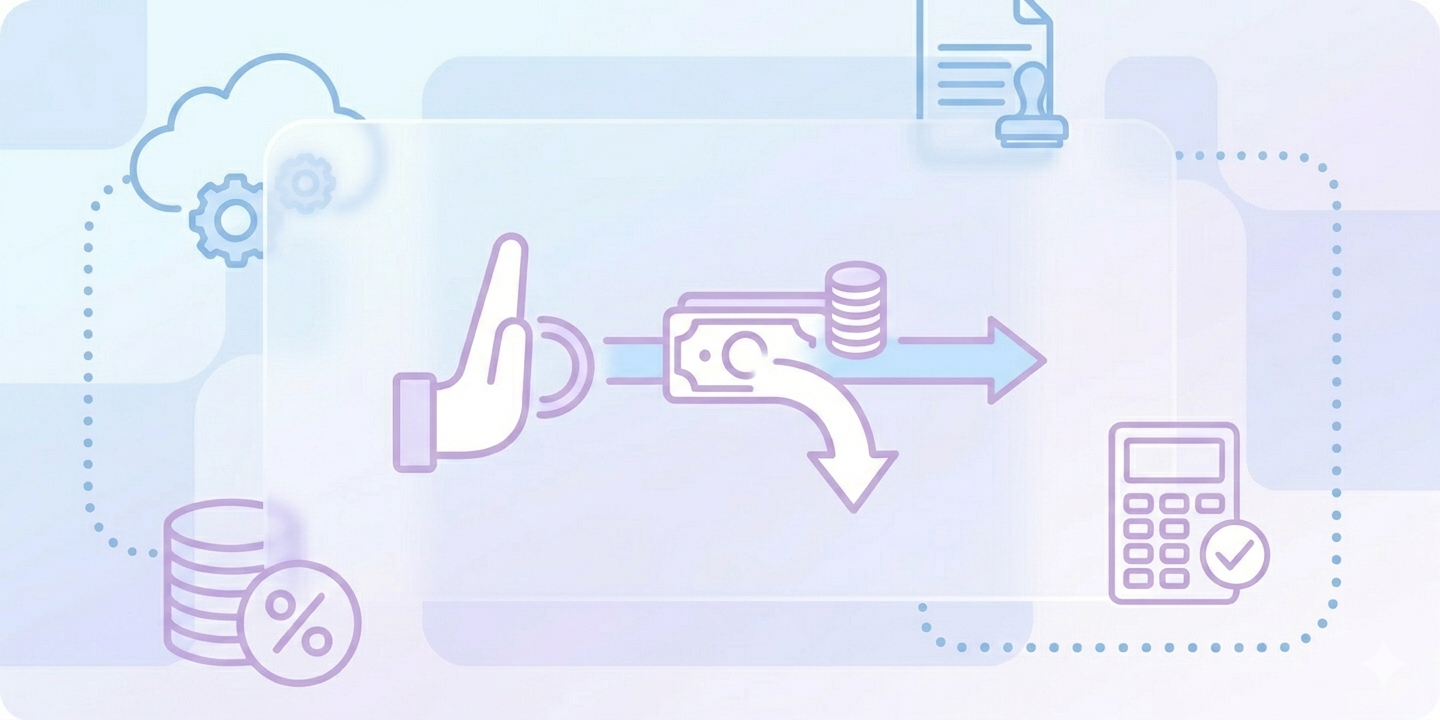
What is SaaS Tax Withholding?
SaaS withholding tax is a part of a cross-border payment for software services that the customer deducts and pays directly to their local government. This tax mechanism allows tax authorities to collect revenue from foreign digital providers that do not have a physical presence in the customer’s country.
Why does withholding tax matter for SaaS companies selling internationally?
SaaS Withholding tax (WHT) is critical because it directly impacts a company’s cash flow and global tax liability. When a client in another country withholds a percentage of your invoice (often between 10% and 30%), you receive a lower amount upfront, which should be accounted for in cash flow planning.
Furthermore, these taxes should be taken into account, as double taxation can mean the same income is taxed in both the customer’s country and your home country.
Key Features of Digital Withholding Tax
- Variable Rates: The percentage that is withheld is determined by the specific tax regulations of the buyer’s country.
- Tax Treaties: Agreements between countries define how withholding applies.
- Compliance Burden: The customer is usually responsible for handling and submitting the withheld tax as required.
- Creditability: In many cases, tax withheld in another country may be used in a domestic tax filing.
How is a SaaS payment characterized as a royalty vs. business income?
A SaaS payment is identified as either business income or royalty based on agreement details and legal standards in each country. This classification indicates whether withholding tax (WHT) is to be applied. If a payment is classified as business income and no permanent establishment exists, WHT is usually not involved. Payment recognized as royalty usually falls under WHT rules per local legislation.
|
Payment Type |
Classification |
Typical WHT Status |
|
Business Income |
Payment for a service or finished product. |
Often 0% under treaties. |
|
Royalty |
Payment for the use of intellectual property (IP). |
High WHT rates (10–25%). |
There may be a clearer regulatory path in certain conservative tax jurisdictions, but an immediate revenue is impacted; it requires considerable treaty documentation to lower rates.
What role do tax treaties play in reducing SaaS withholding tax?
Tax treaties are agreements between countries that set out specific provisions for how cross-border income, such as software payments, is taxed, often reducing a standard 25% tax to 5%, 2%, or even 0%. These treaties designate which country has the primary ability to tax certain types of transactions and contain procedures aimed at minimizing instances of double taxation. By using these treaties, SaaS companies can determine how much of their top-line revenue is subject to foreign taxes.
Practical Guidance for Usage
- Verify Residency: Always maintain a valid Tax Residency Certificate (TRC) from your home country.
- Check the Treaty: Use a treaty at the start of a contract, not after the first payment is already docked.
- Request Certificates: Ensure customers provide official tax receipts for every deduction made.
How do you manage withholding tax on cross-border SaaS payments?
Managing WHT involves practical methods during the sales process. Some SaaS companies include contract terms, often called “gross-up” clauses, that outline that the customer pays the invoice in full regardless of local taxes. In addition, businesses may implement tax automation software that determines the applicable withholding tax requirements for each buyer’s location.
重要な考慮事項
- Contractual Language: Does your contract specify who covers the cost of local taxes?
- Local Regulations: Some countries (like India or Brazil) have very specific rules for digital “automated” services.
- Accounting Systems: Ensure your ERP can track “Tax Withheld at Source” to simplify year-end filing.
What documentation must be kept for cross-border SaaS WHT compliance?
のための 越境 SaaS withholding tax compliance, standard recordkeeping procedures are required. Relevant materials generally include a valid Tax Residency Certificate from the provider’s home country and official tax receipts from customers indicating amounts that have been withheld. These records serve as a reference if foreign tax credits are processed within domestic filings and are used during reviews by tax authorities.
Decision Factors: Do You Need a WHT Strategy?
- Are you generating more than 20% of revenue from foreign markets?
- Are your customers primarily B2B entities (who are required to withhold)?
- Is your home country’s tax rate higher than the withholding rates abroad?
結論
SaaS withholding tax is one aspect that software companies review when conducting international business. Assessing the classification of digital payments and considering applicable tax treaties provides information needed to comply with rules and understand related obligations in multiple jurisdictions, as well as reduce their tax leakage and protect their profit margins.
準備はよろしいですか?


 日本語
日本語  English
  Español
  Português
  Português do Brasil
  Français
  Italiano
  Deutsch
  Nederlands
  Polski
  Română
  Українська
  简体中文
简体中文  한국어
한국어