
サーバーレスコンピューティング
ファンクションアズアサービス(FaaS)とは?
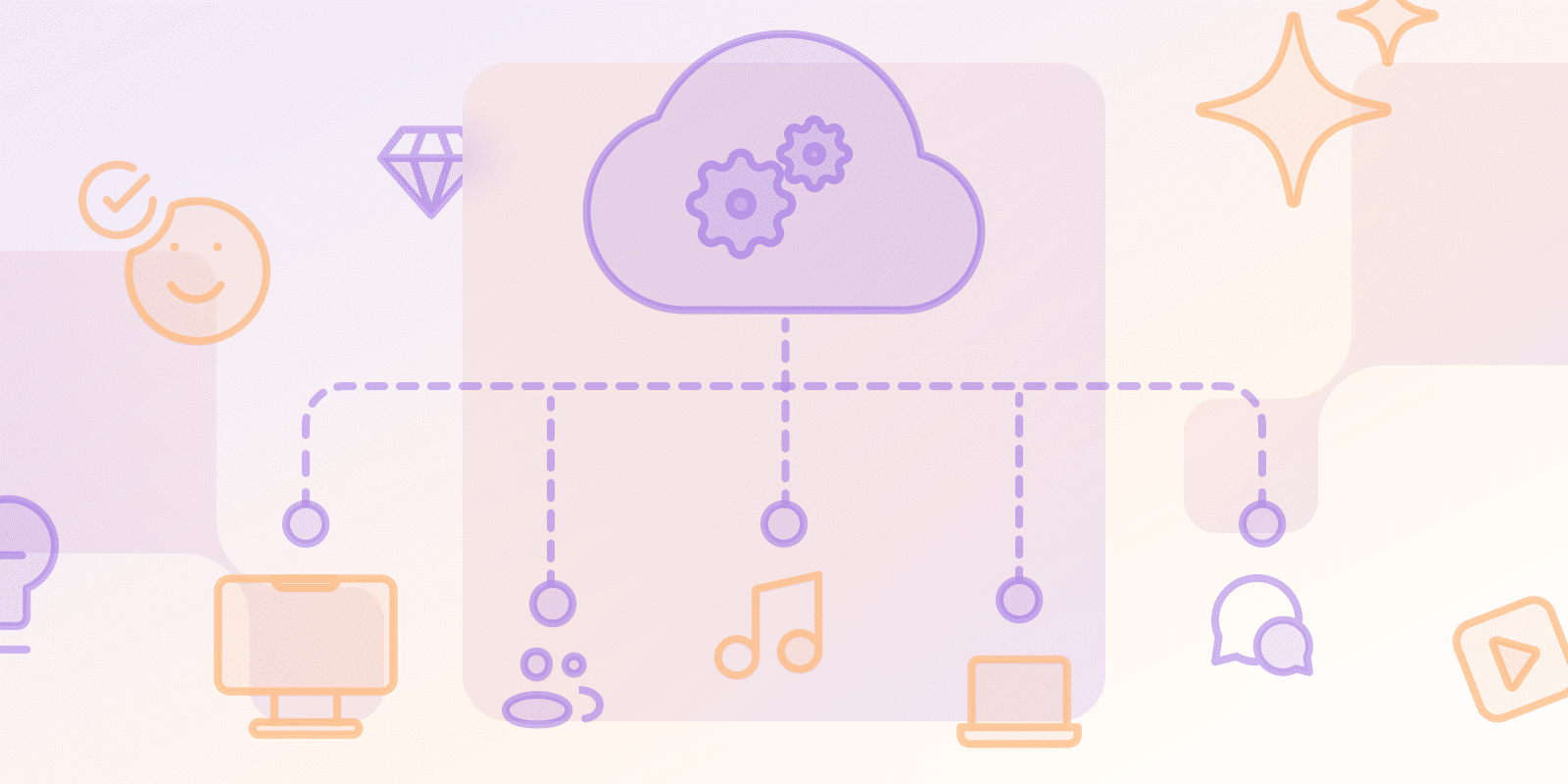
ファンクションアズアサービス(FaaS)モデルとは何ですか?
Functions as a Service or FaaS is a serverless computing execution model that allows developers to easily deploy and execute applications without any need to manage the servers. Estimates for the global FaaS market in 2025 vary by research firm, ranging from $7.17 billion according to Straits Research to $13.08 billion according to The Business Research Company.
~における FaaS, you write the code while the cloud provider automatically handles server deployment, resource allocation, and environment management.
FaaSはどのように機能しますか?
FaaSモデルでは、開発者は単一の操作を実行するように設計された小さな独立したチャンクである関数という形式でコードを作成します。これらの関数は、HTTPリクエスト、データベースの変更、ファイルのアップロードイベントなどのイベントによって開始されます。イベントが発生すると、クラウドプロバイダーはすぐにその関数に必要なリソースを割り当て、関数のイベントが完了するとそれらを解放します。このコンピューティングモデルは、イベント駆動のサーバーレスデプロイメントを可能にし、つまり関数の実行ごとに課金されることを意味します。
Some well-known FaaS providers are Amazon AWS Lambda, Microsoft Azure Functions, and Google Cloud Run functions (formerly Cloud Functions).
FaaSとSaaSの違いは何ですか?
FaaS と SaaS は both services クラウドコンピューティング 環境で、機能は異なります。 環境で、機能は異なります。
- FaaS: It provides a platform for executing custom code triggered by specific events. Application developers control the code, the provider takes care of the infrastructure, and scaling is handled automatically and at the most micro level. Costs are determined by the actual resources used (pay-as-you-go): With Azure Functions’ Flex Consumption plan, you pay for total executions and the memory used while your code is running (calculated in GB-seconds).
- SaaS: Provides pre-configured software solutions through a cloud infrastructure. Users work with the given interface but have limited control over the underlying infrastructure. Scaling is limited based on the subscription plan, with costs typically charged as サブスクリプション.
| 機能 | サービスとしての関数(FaaS) | Software as a Service (SaaS) |
|---|---|---|
| コア機能 | ||
| 主な目的 | 特定のイベントによってトリガーされるカスタムコードを実行する | 事前構成済みのソフトウェアソリューションを提供する |
| インフラストラクチャ管理 | Developers control code; the provider manages infrastructure | 基盤となるインフラストラクチャに対するユーザーの制御は限定的 |
| スケーラビリティとパフォーマンス | ||
| スケーリングメカニズム | 自動、マイクロレベルのスケーリング | 通常、サブスクリプションプランによって制限される |
| リソースの割り当て | 動的、実際の関数実行に基づく | 静的、サブスクリプション層によって事前定義 |
| 価格設定とコストモデル | ||
| 料金体系 | Pay-as-you-go, charged by executions and execution time | Usually subscription-based, fixed recurring fees |
| 費用対効果 | High, on-demand use is billed by executions and run time | Usually fixed costs regardless of actual usage |
FaaSの主な利点は何ですか?
FaaS is a type of serverless computing where developers specifically are concerned with writing code and may have very little control over the servers.The system enables the adjustment of activity levels in correlation with application demand, utilizing usage-based pricing.
FaaSの欠点は?
With FaaS, factors such as vendor lock-in, cold start occurrences, state management approaches, and debugging and monitoring processes are typical.
- ベンダーロックイン: FaaS の実装方法はクラウド サプライヤーによって異なる場合があり、アプリケーションの移行が困難になる可能性があります。
- コールド スタート: The initial commencement time of dormant functions can be prolonged, slowing down response times for users.
- デバッグと監視: A distributed serverless application can be more complex to debug and monitor than a monolithic application.
- ステートレス: 関数の実行全体で状態を保持することは非常に複雑であり、アプリケーションを設計する際には追加の労力がかかる場合があります。
In spite of these disadvantages, FaaS is used with event-driven, scalable applications. In 2025, Research firms’ valued the global FaaS market range from 7.17 billion USD (Straits Research) to13.08 billion USD (The Business Research Company).
結論
FaaS is a component of serverless computing where developers buildi and run applications, with server management handled independently. It manages the underlying infrastructure, with automated scaling and resource-based billing.
You can deploy FaaS in developing event-driven and scalable cloud solutions, however it is not suitable for all types of applications.
準備はよろしいですか?


 日本語
 English
 Español
 Português
 Português do Brasil
 Français
 Italiano
 Deutsch
 Nederlands
 Polski
 Română
 Українська
 简体中文
 한국어