

How to Prepare for and Conduct a SaaS Financial Audit
Preparing for a SaaS Financial Audit involves setting clear revenue recognition policies, organizing all documentation in a central location, automating billing operations, performing sample testing, and reconciling accounts on a regular basis.
During a SaaS financial audit, a company’s 재무 기록 are assessed to ensure they align with relevant GAAP 또는 IFRS standards. Both auditors and internal company teams review deferred revenue, examine tax details, and check for inconsistencies in accounting records.
When considering an 감사 approach, it is helpful to assess current transaction volume, the prevalence of custom enterprise contracts, and how multi-year subscriptions are tracked. Reviewing whether processes rely on spreadsheets or billing software clarifies whether the focus should be on full data remediation or routine checks. This guide outlines a step-by-step process for organizing financial data, conducting necessary tests, and navigating the audit process from start to finish.

개념 스냅샷
-

카테고리: SaaS Financial Management
-

사용 대상: B2B SaaS Startups, Enterprise Vendors
-

주요 목적: Verify Financial Compliance And Accuracy
-

관련 개념: 이연 수익, 수익 인정, SaaS Financial Management, SOC 2 인증, 판매세 규정 준수
-

성장 단계: Series A Scaling Pre-IPO
Establish Your Revenue and Expense Recognition Policies
Begin by creating clear 수익 인식은 and expense recognition documents ahead of the audit review. These documents describe how your accounting team applies ASC 606 및 IFRS 15 standards across all subscription contracts.
The policy should note the accounting approaches for items like usage-based billing, setup fees, mid-month contract updates, and tier upgrades. In addition, it should specify the procedures for recognizing expenses, including prepaid software and any capital assets. Auditors compare day-to-day ledger activity with these policies to confirm that recognized amounts are recorded according to the stated guidelines.
Having these rules outlined in advance offers a reference point and may reduce the likelihood of changes during the audit phase.
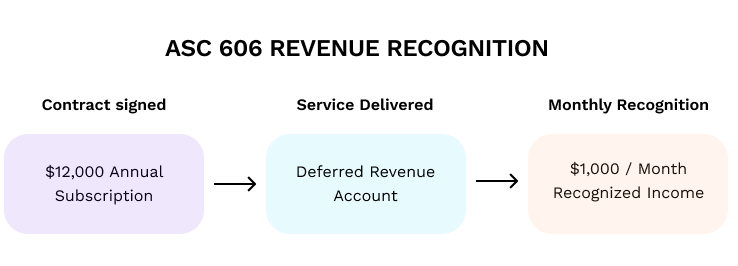
While preparing for a public market, GitLab addressed ASC 606 revenue recognition scenarios such as multi-year enterprise contracts, self-managed license seats, cloud SaaS subscriptions, and dedicated professional services. GitLab’s response was to create a strict revenue recognition policy separating bundled services, assigning standalone selling prices (SSPs), and establishing automated links between contracts and ledgers.
Review and revise your revenue recognition documentation whenever new pricing models, opt-out terms, or customized agreements are adopted into your product.
SaaS Financial Audit Readiness Checklist
Streamline your SaaS Financial Audit preparation and ensure full ASC 606 revenue recognition compliance.
-

Complete 5-phase preparation framework
-
Contract and invoice verification steps
-
Internal control testing protocols
-
Reconciliation and COGS allocation guidelines
Centralize Customer Contracts and Invoices
Store all active customer agreements, purchase orders, and issued invoices in a location designated for audit reference.
During an audit, review teams may request a selection of customer accounts for examination. Auditors may compare the details in agreements with revenue schedules and entries in the general ledger to review for alignment. When documents are stored across multiple inboxes, drives, or folders, the retrieval process may require additional steps.
A designated repository or billing platform can link each invoice to its associated contract for reference. This approach is intended to organize files for audit purposes as needed.
|
Contract Element |
Required Verification File |
Auditor Inspection Focus |
|
Subscription Value |
Executed Order Form / MSA |
Auditors may verify that amounts billed are consistent with the agreement. |
|
Billing Frequency |
Invoices / Payment Receipts |
Auditors can assess whether deferred revenue entries and payment timing reflect what appears in the contract. |
|
Add-ons & Upgrades |
Contract Amendments |
Reviewers examine if changes to the contract during its term are documented according to ASC 606. |
Auditors refer to signed contracts when conducting evaluations. For instance, if a contract logged in the general ledger lists at $20,000 but the signed PDF shows $20,500, the $500 variance will be documented for further review.
SaaS Financial Audit Readiness Checklist
Streamline your SaaS Financial Audit preparation and ensure full ASC 606 revenue recognition compliance.
-
Complete 5-phase preparation framework
-
Contract and invoice verification steps
-
Internal control testing protocols
-
Reconciliation and COGS allocation guidelines
Automate Order-to-Cash Workflows
Connecting your customer relationship management platform to billing software and the general ledger is one method to organize records within the order-to-cash cycle.
When manual data entry is performed in static spreadsheets, shifts in figures may occasionally be observed as data volume grows. Studies show that more than 88% of manual financial spreadsheets in complex data environments include items for review.
Automated order-to-cash workflows are intended to move closed sales into revenue schedules by distributing information to integrated systems without manual involvement. Billing platforms frequently manage 이연 수익 schedules and apply contract terms based on ASC 606 standards automatically.
Establishing automated integrations removes data entry risks and simplifies auditor sampling reviews.
When employee engagement platform Workbuzz expanded its B2B client base, calculating deferred revenue and tracking ASC 606 compliance in spreadsheets resulted in a greater number of routine procedures. The company then modified its 구독 관리 and deferred revenue schedules by integrating MOR. Following this, contract line items were included in regular updates to revenue recognition schedules, with the finance team quickly referencing this data for contract reports during audit and operational review.
Assess 전자 인보이스로의 업그레이드 tools that link PDF invoice files directly with customer entries in the accounting system, allowing auditors to review these materials remotely during remote fieldwork.
SaaS Financial Audit Readiness Checklist
Streamline your SaaS Financial Audit preparation and ensure full ASC 606 revenue recognition compliance.
-
Complete 5-phase preparation framework
-
Contract and invoice verification steps
-
Internal control testing protocols
-
Reconciliation and COGS allocation guidelines
Execute Substantive Testing and Random Sampling Reviews
Carry out substantive audit steps ~을 통해 checking a selection of transactions against the associated source documents.
At this operational stage, auditors or internal reviewers select groups of customer accounts and follow each transaction from the initial sales order through to cash receipt. They review contracts to verify that all performance obligations are properly identified and that recognized revenue aligns with service fulfillment dates. Walkthrough discussions with finance team members help assess internal processes, protocols for preventing errors, and access management.
Recorded general ledger figures are compared with bank payment records to confirm that receipts are accurately captured. These audit checks highlight any variances before the financial statements are finalized.
|
Testing Procedure |
주요 목표 |
Audit Method |
|
Contract Tracing |
Review Revenue Accuracy |
Analyze signed contracts relative to revenue schedules |
|
Cash Recalculation |
Confirm Existence |
Compare settlement reports to bank deposit data |
|
Cut-off Testing |
Confirm Time Period |
Verify transactions near fiscal year-end are posted correctly |
If audit testing identifies a calculation inconsistency in a random sample, the review may be adjusted to examine more items, which can affect the time and hours required to complete the audit process.
SaaS Financial Audit Readiness Checklist
Streamline your SaaS Financial Audit preparation and ensure full ASC 606 revenue recognition compliance.
-
Complete 5-phase preparation framework
-
Contract and invoice verification steps
-
Internal control testing protocols
-
Reconciliation and COGS allocation guidelines
Perform Monthly Reconciliations and Complete Final Audit Reporting
Review bank accounts, deferred revenue waterfalls, and unbilled receivables on a monthly basis.
Completing reconciliations throughout the year helps ensure each audit phase moves according to its established schedule.
Monthly reviews allow for corrections of invoices or entries before auditors compile final working papers.
수행 regular balance sheet checks results in reporting of revenue, deferred liabilities, and Cost of Goods Sold (CoGS) that reflect company transactions.
Once required reconciliations and verifications are finished, the audit team generates the official report.
Keeping a regular reconciliation schedule creates a standard process for annual audit activities.
|
Reconciliation Task |
빈도 |
Target Ledger / Account |
|
Cash & Gateway Balances |
매월 |
Bank Accounts / Stripe / PayPal |
|
Deferred Revenue Waterfalls |
매월 |
Unearned Revenue Balance Sheet Account |
|
Unbilled Accrued Revenue |
분기별 |
Contract Assets / Receivables |
Document monthly reconciliations with manager sign-offs to maintain clear evidence of compliance for any external review.
- Contract Discrepancies: If there are differences between invoiced amounts and signed agreements, ensure that account records align with the executed contract. Supporting documentation, such as a signed contract addendum, can provide clarity if adjustments were made verbally after the original agreement.
- Spreadsheet Formula Behavior: In manually maintained deferred revenue spreadsheets, cell references can change during copy-paste updates. Using database queries or dedicated subscription accounting software instead of static formulas helps maintain consistency in these situations.
- Unallocated Service Fees: Contracts that include both software subscriptions and services often need clearer allocation for accounting. Applying formulas or software tools to divide revenue by separate obligations, based on their individual prices, supports accurate recordkeeping.
결론
Preparing for a SaaS financial audit involves defining accounting policies, using automated billing systems, and including sample testing where appropriate.
Completing monthly reconciliations 및 keeping documentation together can support record consistency and address audit requirements.
Spreading preparation and testing across the year provides a way to 추적 SaaS cash flow and meet the procedural steps needed for an audit.
시작할 준비가 되셨나요?
저희는 귀사와 같은 길을 걸어왔습니다. 19년간의 경험을 공유하고 귀사의 글로벌 꿈을 현실로 만들어 드리겠습니다.

FAQ
-
In a SaaS financial audit, the focus is on evaluating recurring subscription arrangements, contract durations, and billing methods such as usage-based pricing. Revenue recognition is reviewed in accordance with standards like ASC 606, which apply specifically to subscription and service businesses. Unlike audits of traditional businesses that handle physical inventory, SaaS financial reviews prioritize the documentation behind contracts, deferred revenue balances, unbilled receivables, and the delivery of digital services.
-
The pace of SaaS audit reviews is often influenced by how customer contract records are managed and whether they align with general ledger entries. When documentation is maintained in a consistent manner and is accessible, auditors are able to perform their required procedures in accordance with review guidelines. The way records are organized has a direct impact on audit scheduling and process duration.
-
During a SaaS audit, auditors review the organization’s revenue recognition policy and examine selected contract samples to verify how multiple performance obligations, such as software access, onboarding, and professional services, are outlined in agreements. They follow transactions from the initial order forms through the billing records to confirm how revenue is recorded in relation to the timing of service delivery. This approach ensures that the methods for revenue recognition align with ASC 606 standards throughout the audit process.
-
For audit fieldwork preparation, assemble executed Master Services Agreements (MSAs), Statements of Work (SOWs), issued invoices, payment receipts, monthly bank reconciliations, and a current deferred revenue waterfall schedule. Storing these records in a central system gives auditors access to the files required for random sampling review.
-
The deferred revenue in the accounting statements of software as a service will be reflected under liabilities. The deferred revenue refers to those revenues that have been received or invoiced but services are still to be delivered. With regard to auditing the deferred revenue account, the auditor will determine whether there is monthly recording of the revenues against liabilities.
-
Account reconciliation is usually done monthly by SaaS finance departments, instead of waiting for the year-end period. This is because of the constant need to record any changes made to formulas, accrued income, and transactions. The purpose of this approach is to have the accounting data match the audit requirements.
-
Spreadsheets are commonly used by many new businesses when it comes to auditing and recording revenues. There might be neutral variances in the accounts of deferred revenues due to manual entries, and these are sometimes reported during the course of an audit. Automated billing systems and subscription sub-ledgers are connected with CRM and accounting systems as other means of record keeping and auditing.


 한국어
한국어  English
  Español
  Português
  Português do Brasil
  Français
  Italiano
  Deutsch
  Nederlands
  Polski
  Română
  Українська
  简体中文
简体中文  日本語
日本語