
Métricas e KPIs de SaaS
O que é TCV vs ACV em SaaS?
O que é TCV vs ACV em SaaS?
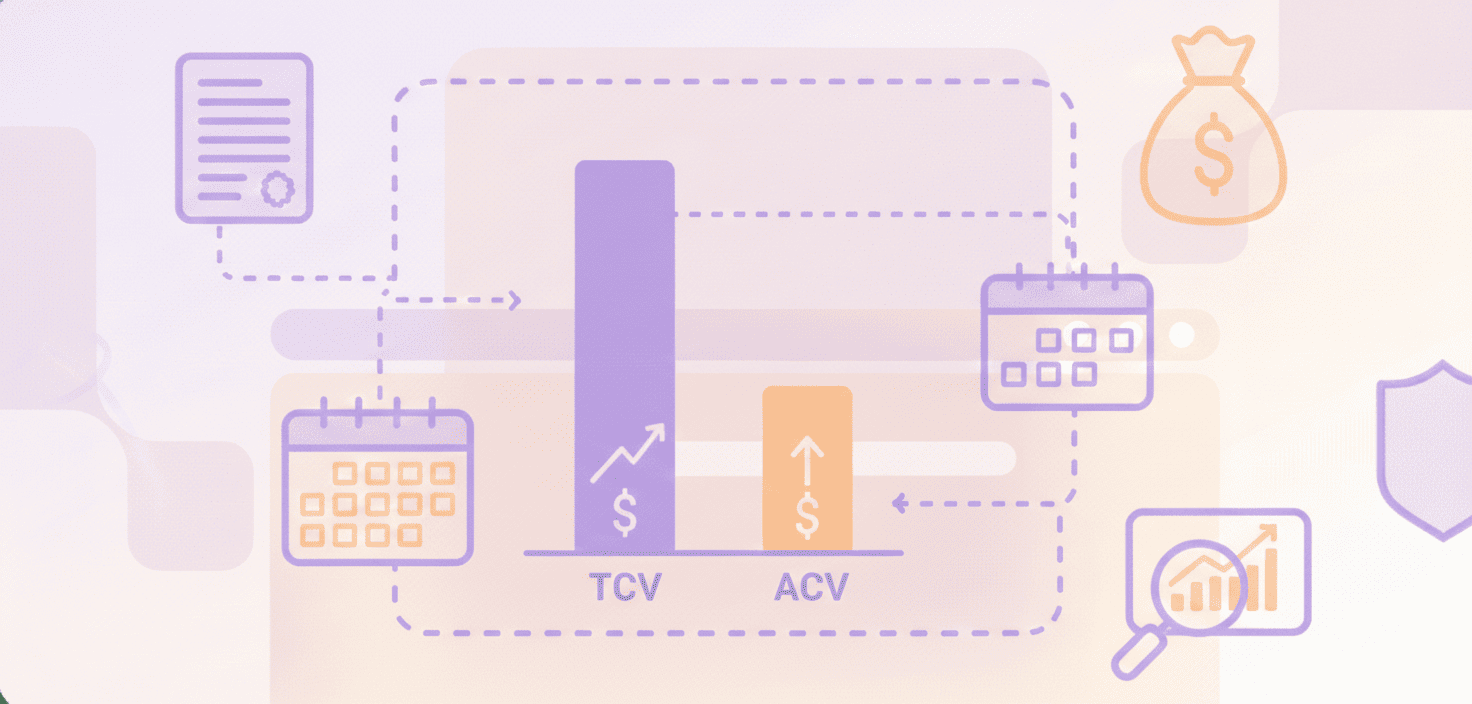
Valor Total do Contrato (TCV) é uma métrica SaaS que identifica o valor total de um contrato de cliente ao longo de toda a sua duração.
O Valor Anual do Contrato (ACV) é uma métrica SaaS que aponta o valor médio do contrato por ano.
Ambas essas medições são relevantes para empresas SaaS porque elas medem a receita obtida e oferecem uma imagem abrangente do desempenho da receita de assinaturas.
Qual a diferença entre ACV e TCV?
A diferença entre TCV e ACV reside no período medido. Enquanto o TCV considera o valor total do contrato, o ACV divide esse valor em parcelas anuais.
A razão pela qual as empresas SaaS precisam de ambos é que elas necessitam de perspectivas de curto e longo prazo para avaliar o desempenho da receita.
|
Aspecto |
TCV |
ACV |
|
Prazo |
Duração total do contrato |
Valor anual |
|
Taxas únicas |
Incluído |
Excluído |
|
Contratos plurianuais |
Pode impactar o TCV |
O ACV não é afetado |
|
Previsões |
Apoia o rastreamento da receita total |
Ajuda no planejamento anual |
|
Relatórios de vendas |
Concentra-se no valor do negócio |
Destaca a receita recorrente |
Como ACV e TCV diferem em modelos SaaS e de Assinatura?
TCV e ACV são duas métricas SaaS que monitoram a receita de assinatura de duas perspectivas.
Tendência das empresas de assinatura de priorizar o ACV porque permite monitorar o desempenho anual.
Investidores preferem o TCV porque oferece uma visão de longo prazo e ajuda na avaliação da consistência.
As diferenças entre as duas métricas geralmente aparecem nas seguintes áreas:
- Contratos empresariais plurianuais
- Negociações com taxas de integração ou implementação
- Acordos de longo prazo com desconto
- Níveis de precificação baseados em uso
- Renovações anuais versus compromissos de longo prazo
Como Calcular o ACV?
Para calcular o ACV, você precisa dividir o valor total recorrente do contrato pelo número de anos do contrato.
Fórmula:
ACV = Receita Recorrente Total ÷ Duração do Contrato (anos)
Exemplo:
- Assinatura de dois anos no valor de US$ 50.000 (somente recorrente)
- ACV = US$ 25.000
- Evite considerar taxas únicas
- O ACV é a métrica SaaS preferida para comparar negócios com durações de contrato diferentes.
Como Calcular o TCV?
O TCV determina a receita recorrente total sobre o valor total do contrato, incluindo taxas únicas.
Fórmula:
TCV = (Receita Recorrente × Prazo do Contrato) + Taxas Únicas
Exemplo:
- Receita recorrente de dois anos = $50.000
- Taxa de integração = $5.000
- TCV = $55.000
Como Descontos, Taxas Únicas e o Prazo do Contrato Impactam o ACV e o TCV?
Descontos, taxas únicas e duração dos contratos impactam o ACV e TCV de várias formas:
- Descontos: Reduzem o preço anual, afetando ambas as métricas
- Taxas únicas: Aumentam o valor total do contrato, mas não a receita recorrente
- Prazos mais longos: Aumentam TCV; o ACV permanece estável se a precificação anual permanecer inalterada
- Atualizações durante o contrato: Podem aumentar o ACV ACV e o TCV
Conclusão
TCV e ACV representam duas métricas de SaaS que analisam a receita recorrente a partir de perspectivas diferentes. No entanto, são igualmente importantes.
Empresas de assinatura preferem analisar o ACV porque ele fornece uma medida estruturada de desempenho, enquanto investidores ou a equipe financeira acompanham o TCV pela sua perspectiva de longo prazo.
Pronto para começar?


 Português do Brasil
  English
  Español
  Português
  Français
  Italiano
  Deutsch
  Nederlands
  Polski
  Română
  Українська
  简体中文
简体中文  日本語
日本語  한국어
한국어