
SaaS Product Development
What is SaaS Product Configuration?
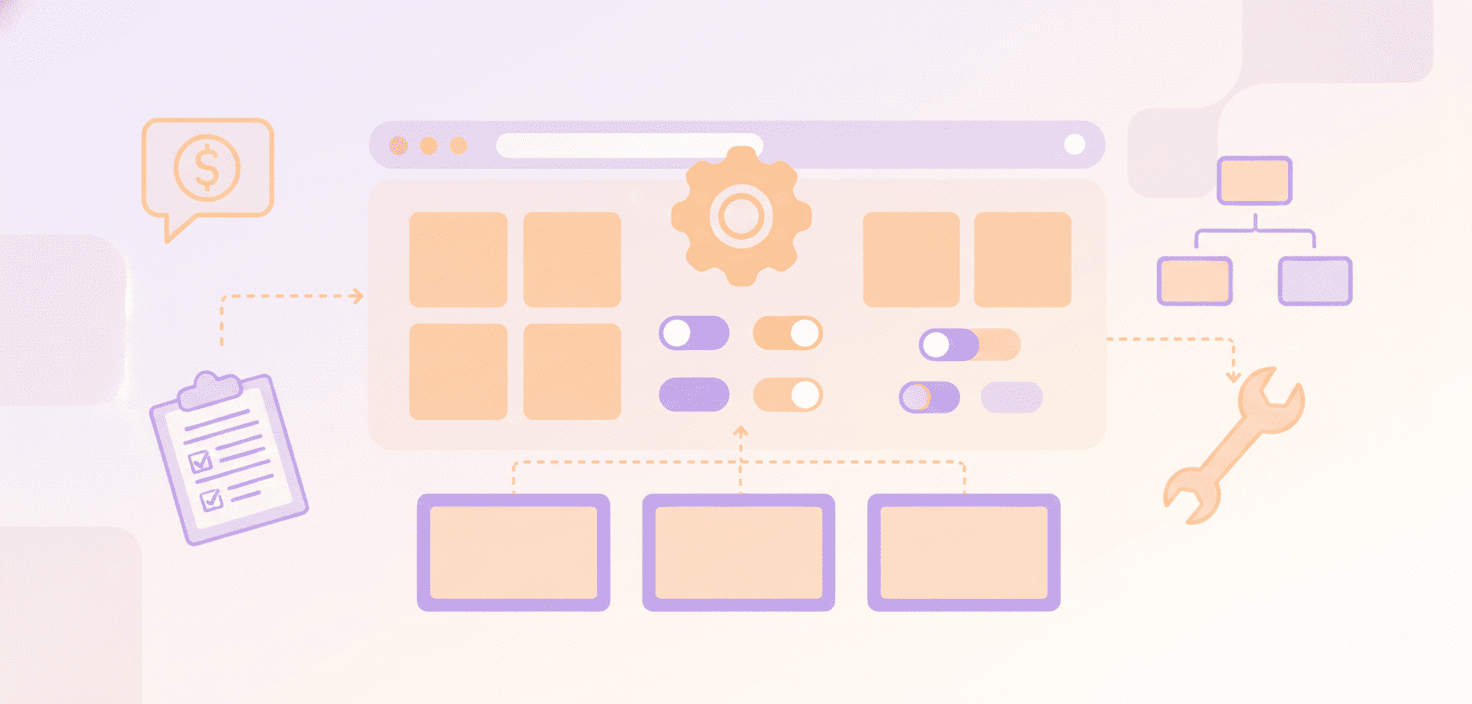
What is SaaS Product Configuration?
Software as a Service (SaaS) Product Configuration is the process of setting up and customizing cloud-based software applications to meet specific business needs.
This involves modifying the software, often through a web interface or mobile/desktop application, without the need for expensive infrastructure. Because of its multi-tenant architecture, SaaS often simplifies configuration management by maintaining a single application version.
While SaaS applications are designed to be customizable, it is important to understand the available configurations and how to effectively utilize them to meet the specific needs.
What are the core components of SaaS Product Configuration?
The main elements of SaaS product configuration include:
- multi-tenancy architecture (allows for the servicing of multiple users with a single instance)
- subscription and billing systems
- UI/UX design
- development frameworks
- analytics and reporting
- API integrations (for enhanced functionality)
- high availability and performance optimization (for controlling downtime and maintaining system performance)
What are the benefits of SaaS Product Configuration?
SaaS Product Configuration has several advantages, including:
- faster time to market
- higher efficiency
- greater scalability
- enhances usability
- promotes collaboration
- focuses on security
- extends compatibility.
SaaS relates to alterations in the onboarding process, with possible impacts on IT resource needs and software upgrade management.
Organizations should also consider having a reliable internet connection in order to to fully leverage the 24/7 accessibility of SaaS.
How does SaaS product configuration reduce IT costs?
SaaS configuration impacts IT expenses by altering the reliance on extensive hardware, software licensing, and maintenance investments.
SaaS product configuration:
- simplifies operations
- automates processes
- allows for efficient resource allocation, focusing on operational expenses
How does SaaS product configuration improve scalability?
SaaS product configuration can affect scalability by enabling businesses to modify resources and integrate with third parties. This approach can result in adjustments to technical infrastructure scaling, influence maintenance operations, and affect company growth in relation to server capacity.
Thus, companies can face up to increased traffic and data volume without issues.
How does SaaS Product Configuration impact security?
SaaS Product Configuration requires careful setup and continuous management. This increased security levels.
Security breaches through unauthorized access can be triggered by misconfigurations. For example, poorly managed user permissions, unsecured APIs, or incorrect setup of data sharing and access control can impact security.
Perform regular updates and monitoring to maintain high system security levels.
Examples of SaaS Product Configuration in use
Saas Product Configuration is an attribute seen in various industries. It provides the ease of the introduction, the collaboration, and the customization. Examples include:
- Slack for business communication
- Google Workspace for collaborative tools
- AWS for cloud computing
- Dropbox for file sharing
- Canva for graphic design.
These systems show a relationship between efficiency, scalability, user experience, and the operation of the SaaS model.
What are the future trends in SaaS Product Configuration?
In terms of product configuration in SaaS, some interesting trends involve artificial intelligence, mobile-first design, accessibility, and Micro-SaaS.
Security is also likely to be a major concern, with companies considering adopting AI-driven solutions and zero-trust models.
For operations and business intelligence, these methods will become even more efficient with AI.
Conclusion
SaaS product configuration is essential for tailoring cloud-based software to specific business needs, offering flexibility and efficiency without the burden of traditional IT infrastructure. This may affect efficiency, flexibility, and cost-effectiveness of IT infrastructure, a factor in various industries. As SaaS develops, monitoring trends like artificial intelligence and focusing on security may be important for realizing its potential and maintaining a competitive position.
SaaS businesses should consider the applicability of these trends to their particular industry and the needs of their customers.
Ready to get started?


 English
  Español
  Português
  Português do Brasil
  Français
  Italiano
  Deutsch
  Nederlands
  Polski
  Română
  Українська
  简体中文
简体中文  日本語
日本語  한국어
한국어