
SaaS Payments
What are SaaS QR Code Payments?
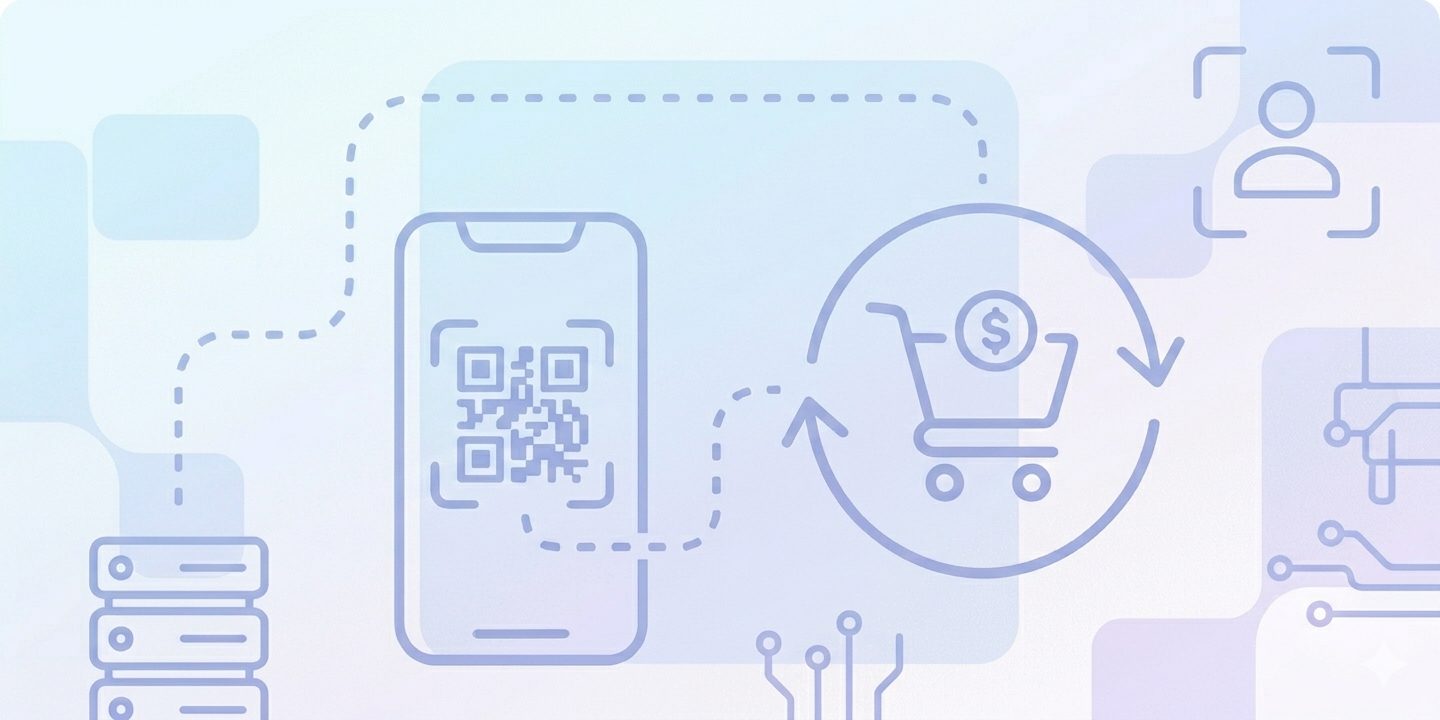
What are SaaS QR Code Payments?
Through the cloud-hosted system, SaaS QR code payments connect the merchant’s point of sale directly with the customer’s mobile wallet. The effect of this can be observed in existing companies through access to a scalable and relatively low-cost payment alternative, influencing considerable investment requirements for physical point-of-sale systems. The shift to cloud-based payment processing can correlate with businesses using a single subscription for their entire finance operations.
What are the features of SaaS QR Code Payments?
Among other things, SaaS QR code payment systems offer:
- Cloud Synchronization: Transaction data is updated across a centralized business dashboard.
- Code Generation: The program facilitates code generation, creating new codes tailored for individual amounts or customers.
- Device Versatility: The system is designed to function on cell phones or tablets equipped with a camera and web access.
- Wallet Integration: The software provides options for integration with payment systems, including Apple Pay, Google Pay, and specified local bank apps.
What is the step-by-step process that occurs from the moment a user scans a QR Code to the final payment authorization?
After a physical scan, traceability of the transaction depends on an automated, secure exchange that occurs behind the scenes between the user’s gadget and the cloud.
- Scanning: A user leverages a digital camera or a bank-supported application to create a QR code snapshot.
- Decoding: To extract the message, the program reads the QR code data and sends the customer to the payment gateway (run by the SaaS company).
- Authentication: The user checks the balance and approves the transaction by fingerprint, face recognition, or a PIN.
- Processing: The bank’s payment processor is SaaS, communicating with both issuing and acquiring banks to check and guarantee that the funds are available.
- Authorization: Upon confirmation, the system simultaneously implies to the merchant and buyer that the payment was successful.
How does a payment processor facilitate a QR Code Payment?
By acting as a digital intermediary, a payment processor oversees the examination of sensitive data and funds delivery among various financial entities. In the SaaS QR setup, the processor encrypts data so as not to expose the cardholder’s credentials (neither on the merchant’s device nor on the SaaS platform).
Verifying the transaction comes first, and after a successful transaction, clearing and settling are handled by the processor. It operates in the background without requiring user intervention. The SaaS platform and the global banking network can exchange information via the processor’s secure API, with processing times generally around one minute.
What is the difference between a static QR Code and a dynamic QR Code created for a specific transaction?
The decision of which type of code to create is largely influenced by how much a business runs on automated systems and how much accounting detail is maintained at any point in time.
|
Feature |
Static QR Code |
Dynamic QR Code |
|
Data Content |
Fixed; usually contains a permanent URL. |
Unique; generated for a specific order. |
|
Pricing |
The customer is required to enter the amount. |
The price is pre-populated in the code. |
|
Tracking |
Manual reconciliation of sales is required. |
Automated tracking links payment to the order. |
|
+ |
Low cost is a trait associated with the ability to be printed on durable signage. |
Related to changes in user error frequency and checkout efficiency. |
|
– |
Amount entry includes a validation step to reduce input errors. |
Requires a digital screen to display. |
How do QR Codes improve flexibility for businesses that operate both online and in physical locations?
SaaS QR codes can be used to consolidate payment options “in and out” of a merchant’s store. One SaaS account can generate a QR code that is used either as a tiny sign on a restaurant table or as a checkout page on the e-commerce website.
This feature impacts bookkeeping by channeling sales transactions, irrespective of their source, into a unified system. Businesses might consider adapting delivery boxes or flyers for point-of-sale functions, which could affect the need for new hardware.
Which specific security features make QR code payments safer than magnetic stripe cards?
Payments via QR code incorporate security features that differ from those of traditional magnetic stripe cards:
- Tokenization: Instead of transmitting the card details, QR codes send single-use tokens. This way, if someone intercepts the data, they cannot do anything with it.
- Multi-Factor Authentication: Users must unlock their phone using biometrics as part of the transaction, acting as a secondary verification.
- Anti-Skimming: Without a physical card, it is physically impossible for criminals to clone the card data since there is no contact with the card reader.
Making the Decision: Do I Need SaaS QR Payments?
Think about your business and whether this technology would be a good match by answering these questions:
- Do you want a contactless payment solution that will work on any device?
- Are you interested in eliminating the monthly fees and physical POS terminals maintenance?
Decision Factors:
- Customer Preferences: Are most of your clients using mobile wallets and smartphones?
- Operational Speed: Will your employees need to make payments outside of a central counter area?
- Security Goals: Would it be very important to you to reduce the risk of fraud in your business?
- Budget: Do you want a predictable pricing model where you pay a subscription?
Conclusion
SaaS QR code payments, facilitated by cloud technology, present various transaction methods in contrast to traditional hardware-based systems. The implementation of static or dynamic codes might relate to the development of a cross-channel payment environment with some degree of flexibility for businesses. The technology relates to modifications in the payment process for merchants and consumers, possibly including simplification.
Ready to get started?


 English
  Español
  Português
  Português do Brasil
  Français
  Italiano
  Deutsch
  Nederlands
  Polski
  Română
  Українська
  简体中文
简体中文  日本語
日本語  한국어
한국어