
Legal and Compliance
What is India’s RBI e-Mandate?
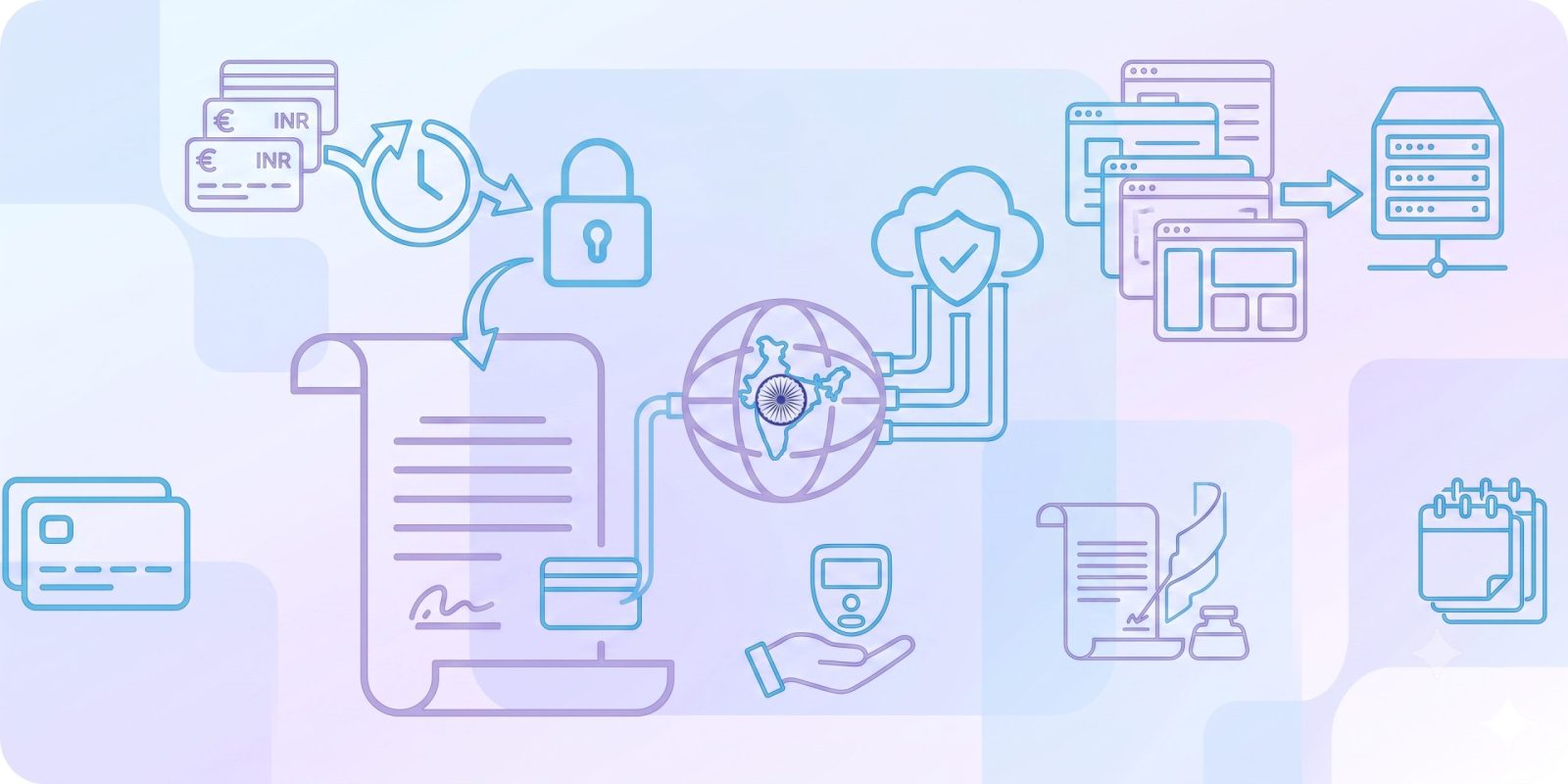
What is India's RBI e-Mandate?
E-Mandate is a digital authorization system that debits the bank account of the customer for handling recurring payments like subscriptions, EMIs, insurance payments, and utility payments without authorizing each payment individually. During the process of mandate creation, there is one-time validation required, after which further eligible payments will be made until there is a change in the mandate or its cancellation.
On April 21, 2026, the Reserve Bank of India (RBI) released the Digital Payments – e-Mandate Framework, 2026. This framework cancels eight earlier circulars and sets out one administrative routine for managing recurring digital transactions (both domestic and international) that use cards, prepaid payment options, or UPI. The framework outlines requirements on issues such as payment thresholds, notifications, and authentication rules for every participant in the recurring payment process.
What Is the Difference Between e-Mandate and e-NACH?
E-Mandate is a term used for any authorization that allows repeated digital debits from a customer’s account. Several channels exist for this, and e-NACH (electronic National Automated Clearing House) is a common example based on routing transactions from a bank account through India’s NACH system. Each transaction through e-NACH is covered by the concept of e-Mandate, but the e-Mandate guidelines encompass other concepts like Card mandates and UPI AutoPay as well. e-NACH is simply one way to manage recurring debit transactions using the framework. Card mandates and UPI AutoPay are two more ways to manage recurring collections digitally.
What Are the Main Types of e-Mandates Available?
Three mandate types cover most recurring billing use cases in India, and each is set up for particular forms of transactions:
- Card-based mandates are linked to a customer’s debit or credit card, familiar to customers already paying by card.
- Bank-account-based mandates (e-NACH), also called e-NACH, authorize direct debits from a bank account using the NACH platform; this method is typically seen with EMIs, insurance, or mutual funds.
- UPI AutoPay connects to the customer’s UPI ID, processing debits automatically through recognized UPI applications (such as GPay or PhonePe) or directly through a bank’s UPI interface.
Bank e-Mandates (or NACH mandates) register a recurring debit agreement directly between the bank account and merchant. UPI mandates instead operate by routing each recurring transfer through the UPI rails tied to a UPI ID. All three mandate structures follow aligned guidelines: transactions below ₹15,000 can go through without an additional factor authentication (AFA), and a higher ₹1,00,000 threshold for insurance premiums, mutual fund subscriptions, and credit card bill payments.
How Do You Set Up an e-Mandate for a SaaS Subscription?
Setting up e-Mandates for SaaS involves following a defined pattern:
- You should begin with picking the mandate type that suits your customer segment; the UPI Autopay mandate applies to customers who use their mobile phones most, whereas the card mandate applies to those familiar with making card payments.
- The mandate registration process is usually concurrent with the process of validating the initial transaction because the latter requires AFA validation.
- Provide renewal notifications to customers at least 24 hours before any debit, and send a confirmation whenever a payment proceeds.
- Build in an easy self-service cancellation or modification flow, since any modification or withdrawal of an existing mandate requires AFA validation from the issuer.
- Use payment partners or Merchants of Record that handle e-Mandate details, which allows necessary processes to be addressed outside of the main operations.
How Do You Handle Mandate Failures, Bank Rejections, and Retry Policies?
Mandate failures might result from low account balances, technical issues at the bank, or outdated authentication. Banks normally allow a limited number of retries within a specified timeframe, so setting up a simple system with appropriate timing and clear customer notifications fits the norm.
|
Approach |
Pros |
Cons |
|
Automated retries |
This approach processes additional payment attempts by the system without direct input |
If repeated too quickly, banks may pause transactions or ask for follow-up |
|
Renewal reminders before debit |
Notifying customers before an upcoming debit often makes them aware if funds are not available |
Sending these types of reminders typically leads to a small increase in overall notification volume |
|
Manual re-authorization prompts |
In these cases, customers are requested to approve the payment one more time |
Completing the transaction is determined by whether the customer chooses to respond |
If a mistaken debit takes place, customers are encouraged to contact their bank promptly; this starts the zero-liability resolution process according to regulatory timeline requirements.
What Are the Key Benefits and Risks of Using RBI e-Mandates for Recurring Billing?
Benefits:
- Some payments fall within a limit where OTP is not required for every cycle, which changes the steps for renewals.
- The framework does not require a distinct fee specifically for customers making use of the e-Mandate process.
- Notifications are sent before and after recurring debits, as set by policy, mainly to keep customers informed of payments.
- Businesses now follow a consolidated guideline for compliance rather than relying on multiple earlier instructions.
Risks:
- For transactions above ₹15,000, or up to ₹1,00,000 in certain cases, another form of authentication is needed with each payment, so these renewals may look different compared to smaller amounts.
- If a business’s payment retry logic or notification systems operate outside regulatory expectations, banks may choose not to accept these payments or might apply additional examination.
- Organizations with limited background in domestic billing rules can experience added effort or delays when applying e-Mandate procedures on their own.
Do You Need to Support e-Mandates?
Let’s break it down: Does your business accept recurring payments from customers in India? Would using an OTP for each payment create a slightly longer renewal process? If either of these describes your setup, e-Mandate support operates as a standard compliance requirement for recurring billing. In India, this continues to be a routine practice and not an optional add-on for companies managing SaaS subscriptions or automatic renewal payments.
Conclusion
The RBI e-Mandate scheme explains the process of making recurring electronic transactions in India and mentions certain guidelines on how customers need to be notified and give their consent. In SaaS firms, understanding the various forms of mandates, payment ceilings, and transaction processes is just another way of implementing their recurring billing process within the framework of regulation.
Ready to get started?


 English
  Español
  Português
  Português do Brasil
  Français
  Italiano
  Deutsch
  Nederlands
  Polski
  Română
  Українська
  简体中文
简体中文  日本語
日本語  한국어
한국어