
SaaS Payments
What Is SaaS Card Tester Blocking?
What is SaaS card tester blocking?
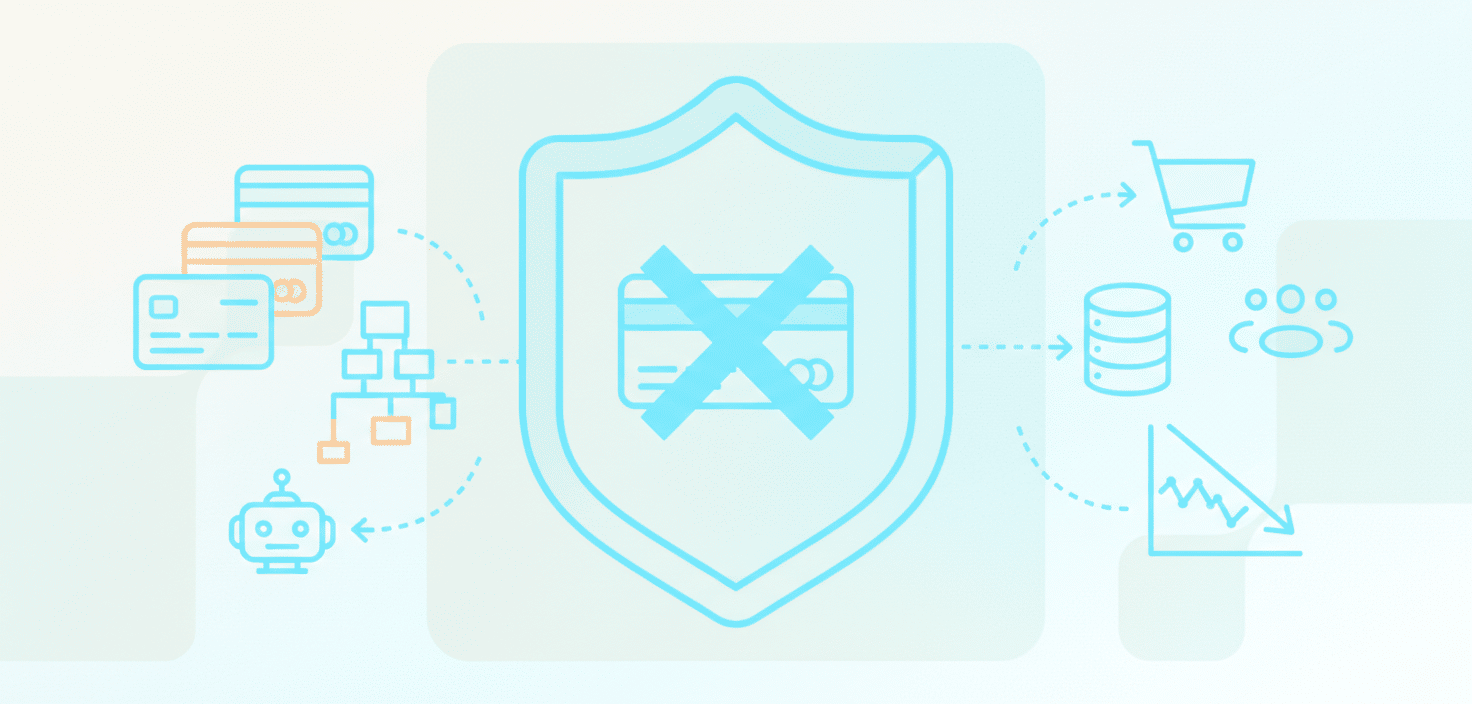
SaaS card tester blocking represents a number of measures that SaaS companies take to prevent card testing fraud.
SaaS card tester blocking includes blocking repeated payment attempts from the same payment card, IP address, or device within a short timeframe.
Other measures are:
- CAPTCHAs
- rate limiting
- monitoring rules to stop automated scripts.
It is important to note that basic firewalls are no longer sufficient to protect SaaS businesses against card testing. For this reason, SaaS companies need to consider integrating processes such as transaction velocity controls, identity verification, and high-risk payment monitoring.
What is credit card testing fraud?
Credit card testing fraud is a process where stolen payment information may be used to make small purchases in order to verify the credit card details.
Upon verification, the credit card details can be utilized for high-value transactions or offered for sale on illicit marketplaces. Credit card testing is automated, which is why it can be difficult to identify and prevent in the absence of structured monitoring. Pro Tip:
SaaS businesses can focus on specific patterns, including low-value transactions or bot-driven behaviour. Integrating with fraud prevention solutions that can identify these patterns should be considered.
What is SaaS payment fraud prevention?
In SaaS, fraud prevention includes technology, data analysis, and pre-defined rules to detect and stop fraudulent activities such as:
- fake signups
- payment abuse
- card testing.
The use of real-time transaction monitoring by SaaS companies can affect responses to suspicious activities and revenue protection efforts. Tools such as risk scoring, alerts, and chargeback prevention can assist in the identification of payments that may be high-risk.
Effective fraud prevention requires balancing security with user experience to avoid blocking legitimate customers through excessive false positives.
What are the signs of a card testing attack?
In a card testing attack, SaaS companies notice:
- strange payment patterns
- fast sequences of declined payments
- multiple authorization attempts within a short timeframe
- small-value transactions, often under $1, from the same IP
- geographic mismatches between billing addresses and IP locations
Continuously tracking transaction data and implementing strong security checks when these patterns appear is important for early detection.
How can I protect my SaaS platform from card testing?
Consider the following steps:
- Understand your audience and the potential risks to their security.
- Integrate various tools for fraud detection, which look at the behavior of a card during the transaction and identify any unusual activities, such as high volume or too many attempts to charge the card.
- Add CAPTCHA, rate limits, and firewalls in the areas of the website where the card is used, or the payment process. These methods tend to be sufficient in discouraging bots and preventing manual attacks.
If you require an even higher level of protection, there are advanced fraud prevention systems available that use machine learning and AI to provide real-time alerts and flexible controls that allow for a quicker response to changing attack patterns.
What should I consider when choosing a card testing prevention solution?
When looking for a card testing solution, consider one that is flexible enough to adjust to changing fraud methods and uses machine learning for rapid analysis.
This type of solution should have flexible workflows and be easily integrated with your existing systems, providing a complete overview of the transaction data. Functions such as risk scoring, automation, review queues, and alerts are necessary.
If you require an even higher level of protection, there are advanced fraud prevention systems available that use machine learning and AI to provide real-time alerts and flexible controls that allow for a quicker response to changing attack patterns.
What should I consider when choosing a card testing prevention solution?
When looking for a card testing solution, consider one that is flexible enough to adjust to changing fraud methods and uses machine learning for rapid analysis.
This type of solution should have flexible workflows and be easily integrated with your existing systems, providing a complete overview of the transaction data. Functions such as risk scoring, automation, review queues, and alerts are necessary.
Your solution of choice monitors all payment entry points and responds quickly without disrupting legitimate customer activity.
How effective are payment gateways at blocking card testing?
In the last few years, payment gateways have become effective at recognizing and stopping card testing through a combination of methods that include velocity verifications, IP and device monitoring, machine learning algorithms, and CAPTCHAs.
Through this strategy, payment gateways can protect SaaS businesses from repeated testing attempts.
SaaS businesses should not consider their payment gateway as the only defense and should think about implementing additional controls at the application level.
Which countries or IP addresses are typically linked to card testing?
Card testing cannot be linked to specific countries and IP addresses. Generally, fraudsters employ VPNs and proxies to keep their location secret. SaaS businesses should not rely on geolocation signals, but rather on behavioural indicators, like:
- transaction speed
- multiple payment declines
- transaction value
- inconsistency between billing addresses and IP
How does high transaction volume affect card testing detection?
SaaS companies find it difficult to identify card testing attempts, especially during peak sales. In those periods, the high number of valid SaaS transactions can hide fraudulent patterns.
Another issue with high transaction volumes is faced by SaaS companies that typically have low-value transactions. This makes it even harder to quickly spot patterns.
SaaS companies can address card testing through analytics, rule adjustments, and updated fraud detection procedures.
Conclusion
SaaS card tester blocking is a key element in protecting SaaS businesses from fraud by integrating various preventative measures.
By understanding the signs of card testing attacks, integrating robust fraud detection tools, and continuously monitoring payment patterns, SaaS platforms can effectively minimize their risk.
Protecting your SaaS platform is an ongoing process that requires vigilance and adaptability, ensuring a secure and trustworthy environment for both your business and your customers.
Ready to get started?


 English
  Español
  Português
  Português do Brasil
  Français
  Italiano
  Deutsch
  Nederlands
  Polski
  Română
  Українська
  简体中文
简体中文  日本語
日本語  한국어
한국어