
Growth Strategies
What is a SaaS Revenue Engine?
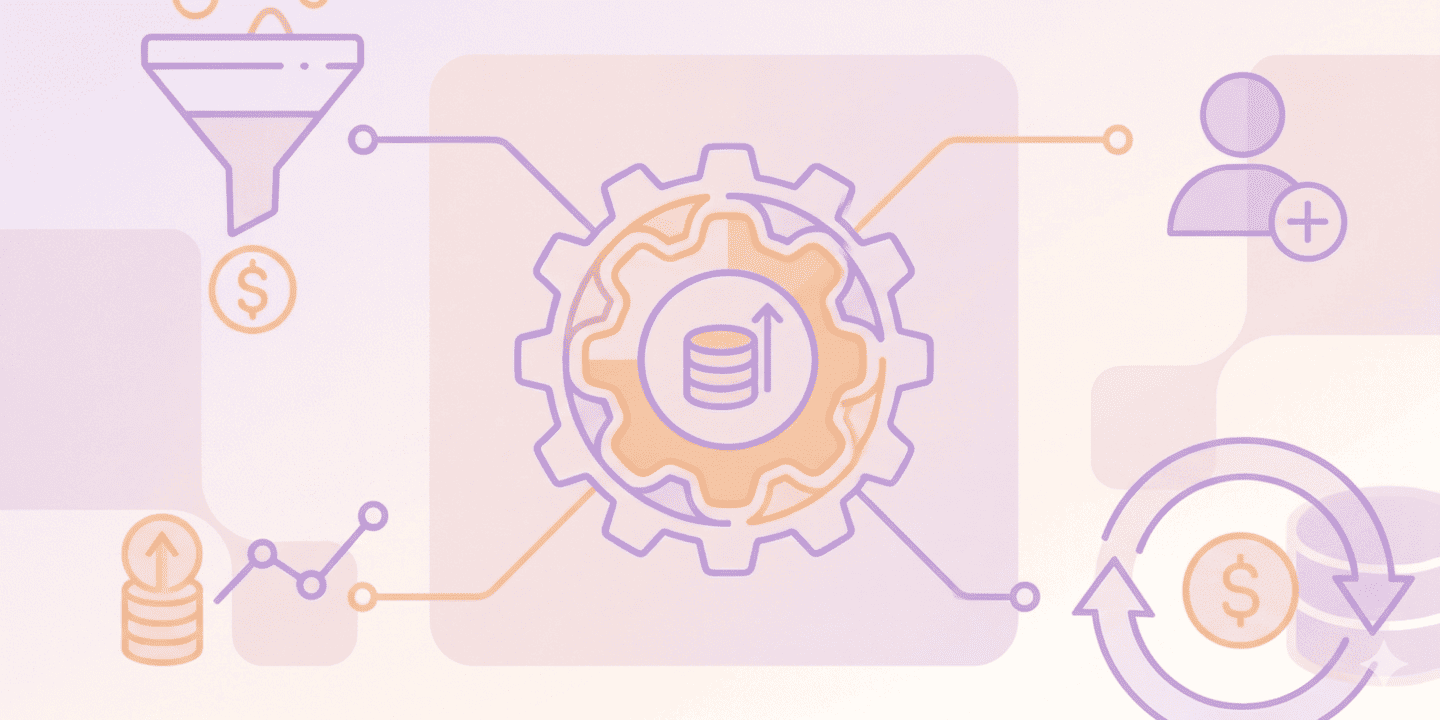
What is a SaaS Revenue Engine?
A SaaS revenue engine is a structure that displays how a SaaS company generates recurring revenue from the services offered. This framework relies on the subscription model, where customers pay a monthly, quarterly, or annual fee for access to cloud services. This also implies that a SaaS revenue engine has an impact on customer retention, lifetime value, and operational scalability.
Why is a Revenue Engine important for SaaS businesses?
The SaaS revenue engine strategy is very important for creating a stable and reliable income stream. It relates to growth support, customer retention, and expansion efforts within existing accounts.
For instance, an effective revenue engine integrates marketing, sales, and customer service to ensure a smooth customer experience. The application of this engine could reveal factors such as pricing, product features, and onboarding processes, which may assist in pinpointing and addressing aspects related to revenue leakage.
What are the key components of a SaaS Revenue Engine?
A SaaS revenue engine’s key components include recurring revenue from:
- Subscriptions
- cloud delivery
- updates
- customer support
At the same time, it is important to monitor specific metrics like MRR, ARR, CAC, churn rates, and CLTV.
How do I build a predictable SaaS Revenue Engine?
In order to build a predictable SaaS revenue engine, consider following these steps:
- Start by creating a revenue forecasting structure that considers customer retention, expansion revenue, sales pipeline, and customer behaviour patterns.
- Develop a process that combines historical data, industry trends, and results.
- Continuously monitor and track your revenue engine and adjust your strategies to keep things as predictable as possible.
Always factor in the complexity of your revenue engine with your business stage.
Who are the target customers for a SaaS Revenue Engine?
You can use Ideal Customer Profile (ICP) to identify your target customers. This ICP is based on factors such as profit density, product adoption velocity, and lifetime value, rather than typical demographic data.
High-performing SaaS companies focus on this ICP to enhance efficiency as far as resources are concerned, messaging, and general customer acquisition activities, to avoid investing time and resources in unproductive accounts.
What are the common pain points experienced by target customers of SaaS products?
Customers experience common pain points like:
- a lack of a clear market need
- annoying user interface
- ineffective customer support
- inconsistent pricing
- ineffective onboarding.
Customer churn is a significant problem because of the difficulty in retention and the high cost of acquiring new customers. It is essential to address these issues effectively to enhance customer satisfaction.
How is a SaaS Revenue Engine product differentiated?
The operation of the SaaS Revenue Engine involves integrating a customer-centric value proposition with its products. The availability of unique features and product flexibility can be factors in a company’s competitive position and the duration of customer relationships.
Various pricing strategies, such as tiered and user-based models, cater to different customers and increase income streams.
Are customers achieving their desired outcomes with a SaaS Revenue Engine?
SaaS customers may achieve their desired outcomes when the revenue engine aligns with their goals and focuses on customer-defined success criteria.
Setting customer success as a growth lever links results to NRR and expansion. This may also correlate with changes in Customer Lifetime Value (CLV) and Customer Acquisition Cost (CAC) Payback Period.
How do we measure the effectiveness of a SaaS Revenue Engine?
SaaS revenue engine is measured using various KPs, which include:
It is important to continuously track these measures to keep an eye on all changes and adjust the SaaS revenue engine fast, if required.
Conclusion
A SaaS revenue engine is the main framework driving recurring revenue for SaaS businesses through subscriptions, cloud delivery, and dedicated customer support. Understanding your ideal customer profile, addressing pain points, and offering a personalized value proposition are all factors that can impact its effectiveness.
Ready to get started?


 English
  Español
  Português
  Português do Brasil
  Français
  Italiano
  Deutsch
  Nederlands
  Polski
  Română
  Українська
  简体中文
简体中文  日本語
日本語  한국어
한국어