
Juridique et conformité
Qu'est-ce que la fraude à l'identité synthétique ?
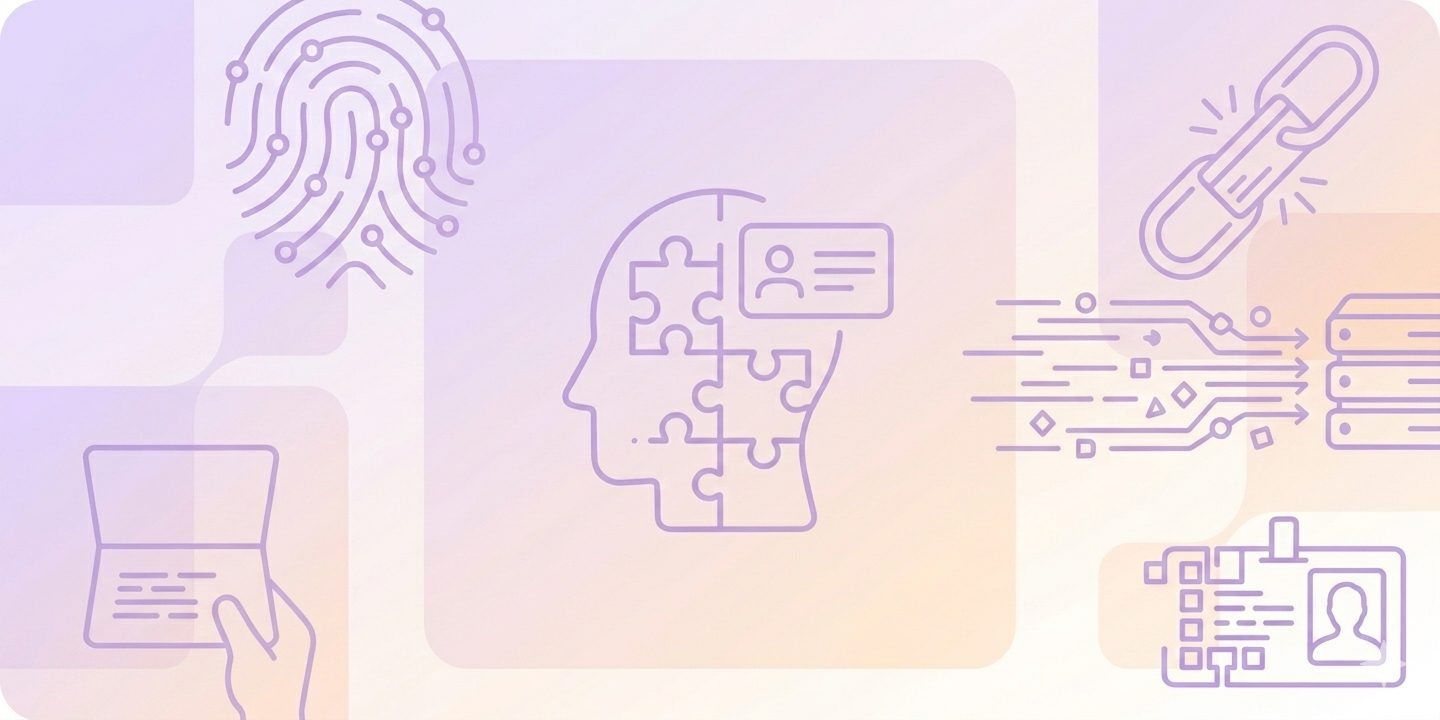
Qu'est-ce que la fraude à l'identité synthétique ?
Lors de la construction d'identités synthétiques à des fins de fraude, les données utilisées peuvent être vérifiables ou invérifiables. Cette tactique en constante évolution met en évidence la nécessité de systèmes de sécurité adaptables, capables de vérifier les identités avec précision tout en servant de nouveaux clients.
Dans ces situations, il est possible d'avoir une composante mineure de détails personnels originaux, tels qu'un numéro de sécurité sociale (SSN), coexistant avec des composantes de données créées, par exemple, des noms, des adresses ou des dates de naissance. Le résultat peut être une nouvelle identité pas nécessairement liée à un individu spécifique, ce qui souligne la pertinence de la vérification d'identité, de la sécurité des données et de la surveillance continue.
Quelle est la différence entre la fraude à l'identité synthétique et le vol d'identité traditionnel ?
La différence essentielle réside dans la manière dont les identités sont formées et détectées. Le vol d’identité traditionnel, caractérisé par l’utilisation non autorisée de l’identité d’une personne, peut parfois être détecté plus rapidement car des transactions inhabituelles sur les relevés de compte peuvent être remarquées et signalées.
En revanche, les cas d'identité synthétique impliquent la création d'une nouvelle identité en utilisant un mélange d'informations réelles et fabriquées. Étant donné que ces identités sont construites progressivement, elles peuvent prendre plus de temps à identifier, ce qui souligne l'importance d'une surveillance continue et d'une protection précoce de l'identité, surtout pour les individus dont les informations peuvent être moins activement examinées, comme les mineurs.
- Traditionnel: Utilisation d'une identité existante ; généralement plus facile à détecter ; impact clair et direct.
- Synthétique: Implique la construction d'un nouveau « persona » au fil du temps ; la détection peut prendre plus de temps ; souligne l'importance d'une surveillance proactive et d'une protection précoce de l'identité.
- Objectif: Recherche de NSS “dormants”, car ceux-ci sont moins susceptibles de déclencher une alarme.
- Objectif: Accumuler du crédit sur une longue période pour obtenir un rendement conséquent à la fin.
Quels sont les différents types d'identités synthétiques ?
La formation de ces fausses identités peut se produire de deux manières principales : en manipulant des identités existantes ou en en fabriquant de nouvelles.
- Identités fabriquées: Ces identités sont créées en combinant un numéro de sécurité sociale (SSN) non attribué, tels que ceux générés après les modifications de randomisation de la Social Security Administration en 2011, ou un numéro associé à un mineur, avec des détails nouvellement créés (tels qu'un nom et une adresse). Cela souligne l'importance de processus de validation d'identité robustes et de la protection des informations personnelles dès les premières étapes.
- Identités manipulées: Cela implique d'apporter de petites modifications à des informations personnelles existantes, telles que l'ajustement d'un chiffre de numéro de sécurité sociale ou l'orthographe d'un nom, pour créer ce qui semble être une nouvelle identité. Cette approche souligne la nécessité de systèmes de correspondance de données précis et d'une surveillance continue pour détecter les incohérences subtiles.
Comment une identité synthétique est-elle créée et cultivée au fil du temps ?
La construction d'une identité synthétique suit un processus graduel et étape par étape, soulignant l'importance d'une surveillance cohérente et d'une conscience du risque à long terme dans les systèmes financiers.
- The Stitch: Une identité est formée en combinant un numéro de sécurité sociale (SSN), qu'il soit attribué (ou généré aléatoirement), avec des informations personnelles nouvellement créées telles qu'un nom. Cette étape souligne la nécessité d'une vérification d'identité rigoureuse au moment de la demande.
- Le Fichier Souple: Le rejet d'une demande de crédit initiale n'empêche pas la création d'un historique de crédit. Cela illustre comment les données initiales peuvent établir une empreinte, soulignant l'importance du suivi et de l'examen des historiques de crédit nouveaux ou limités.
- La Constitution: Au fil du temps, l'identité peut être utilisée de manière responsable pour établir la crédibilité et l'accès à des limites de crédit plus élevées, ce qui souligne pourquoi une surveillance continue du comportement est essentielle.
- L'Éclatement: À un stade ultérieur, le crédit disponible peut être entièrement utilisé en peu de temps. Cela souligne l'importance des alertes en temps réel, de l'analyse des habitudes de dépense et des garde-fous proactifs.
Comment détecter la fraude à l'identité synthétique ?
Les efforts de détection peuvent être influencés par les caractéristiques communes observées chez les identités synthétiques et certains profils clients à faible historique, par exemple, ceux appartenant aux étudiants et aux nouveaux emprunteurs. Cette similarité suggère un domaine potentiel où les organisations peuvent ajuster leurs méthodes de détection au-delà des filtres automatisés traditionnels.
Étant donné que les éléments de données (tels que le nom, l'adresse et le numéro de sécurité sociale) peuvent ne pas correspondre directement à un individu existant qui signalerait des écarts, les analyses avancées, la surveillance comportementale et la validation inter-données deviennent particulièrement précieuses pour renforcer les efforts de prévention de la fraude.
|
Fonctionnalités |
Exemples |
|
Utilise l'IA pour trouver des modèles à travers les comptes. |
Les systèmes de détection peuvent être ajustés pour influencer le taux de faux positifs et l'expérience client. |
|
Peut signaler un comportement de “piggybacking” inhabituel. |
Bien que les vérifications manuelles puissent être détaillées, l'adoption de méthodes de vérification automatisées et évolutives permet de rationaliser les processus. |
|
S'appuie sur le recoupement des bases de données de la Sécurité sociale. |
Réglementations sur la protection des données suggèrent d'utiliser des méthodes sécurisées et conformes qui prennent en compte à la fois la vérification et la gestion des données. |
Quels sont les signaux d'alerte et les signes avant-coureurs d'une demande d'identité synthétique ?
Les institutions financières et les consommateurs peuvent observer ces indicateurs :
- Plusieurs identités peuvent être associées au même numéro de sécurité sociale.
- Un dossier de crédit qui démarre soudainement avec un score de crédit élevé.
- Les applications provenant du même emplacement ou de la même adresse IP peuvent présenter des conventions de nommage aléatoires.
- Les numéros de téléphone et les adresses e-mail qui manquent d'une empreinte numérique substantielle ou n'ont qu'un historique de quelques mois peuvent être considérés pour une vérification des risques renforcée.
- Vérifiez si vos enfants ont un dossier de crédit avant qu'ils n'atteignent 18 ans.
- Gelez le crédit pour les membres de votre famille qui ne cherchent pas actuellement de prêts.
- Les entreprises devraient utiliser le service de vérification du numéro de sécurité sociale basé sur le consentement (CBSV) de la SSA.
Conclusion
La fraude à l'identité synthétique reflète la convergence des pratiques d'identification avancées et des systèmes de crédit numérique, suggérant des améliorations possibles aux mesures de protection et aux méthodes de vérification afin de promouvoir des écosystèmes financiers plus robustes. Comprendre comment ces personas « fantômes » sont créées et entretenues peut aider les individus et les organisations à se protéger de ce danger caché.
Prêt à commencer ?


 Français
  English
  Español
  Português
  Português do Brasil
  Italiano
  Deutsch
  Nederlands
  Polski
  Română
  Українська
  简体中文
简体中文  日本語
日本語  한국어
한국어