
재무 관리
What is the Total Cost of Ownership (TCO) for SaaS?
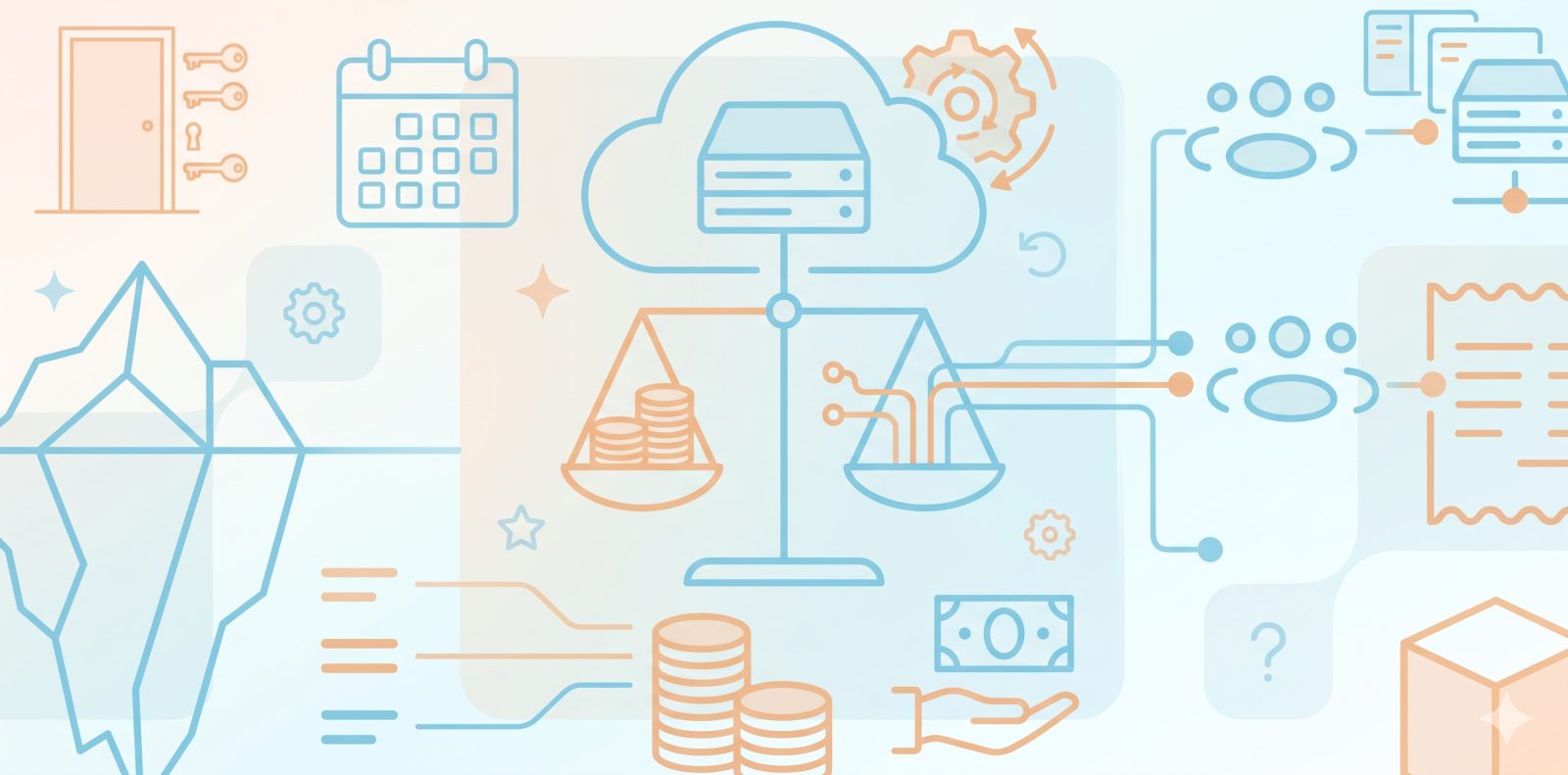
What is the Total Cost of Ownership (TCO) for SaaS?
Total Cost of Ownership (TCO) for SaaS represents the full cost of a cloud software subscription, including purchase, implementation, operation, and replacement over a specific period. In general, it goes beyond subscription price to include implementation, integration, internal labor, support, security, and switching costs.
What cost components go into SaaS TCO?
SaaS TCO includes both direct expenses paid to a software vendor and internal costs required to operate the platform effectively.
| Cost Component | 포함 내용 |
| Subscription fees | Recurring seat-based, tiered, or usage-based charges |
| 구현 | Initial setup, configuration, and go-live work |
| Data migration | Moving data from existing or legacy systems |
| 통합 | Connecting the SaaS product to other systems |
| 맞춤형 | Adapting workflows, fields, or configurations |
| 교육 | Initial onboarding and ongoing employee training |
| Internal administration | IT, operations, or business-team time managing the platform |
| Security and compliance | Access management, reviews, audits, and data-protection work |
| 지원 | Vendor support plans and internal help-desk resources |
| Exit and switching costs | Data export, transition work, and migration to another solution |
Cost levels for individual items vary among organizations. Smaller businesses may absorb administration, training, or support within existing roles rather than record them as separate budget items.
Why is TCO different from list price and ROI?
List price normally only reflects subscription/licensing charges. TCO captures these extra expenses supporting and replacing the software. TCO refers to ownership costs; ROI evaluates the financial value of the investment. For example, a SaaS product might have a notable TCO, yet it could yield a return on investment through changes in revenue, productivity levels, or operational expenses.
What time horizon should be used for SaaS TCO?
The most suitable TCO timeline is the anticipated contract length, the effort required to implement the software, the software’s lifecycle, and when the organization changes the software. Models of the TCO based on three- and five-year cycles may provide a basis for plans in more than one period. However, no particular period is a one-size-fits-all benchmark for that category of SaaS. The period consistency and assumptions matter across products.
A short evaluation period can give one-time implementation costs, while a longer period requires more assumptions about future pricing, usage, and business needs.
How does SaaS TCO differ from on-premises software TCO?
Running software on-site most of the time means customers must manage infrastructure, including servers, storage, software setup, patching, and ongoing maintenance. SaaS vendors usually relieve customers by operating the underlying service themselves. Cost factors for organizations may include implementation, integration, administration, security, training, support, and vendor management.
How is SaaS TCO calculated?
Start by selecting an evaluation period and all one-time, recurring, variable, internal, and exit costs that will be expected within that period. For example, a TCO model should consider the expected number of users (if subscription pricing is based on seats). SaaS Total Cost of Ownership (TCO) comprises components such as implementation and migration, subscription and support, internal operating activities, integration, security, compliance, and exit or switching.
Use the same assumptions for every option being compared. Differences in user growth, implementation scope, or support requirements can distort a comparison.
How can businesses use TCO when comparing SaaS products?
TCO is used when buying or renewing a subscription. Procurement officers, finance, IT, and business can evaluate products using a shared cost model and identify assumptions that influence purchase cost later. Besides that, different situations like a greater number of user additions or higher levels of consumption, increased integrations, or a migration done earlier than expected may also be examined.
결론
Total Cost of Ownership is more precisely a tool that allows businesses to look at both the financial commitment associated with the implementation and the day-to-day operation, plus the replacement of a SaaS product. A solid TCO analysis will ensure that the same time period is used, both direct and internal expenses are included, and the same assumptions are applied to each of the software alternatives that are being compared.
시작할 준비가 되셨나요?


 한국어
 English
 Español
 Português
 Português do Brasil
 Français
 Italiano
 Deutsch
 Nederlands
 Polski
 Română
 Українська
 简体中文
 日本語