
法律与合规
What is Vendor Due Diligence in SaaS?
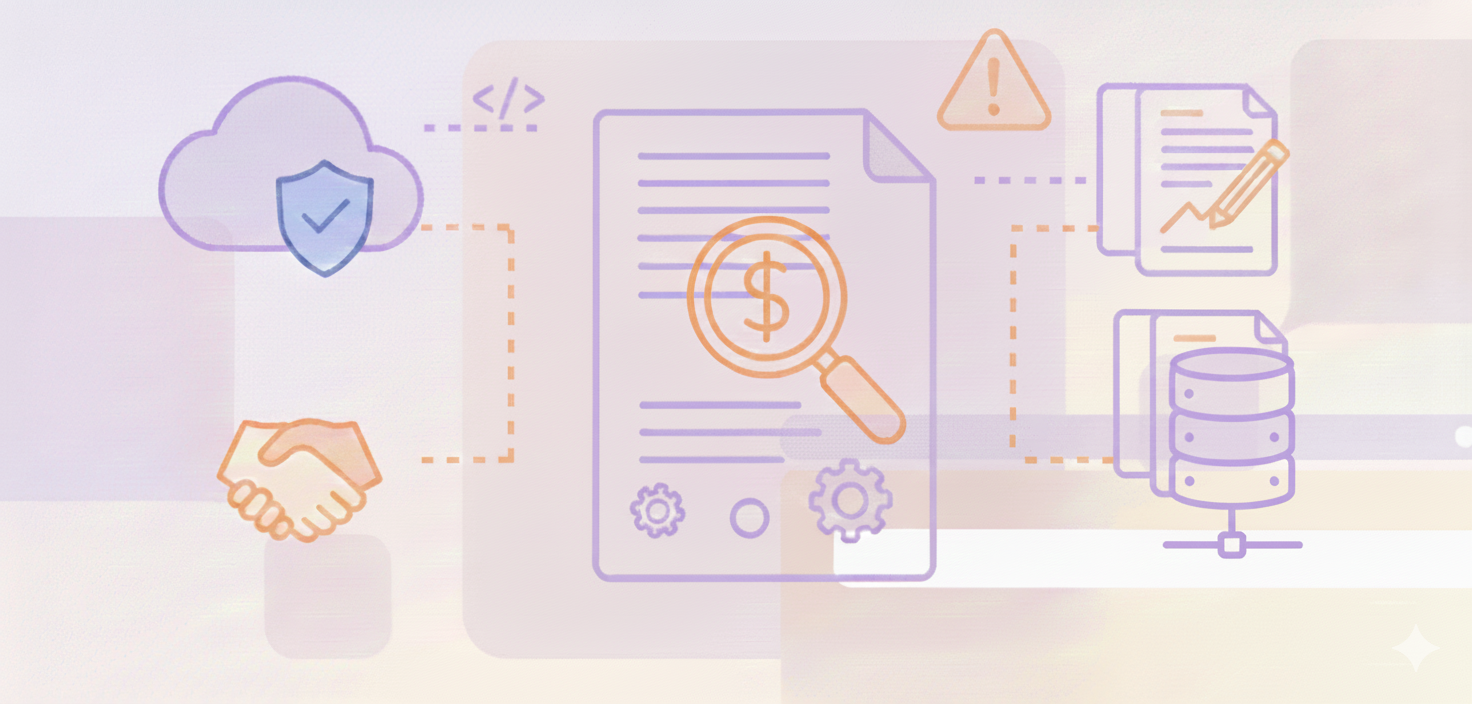
What is Vendor Due Diligence in SaaS?
In SaaS, vendor due diligence is the process of carefully examining potential SaaS providers before collaborating with them. This includes looking at various areas such as the:
- legal standing of the company
- financial stability
- product performance
- handling of sensitive customer information
These verifications are intended to protect businesses against harmful events such as data theft, service interruptions, and compliance issues.
What does the vendor due diligence process look like in SaaS?
Here are the steps of the vendor due diligence process:
- Consider the financial situation of the vendor, whether it is strong enough to provide services over an extended period of time.
- Focus on their operational efficiency and technical effectiveness, including time-keeping, security policies, and disaster recovery plans.
- Analyze the legal issues and compliance with regulations to avoid any potential legal problems.
A formal SaaS due diligence checklist can provide structure for these tasks. In particular, vendor risk management should be carried out regularly to identify any weaknesses or compliance issues related to data protection and business continuity.
Why is VDD especially important for SaaS compared to traditional software?
In the case of traditional, on-premise software, the company owns the infrastructure.
In the case of SaaS, the customer gives up the control of data, applications, and infrastructure security to the vendor. However, Variation drift monitoring (VDD) comes in handy in ensuring that there is accountability by the vendor regarding the management of the assets.
What are the core areas of risk assessed during a SaaS VDD?
The due diligence process typically focuses on four critical areas:
- Security & Technical: Assessing the vendor’s data protection, encryption, network security, access controls, and incident response plan.
- Compliance & Legal: Reviewing adherence to regulations like GDPR, HIPAA, SOC 2, ISO certifications, and ensuring contracts include appropriate liability and data ownership clauses.
- Financial & Operational: Evaluating the vendor’s financial stability (to avoid service disruption or termination), infrastructure uptime, disaster recovery plans, and service level agreements (SLAs).
- 数据管理: Scrutinizing where and how data is stored, processed, and potentially transferred across borders, and the policy for data deletion upon contract termination.
What standard reports or certifications should a SaaS vendor provide?
A strong VDD process relies heavily on verifiable evidence. Key documentation sought includes:
|
Document/Certification |
目的 |
|
SOC 2 Report |
evaluates a company’s controls over how it handles sensitive information. |
|
ISO 27001 Certification |
acts as proof to the world that the vendor’s information is well protected since it is adherent to the information security management system principles and practices. |
|
Penetration Test Summaries |
are documents created by independent security firms that contain information on the vulnerabilities found in a SaaS application and the remedial actions taken. |
|
Data Processing Addendum (DPA) |
is a document that specifies how a vendor will process personal information in accordance with applicable laws, such as GDPR. |
What are common red flags in SaaS VDD?
It is advisable to carefully assess vendors who:
- decide not to share security documentation (e.g., SOC 2 report, pen test results) might be relevant.
- have an insufficient or absent 灾难恢复 (DR) plan that could be associated with less desirable RTO/RPO metrics.
- have ambiguous or overly restrictive terms regarding data ownership or data portability (getting your data back).
- utilize encryption methods for data, both when stored and during transfer, that may be vulnerable to compromise.
- may experience financial instability or demonstrate a history of difficulties in adhering to SLAs.
Who is responsible for conducting the VDD within the customer organization?
VDD is a cross-functional effort that requires input from several departments:
- Information Security/IT: Monitors technical controls, architecture, and network security.
- Legal/Compliance: Reviews contracts, DPAs, and 遵守法规.
- Finance/Procurement: Evaluates cost, financial stability, and contract terms.
- Business Unit/User: Verifies the operational fit and functional capabilities of the solution.
结论
在SaaS领域,技术尽职调查尤其重要且相关,因为它涉及评估企业的技术能力和基础设施。这包括评估底层软件和硬件的稳定性,以及评估任何云部署或基础设施即服务 (IaaS) 解决方案。凭借这些信息,企业可以就如何最好地交付其产品和服务做出明智的决策,确保其可靠和稳定。
准备好开始了吗?


 简体中文
简体中文  English
  Español
  Português
  Português do Brasil
  Français
  Italiano
  Deutsch
  Nederlands
  Polski
  Română
  Українська
  日本語
日本語  한국어
한국어