
Legal and Compliance
What is Vendor Due Diligence in SaaS?
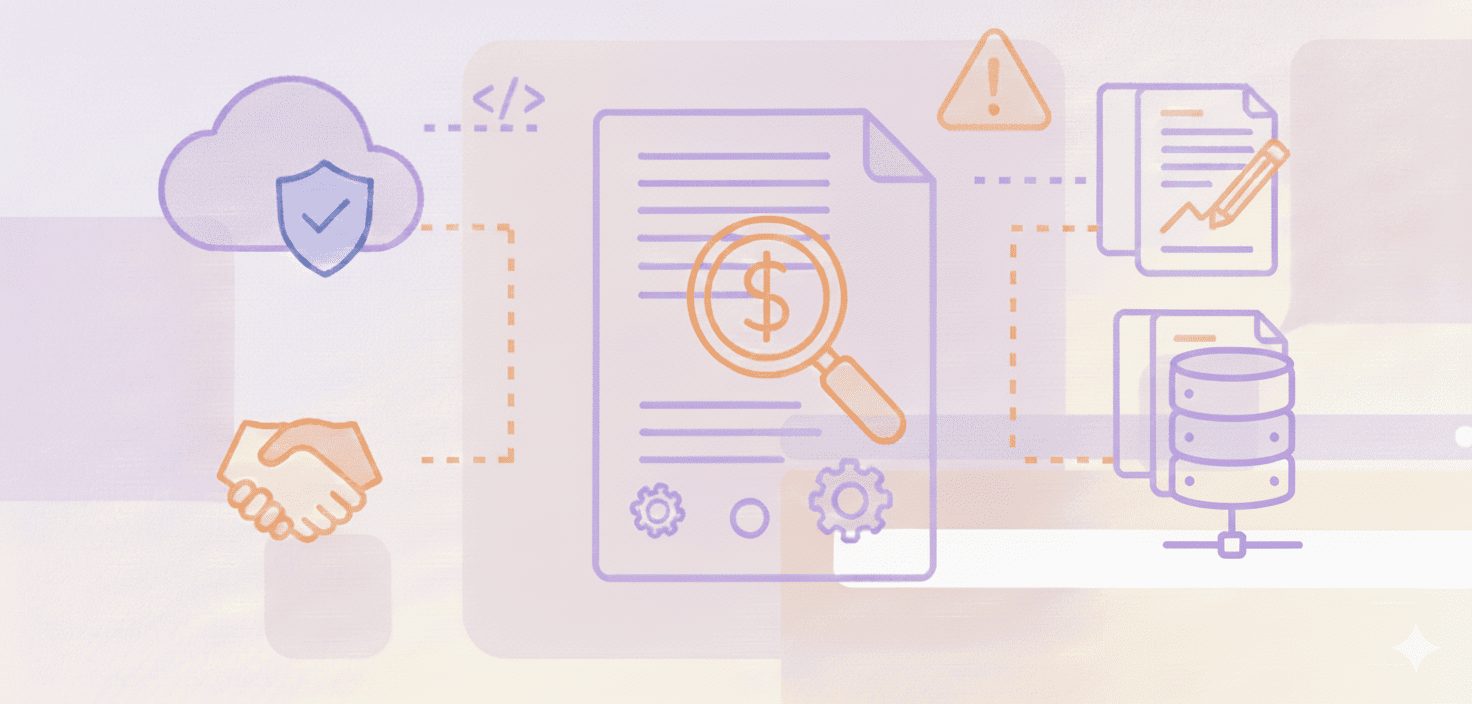
What is Vendor Due Diligence in SaaS?
In SaaS, vendor due diligence is the process of carefully examining potential SaaS providers before collaborating with them. Where the EU GDPR applies and a provider will process personal data on your behalf, its Article 28 requires you to use only processors that give sufficient guarantees of appropriate technical and organisational measures. The review includes looking at various areas such as:
- legal standing of the company
- financial stability
- product performance
- handling of sensitive customer information
These verifications are intended to protect businesses against harmful events such as data theft, service interruptions, and compliance issues.
What does the vendor due diligence process look like in SaaS?
The vendor due diligence process in SaaS usually covers three areas:
- Consider the financial situation of the vendor, whether it is strong enough to provide services over an extended period of time.
- Weigh operational efficiency and technical effectiveness, including uptime, security, and disaster recovery.
- Legal aspects are important as well – make sure to be in compliance to avoid issues.
The more a vendor touches your data or process, the more due diligence you should conduct.
A formal SaaS due diligence checklist can provide structure for these tasks. In particular, vendor risk management should be carried out regularly to identify any weaknesses or compliance issues related to data protection and business continuity.
Why is VDD especially important for SaaS compared to traditional software?
In the case of traditional, on-premise software, the company owns the infrastructure.
In the case of the SaaS solution, the customer gives up control of data, applications, and infrastructure to the vendor. The process of vendor due diligence (VDD) ensures accountability of the vendor regarding asset management.
What are the core areas of risk assessed during a SaaS VDD?
As part of third-party risk management, the due diligence process typically focuses on four critical areas:
- Security & Technical: Assessing the vendor’s data protection, encryption, network security, access controls, and incident response plan.
- Compliance & Legal: Ensuring compliance with regulatory requirements, such as GDPR, with its Article 28 requirement that requires controllers to only use processors who give appropriate guarantees, and HIPAA, where applicable, as well as compliance with SOC 2 and ISO 27001, among other standards, and ensuring inclusion of appropriate liability and data ownership terms in the contract.
- Financial & Operational: Assessing the vendor’s financial stability (to avoid service disruption or termination), customer concentration risk, infrastructure availability, disaster recovery planning, and service level agreements (SLAs).
- Data Management: Scrutinizing where and how data is stored, processed, and potentially transferred across borders, and the policy for data deletion upon contract termination.
What standard reports or certifications should a SaaS vendor provide?
A SaaS vendor should provide verifiable evidence, such as these reports and certifications:
| Document/Certification | Purpose |
| SOC 2 Report | evaluates a company’s controls over how it handles sensitive information. |
| ISO 27001 Certification | shows that an independent certification body has audited the vendor’s information security management system (ISMS) and certified it as conforming to the standard, within the scope of the certificate. |
| Penetration Test Summaries | are documents created by independent security firms that contain information on the vulnerabilities found in a SaaS application and the remedial actions taken. |
| Data Processing Addendum (DPA) | is a document that specifies how a vendor will process personal information in accordance with applicable laws, such as GDPR. |
What are common red flags in SaaS VDD?
Common red flags in SaaS VDD are vendors who:
- decide not to share security documentation (e.g., SOC 2 report, pen test results).
- have an insufficient or absent Disaster Recovery (DR) plan that could be associated with less desirable RTO/RPO metrics.
- have ambiguous or overly restrictive terms regarding data ownership or data portability (getting your data back).
- utilize encryption methods for data, both when stored and during transfer, that may be vulnerable to compromise.
- may experience financial instability or demonstrate a history of difficulties in adhering to SLAs.
Who is responsible for conducting the VDD within the customer organization?
VDD is a cross-functional effort that requires input from several departments:
- Information Security/IT: Monitors technical controls, architecture, and network security.
- Legal/Compliance: Reviews contracts, DPAs, and adherence to regulations.
- Finance/Procurement: Evaluates cost, financial stability, and contract terms.
- Business Unit/User: Verifies the operational fit and functional capabilities of the solution.
Conclusion
In SaaS, vendor due diligence is particularly important and relevant because it involves the evaluation of a vendor’s technical capabilities and infrastructure. This includes assessing the stability of the underlying software and hardware, as well as evaluating any cloud deployments or infrastructure-as-a-service (IaaS) solutions. With this information, businesses can make informed decisions about which vendors to trust with their products and services, helping keep them reliable and stable.
Ready to get started?


 English
 Español
 Português
 Português do Brasil
 Français
 Italiano
 Deutsch
 Nederlands
 Polski
 Română
 Українська
 简体中文
 日本語
 한국어