
SaaS Payments
What is a Global Payment Orchestration Platform?
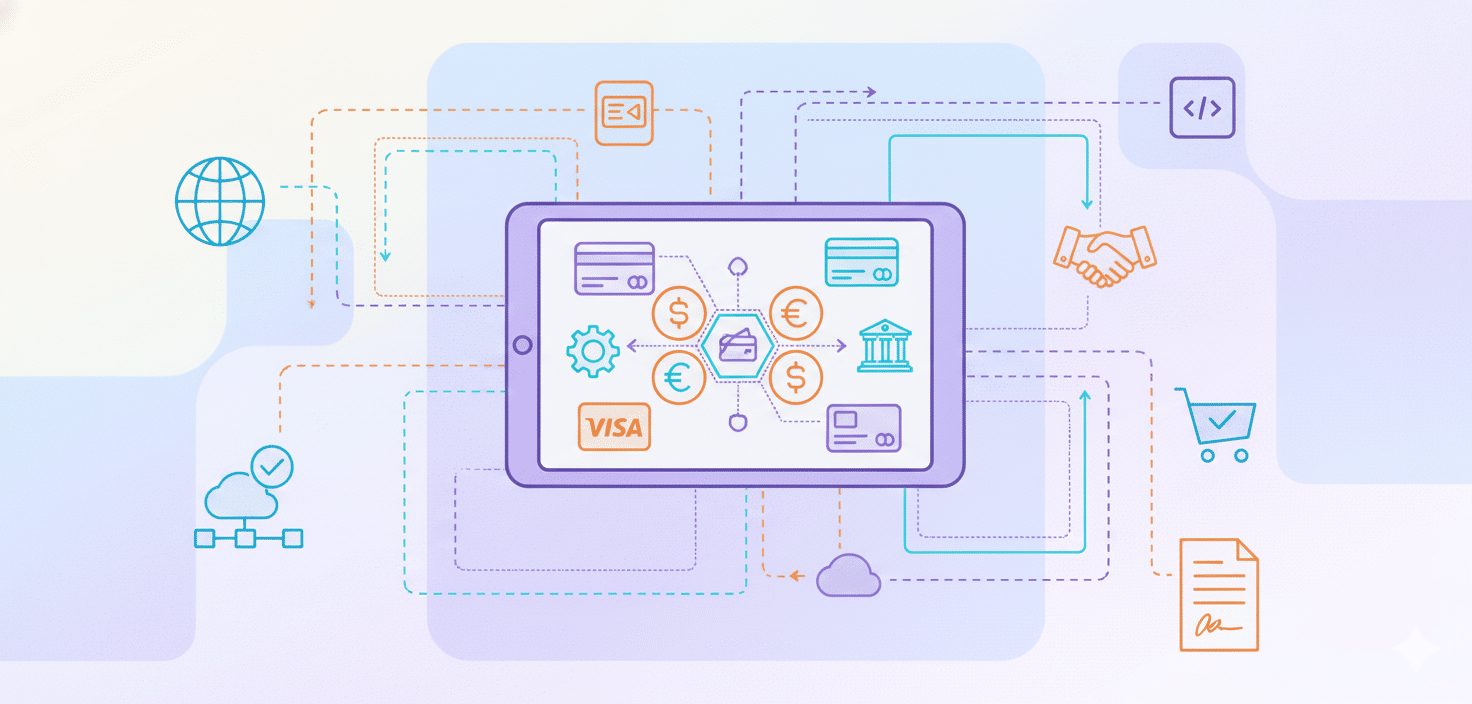
What is a Global Payment Orchestration Platform?
A Global Payment Orchestration Platform is a unified system that brings together:
- various payment methods
- payment service providers
- payment-related technologies incorporated into a single platform
It coordinates the execution of payments and related operations, including the routing of payments. Real-time data generation, integration support for local payment processors, and handling of local regulatory compliance are features of the platform.
It provides a single dashboard for business teams to control and monitor payment activities effectively.
Why use a Global Payment Orchestration Platform?
A Payment Orchestration Platform (POP) can be considered for the following reasons:
- It has implications for the operational aspects of payment management.
- It offers features that address aspects of compliance management, reporting processes, and payment authorization functionalities for businesses.
- Simplifying payment processes can reduce payment-related overhead costs.
- The incorporation of new payment providers and methods via one API can support market expansion.
Global Payment Orchestration vs. Gateways/PSPs: What's the Difference?
A payment orchestration platform handles the entire experience of taking payments, in contrast to traditional payment gateways, which focus simply on the execution of the payment, and PSPs, which focus on payment processing.
Payment orchestration platforms offer intelligent routing, testing, and cascading, potentially affecting authorization success rates and costs. These platforms serve as a central point for various payment processing systems, which may allow businesses to change providers and potentially negotiate different rates.
How does a Global Payment Orchestration improve business operations?
A Global Payment Orchestration can affect business operations through:
- addressing manual task performance
- reducing errors
- effective allocation of resources
The goal is to achieve the fastest possible payment processing and reduce cart abandonment rates.
What roles and limits do Payment Orchestration Platforms (POPs) have?
Payment Orchestration Platforms (POPs) have the following roles and limits:
- Fraud Prevention Features: Payment Orchestration Platforms (POPs) often include fraud detection tools, which can reduce fraudulent transactions.
- Data Tokenization: Sensitive payment data is replaced with non-sensitive tokens, thus reducing the risk of data breaches.
- Compliance Support: POPs facilitate meeting PCI DSS and other industry requirements through payment environments configured to relevant security criteria.
- Regulatory Management: They simplify the management of evolving regulatory requirements, particularly in highly regulated industries.
- Initial Setup Complexity: Implementing a Payment Orchestration Platform (POP) can involve a complex initial setup and integration process.
- Dependency on the Provider: Businesses become reliant on the Payment Orchestration Platform (POP) provider for security and compliance features, requiring careful vendor selection. The merchant still answers for card data: under the PCI Security Standards Council’s guidance, a merchant that outsources payment processing remains responsible for checking that the provider is PCI DSS compliant for its services and for monitoring its compliance status at least annually. The status of the platform influences transaction outcomes. Downtime can lead to transaction failure, making its uptime commitments a point of consideration.
- Potential Costs: Implementing and maintaining a Payment Orchestration Platform (POP) involves financial expenditure, particularly concerning advanced features and customized solutions.
When does my business need Global Payment Orchestration?
If a business is facing challenges related to payment processing, you should think about implementing a Global Payment Orchestration. This can be particularly relevant for SaaS businesses operating across multiple markets or currencies, handling a significant volume of transactions, or requiring adaptable payment processing solutions.
A global e-commerce company would find it useful to simplify payment processes in the different countries where it operates, improve the experience for customers with local payment methods, and reduce costs through effective payment routing and reconciliation.
Selling worldwide implies complex tax management. For entities managing global tax, working with a Merchant of Record (MOR) such as PayPro Global is an operational option.
Conclusion
A Global Payment Orchestration Platform is one that tries to simplify payment procedures through the integration of various payment methods and technologies into one system. Deciding whether or not a partnership with a POP is an option for your business requires considering both future goals and budget constraints.
Ready to get started?


 English
 Español
 Português
 Português do Brasil
 Français
 Italiano
 Deutsch
 Nederlands
 Polski
 Română
 Українська
 简体中文
 日本語
 한국어