
Growth Strategies
What is a SaaS Payment Mix Strategy?
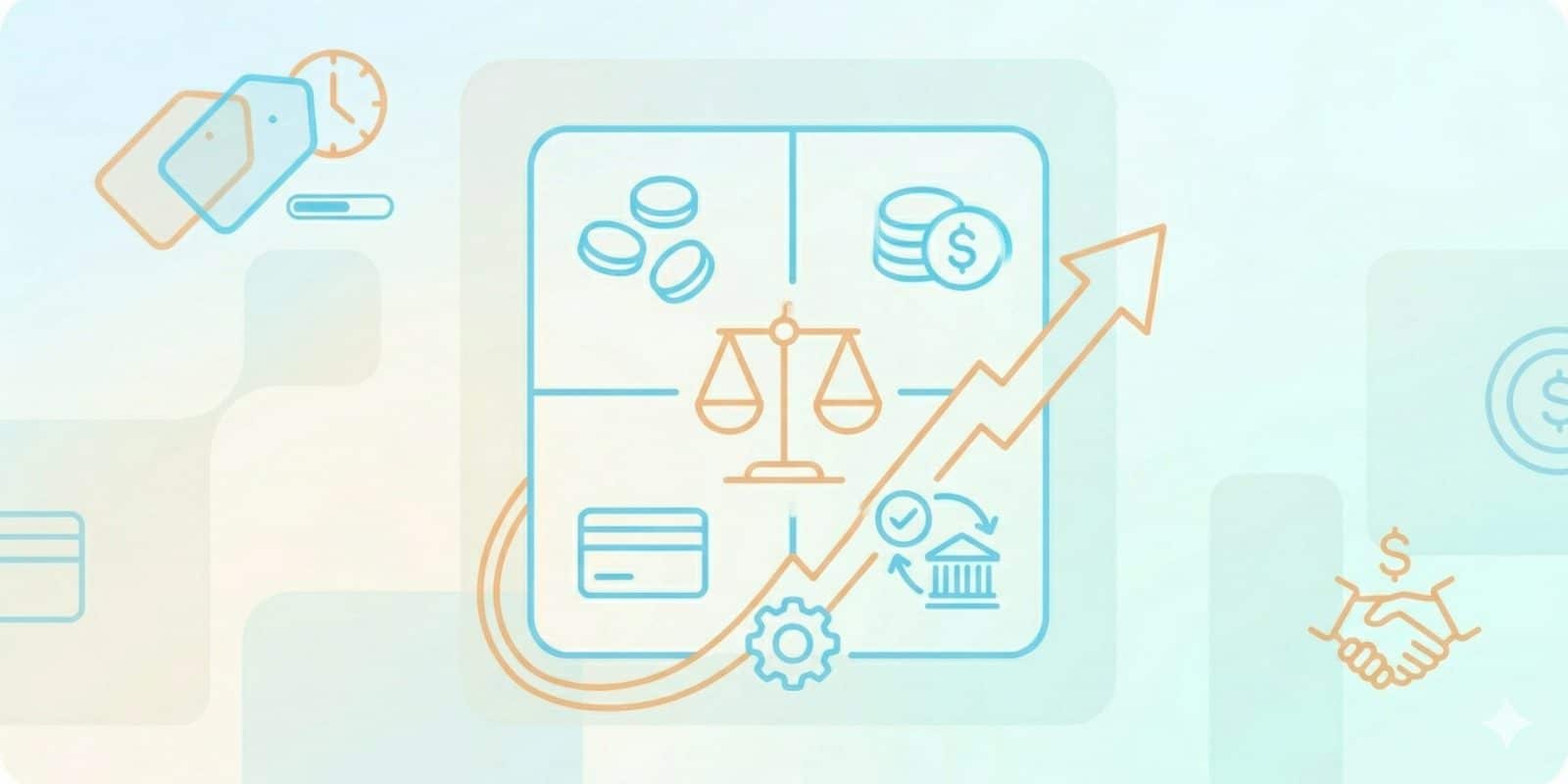
What is a SaaS Payment Mix Strategy?
A SaaS payment mix strategy is a plan that outlines how a SaaS company will manage and optimize its payment methods and currencies. This plan covers tax compliance and addressing fraud risk across various payment channels. The payment mix strategy, when well-defined, may relate to the payment infrastructure’s capacity for scalability and international expansion. A simpler global payment ecosystem may affect revenue streams and customer relationships.
How do I build an effective SaaS Payment Mix Strategy?
- Plan your customer and payment preferences research by considering geographic location and payment method preferences.
- Select payment systems and software that are flexible, secure, and well integrated (with your additional systems), taking special care that the third-party integration and user experience will be smooth.
- Employ a mix of billing methods (subscription, freemium, usage-based) to serve different customer segments and comply with regulations.
- Regular monitoring and analysis of your payment mix, informed by customer feedback, sales data, and market conditions, may affect revenue and customer satisfaction.
What factors influence payment method selection?
Weighing these aspects thoughtfully could relate to customer satisfaction levels, a decrease in fraudulent activities, ongoing regulatory adherence, and altered revenue and business operations.
- Consumer habits
- Country-specific preferences
- Fraud prevention
- Data protection
- Legal issues
Prioritize ease of onboarding and the ability to handle various payment methods, including credit/debit cards, digital wallets, bank transfers, and Buy Now Pay Later (BNPL) options to cater to diverse customer needs.
How can a Strategic Payment Mix optimize revenue and enhance customer experience in a SaaS business?
A considered selection of payment methods could be related to revenue and customer experience levels in SaaS, aligning with efforts to meet customer needs by presenting more payment options and flexible billing models. These measures may influence involuntary churn levels through the provision of backup payment alternatives, addressing intricate billing structures linked to product utilization. Therefore, payment choices may correlate with customer satisfaction.
Regularly reviewing payment data and customer feedback can inform adjustments to the payment mix, potentially aligning it with customer expectations and influencing revenue.
What are the key metrics to evaluate Payment Mix Performance in SaaS?
|
Metric |
Why it Matters |
|
Days Sales Outstanding (DSO) |
DSO measures the collection speed; a higher DSO value is associated with the use of slower manual approaches. |
|
Growth is monitored; a balanced payment mix is associated with reduced revenue shortfalls from unsuccessful transactions. |
|
|
The % of successful charges; identifies technical issues within your payment gateways. |
|
|
It tracks retention rates and can assist in identifying involuntary churn, such as churn resulting from payment issues. |
|
|
While payment fees (e.g. 3% card fees) may reduce your margins, changing to a cheaper payment option may lower your effective CAC. |
|
|
Different payment methods, such as usage-based or freemium, can result in longer user retention and hence increase their value. |
|
|
Satisfaction evaluations suggest a correlation between a streamlined checkout process and score levels. |
|
|
Cost of Payments (CoP) |
The average cost of collecting $1; it can be used to encourage users to switch to higher-margin payment methods (such as ACH). |
These metrics, if overlooked, may impact financial planning and the potential to improve payment processes and customer satisfaction.
What role do payment operations play in a SaaS business?
SaaS payment operations are essential because they handle every stage of the money transfer, from subscription and recurring billing to usage-based pricing.
SaaS customers are more likely to stay with a service if the payment process is straightforward and does not require an unreasonable amount of time. Payment operations can affect growth and revenue through the management of payment processing and associated transaction costs.
What is considered a good payment attach rate in SaaS?
Payment Attach Rate indicates the share of your entire software customer base that uses your integrated or “embedded” payment processing services for running their own transactions.
To illustrate, suppose you offer gym management software. The attach rate is the percentage of gym owners who utilize your built-in payment gateway to charge their members, rather than a third-party terminal.
• A “Good” Rate: Depends on the situation, but generally, a good target for vertical SaaS platforms is between 30% and 60%.
Conclusion
Besides influencing choices of customers and billing options, a SaaS payment mix strategy can impact global scalability, tax compliance, and fraud prevention. Furthermore, it is connected with revenue optimization, churn reduction, and customer satisfaction.
Ready to get started?


 English
  Español
  Português
  Português do Brasil
  Français
  Italiano
  Deutsch
  Nederlands
  Polski
  Română
  Українська
  简体中文
简体中文  日本語
日本語  한국어
한국어