
SaaS Sales
What is SaaS Sales Forecasting?
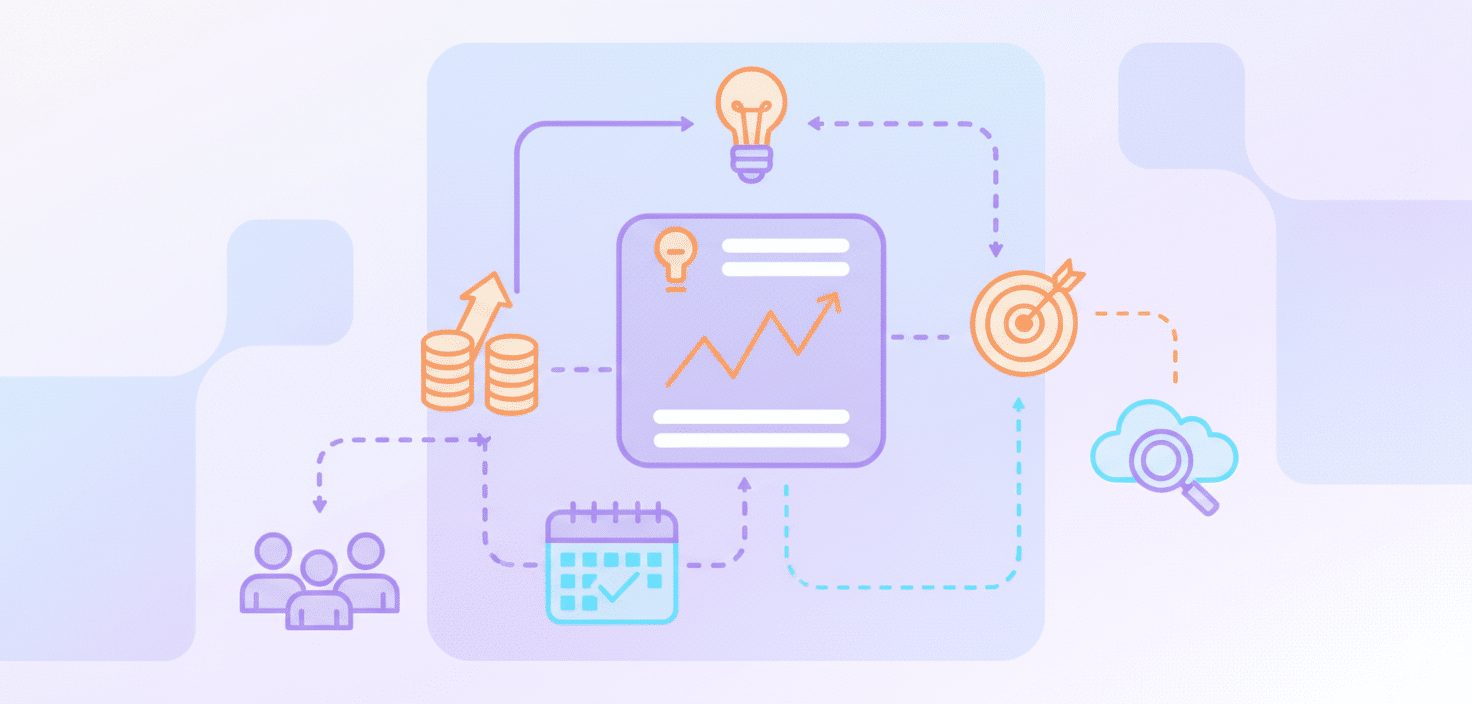
What is SaaS sales forecasting?
SaaS sales forecasting is the prediction of future sales revenue for a Software as a Service (SaaS) business. SaaS sales forecasting analyzes data, industry trends, and important metrics to assess future earnings. Unlike a forecast of one-time sales, it accounts for renewals, expansion, and churn.
Key Metrics Analyzed:
- Monthly Recurring Revenue (MRR)
- Churn rate
- Average sales cycle
The reliability of the SaaS sales forecasting results rests upon the correctness of the data collected through your CRM system.
Why is SaaS revenue forecasting so important for my business?
SaaS revenue forecasting underpins financial planning for SaaS and software businesses.
Accurate forecasting helps:
- Create pricing strategies.
- Achieve sustainable scaling.
- Plan proactively for potential liquidity issues.
- Aid in optimal resource allocation.
- A consistent financial trajectory can relate to stakeholder trust.
Risks of poor forecasting:
- Mismanaging growth.
- Failing to identify critical risks.
- Missing expansion opportunities (e.g., upselling, new product tiers).
What is the difference between SaaS sales forecasting and revenue forecasting?
SaaS sales forecasting looks at estimating deal volumes. SaaS revenue forecasting considers total revenue. Here is a side-by-side comparison of the two concepts:
| Feature | SaaS Sales Forecasting | SaaS Revenue Forecasting |
| Main Focus | Deal volumes (primarily new sales) | Total projected revenue |
| Scope | Narrower | Broader; includes new sales, renewals, upgrades, subscriptions, and trial conversions |
| Governance | Less formal | Typically projects revenue as recognized under accounting principles (e.g., GAAP) |
What are the common SaaS sales forecasting models?
The common SaaS sales forecasting models are historical, pipeline stage, cohort-based, and AI-driven.
Existing SaaS Forecasting Models:
- Historical forecasting
- Pipeline stage forecasting
- Cohort-based forecasting
- AI-driven models
Selection Criteria (How to Choose):
- Company size
- Sales process complexity
- Data quality
- Business model
- All SaaS sales forecasting models function on data.
- It is important to distinguish between revenue and cash flow, as they impact financial planning.
How do I perform SaaS sales forecasting effectively?
Effective SaaS sales forecasting follows five steps:
- Analyze historical data: Consider past results, check metrics like CAC (customer acquisition cost), Churn rate, number of sales, and lifetime value (LTV).
- Choose a SaaS sales forecasting model: Select one that fits your business requirements.
- Group Your Forecasts: Segment sales projections by revenue type for a more detailed understanding.
Common segments include:
- New business
- Renewals
- Upsells
- Churn and downgrades
- Consider patterns: Take into consideration trends like seasonality.
- Assess and adjust: Monitor and review the forecasts regularly. Compare real results with projections and adjust the process for accuracy.
What is a reasonable forecasting horizon for SaaS sales?
A reasonable forecasting horizon for SaaS sales is quarterly to multi-year, depending on company stage and market stability.
Factors influencing the horizon:
- Company’s sales cycle
- Growth stage
- Overall market dynamics
A company’s stage is a primary driver for its forecasting horizon:
| Company Type | Typical Horizon | Rationale |
| Startups | Shorter (e.g., quarterly, bi-annually) | Allows for agility and quick adjustments due to rapid market changes and evolving models. |
| Established Companies | Longer (e.g., annually, multi-year) | Supports long-term strategic planning, as sales cycles and market positions are more predictable. |
You must align your forecasting horizon with your Go-To-Market (GTM) strategy and investor expectations.
How does the sales pipeline inform SaaS sales forecasting?
The sales pipeline provides a structured overview of potential revenue, which is crucial for accurate forecasting. A weighted pipeline multiplies each deal’s value by its stage’s historical close rate: for example, a $40,000 deal at a stage where 25% of deals close counts as $10,000.
The pipeline shows:
- Current deals
- The stage of each deal
- The likelihood of closing
Pipeline visibility allows you to:
- Identify potential revenue gaps.
- Optimize sales strategies.
- Make data-driven decisions.
Technology’s Role:
Big data and machine learning developments, built into some CRM tools such as Salesforce, can affect pipeline management and forecast reliability.
How do Customer Acquisition Cost (CAC) and Average Revenue Per User (ARPU) impact SaaS sales forecasts?
CAC and ARPU are critical metrics that significantly influence the accuracy and realism of your SaaS sales forecasts.
- ARPU (Average Revenue Per User): This metric directly impacts revenue expectations. A higher ARPU generally leads to increased revenue projections.
- CAC (Customer Acquisition Cost): This metric affects the bottom line and profitability. A lower CAC contributes to greater profitability in your forecasts.
Monitoring the relationship between CAC and ARPU over time and adjusting forecasts based on these trends is essential for maintaining realistic projections.
How do internal changes impact SaaS sales forecasts?
Internal changes significantly influence sales forecasts by altering the assumptions the forecast was built on.
Common Internal Changes That Impact Forecasts:
- New hires (especially in sales)
- Product launches
- Pricing adjustments
- New marketing efforts
Why Updating Forecasts is Crucial:
- These factors can either increase or decrease projected sales.
Examples of Impact:
- Lead generation could be affected by a new marketing campaign.
- A price increase might decrease sales volume but increase revenue per customer.
How to Integrate Changes:
Use historical data and past market trends (e.g., seasonality, impact of past promotions) to model the potential impact and refine forecast accuracy.
Conclusion
SaaS sales forecasting is an important tool for assessing future earnings, allowing for detailed planning and decision-making. Selecting the correct forecasting model and making changes can impact results. So, keeping these points in mind is relevant for SaaS companies.
Ready to get started?


 English
 Español
 Português
 Português do Brasil
 Français
 Italiano
 Deutsch
 Nederlands
 Polski
 Română
 Українська
 简体中文
 日本語
 한국어