
SaaS Sales
What is the SaaS Sales Process?
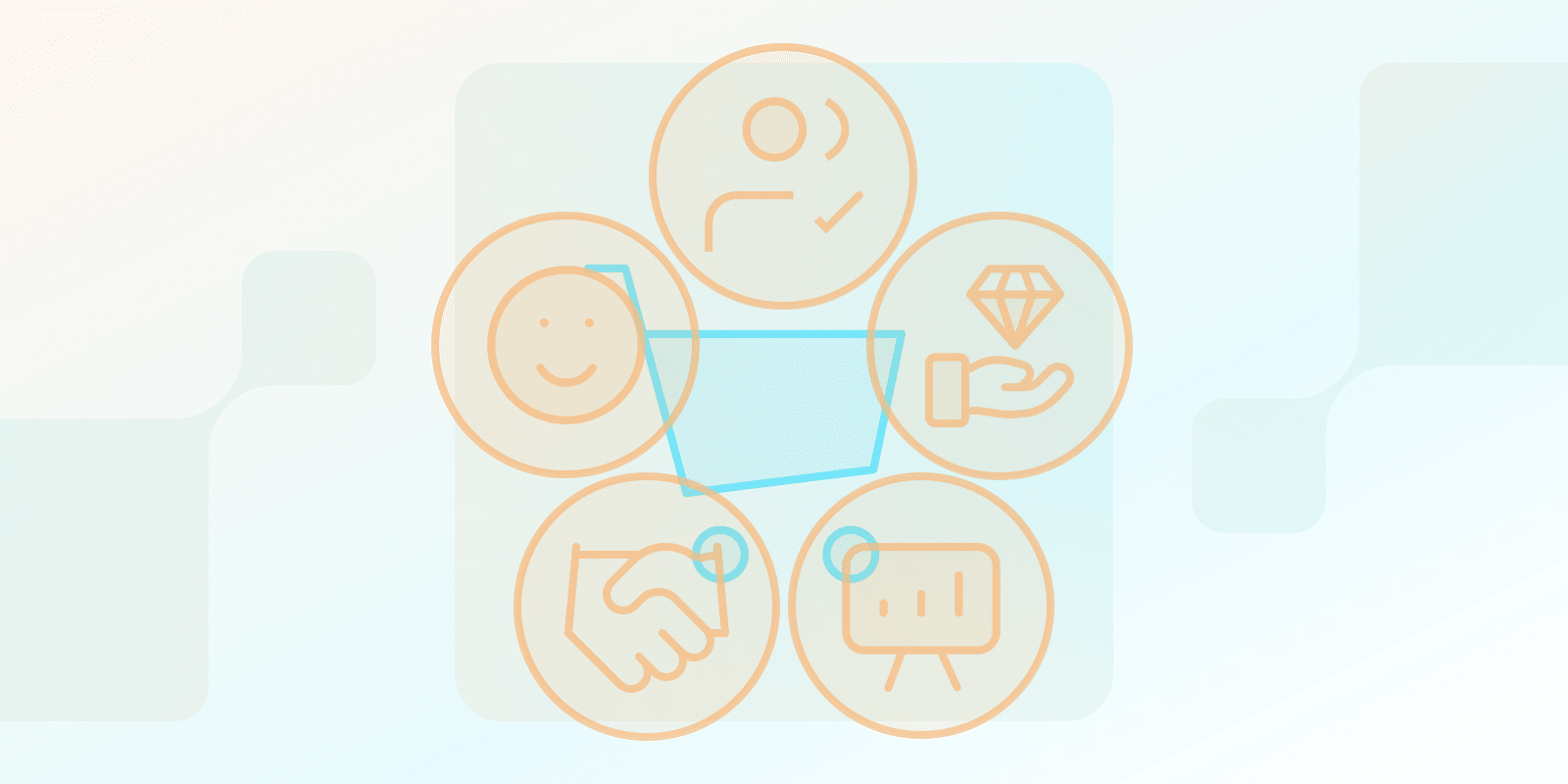
What is the SaaS sales process?
The SaaS sales process is made up of a series of steps taken to sell cloud-based software on the subscription model; one 2026 study puts the median B2B SaaS deal at 84 days. Included in the series is a more typical process beginning with lead generation and ending with onboarding new customers. Qualifying the leads, providing a demo, closing the deal, and onboarding new customers are equally important.
How do SaaS sales work?
SaaS sales are subscription-based, whereby customers pay a recurring fee (monthly, yearly) to use the software instead of buying it outright. This process relies on loyalty and trust within the relationship, and often pricing tactics such as free trials and demos are used to demonstrate the ROI.
These SaaS sales leverage a “land and expand” strategy, which means a basic product is sold, but then an upsell with more features and functionality is available over time.
What are the stages of a SaaS sales deal?
The stages of a SaaS sales deal include:
- Lead Generation: The process of identifying and cultivating potential customers for a business’s products or services.
- Qualification: Determining how valuable a lead is, based on needs and budget.
- Demonstration: Showing your prospect the features of the software.
- Closing: Negotiating the terms of the deal and signing the agreement.
- Onboarding and Customer Success: Training customers, ensuring they are finding the product useful, and pointing out value.
| Stage Component | Key Activities | Typical Challenges
|
|---|---|---|
|
Initial Contact Phase |
||
| Lead Generation | Identifying potential customers, content marketing, social media outreach | Finding qualified prospects, maintaining steady lead flow |
| Qualification | Assessing needs, budget evaluation, determining decision-making authority | Accurate assessment of lead value, time management |
|
Engagement Phase |
||
| Demonstration | Product showcasing, feature explanation, value proposition presentation | Matching features to specific needs, technical difficulties |
| Closing | Contract negotiation, pricing discussion, agreement finalization | Lengthy negotiation periods, competing offers |
|
Post-Sale Phase |
||
| Onboarding & Customer Success | User training, feature implementation, success monitoring | Ensuring adoption, maintaining engagement |
What is the average SaaS sales cycle?
The average SaaS sales cycle depends on:
- complexity
- target audience
- pricing strategy
It varies from a few weeks to several months. One 2026 study of 939 B2B SaaS companies put the median at 84 days, from 14-30 days for deals under $15K a year to 90-180+ days above $100K (Optifai, 2026).
Complex products usually have a longer sales cycle since evaluating and deciding can involve multiple people and require extra time. This is also true for enterprise-level products as opposed to small businesses or individual consumers.
The sales model sets the pace: self-service plans need little or no sales rep, transactional sales add a rep for mid-priced plans, and enterprise sales take months of talks with several decision-makers.
To identify any hurdles, be sure to track the metrics of your sales cycle to optimize the process.
How can I speed up my SaaS sales cycle?
To be efficient in your SaaS sales cycle:
- focus on qualified leads
- personalize your approach
- offer clear pricing
- organize your process
- provide customer support
- Use automation for routine tasks to save time. Never underestimate the power of social proof.
- Use customer case studies and references. Keep an eye on sales data and analyze it to learn where you can build on strategies.
Conclusion
A SaaS company needs to understand its SaaS sales process and then execute strategies.
Your goal is to be efficient in your sales cycle, close as many deals as possible, and drive revenue for your SaaS company.
Ready to get started?


 English
 Español
 Português
 Português do Brasil
 Français
 Italiano
 Deutsch
 Nederlands
 Polski
 Română
 Українська
 简体中文
 日本語
 한국어