
SaaS Metrics and KPIs
What Is TCV vs ACV in SaaS?
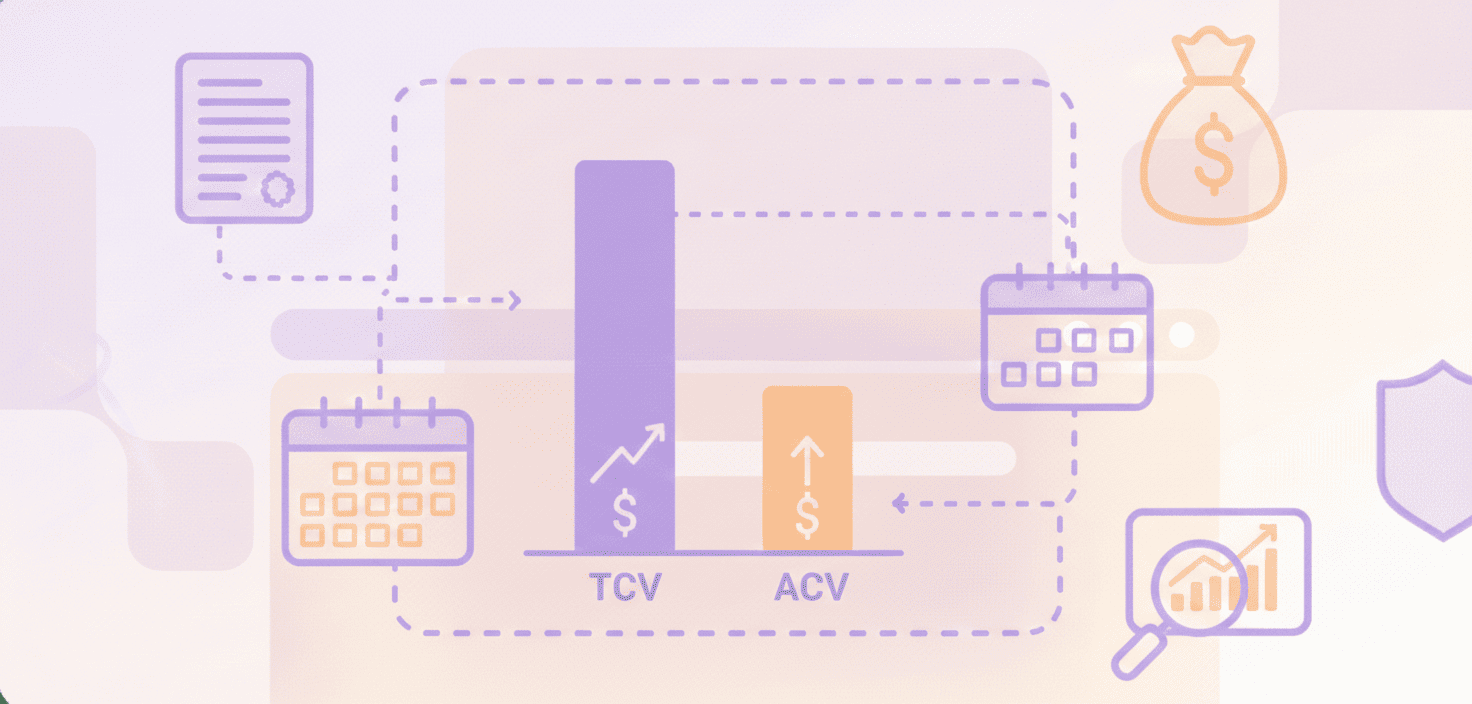
What Is TCV vs ACV in SaaS?
Total Contract Value (TCV) is a SaaS metric identify the total value of a customer contract over its entire duration.
Annual Contract Value (ACV) is a SaaS metric pinpointing the average contract value per year.
Both these measurements are relevant for SaaS companies because they measure the revenue gained and offer a comprehensive picture of the subscription revenue performance.
What Is the Difference Between ACV and TCV?
The difference between TCV and ACV is found i the period measured. While TCV looks at the entire contract value, ACV splits that value into yearly chunks.
The reason why SaaS businesses need both is that they need both short and long-term perspectives to assess revenue performance.
|
Aspect |
TCV |
ACV |
|
Time-frame |
Complete contract term |
Yearly value |
|
One-time fees |
Included |
Excluded |
|
Multi-year contracts |
Can impact TCV |
ACV is not affected |
|
Forecasts |
Supports total revenue tracking |
Helps in annual planning |
|
Sales reporting |
Focuses on deal value |
Highlights recurring revenue |
How Do ACV and TCV Differ in SaaS and Subscription Models?
TCV and ACV are two SaaS metrics that monitor subscription revenue from two perspectives.
Subscription company trend to prioritize ACV because it allows them to monitor yearly performance.
Investors prefer TCV because it provides a long-term vision and helps in assessing consistency.
The differences between the two metrics generally show up in the following areas:
- Multi-year enterprise contracts
- Deals with onboarding or implementation fees
- Discounted long-term agreements
- Usage-based pricing tiers
- Annual renewals vs long-term commitments
How Do You Calculate ACV?
To calculate ACV, you need to divide the total recurring contract value by the number of years in the contract.
Formula:
ACV = Total Recurring Revenue ÷ Contract Length (years)
Example:
- Two-year subscription worth $50,000 (recurring only)
- ACV = $25,000
- Avoid considering one-time fees
- ACV is the preferred SaaS metric for comparing deals with different contract lengths.
How Do You Calculate TCV?
TCV determines the total recurring revenue over the entire contract value, including one-time fees.
Formula:
TCV = (Recurring Revenue × Contract Term) + One-Time Fees
Example:
- Two-year recurring revenue = $50,000
- Onboarding fee = $5,000
- TCV = $55,000
How Do Discounts, One-Time Fees, and Contract Length Impact ACV and TCV?
Discounts, one-time fees, and contract lengths impact ACV and TCV in various ways:
- Discounts: Lower the annual price, affecting both metrics
- One-time fees: Increase total contract value but not recurring revenue
- Longer terms: Increase TCV; ACV stays stable if annual pricing remains unchanged
- Mid-contract upgrades: May increase both ACV and TCV
Conclusion
TCV and ACV represent two SaaS metrics that look at recurring revenue from different perspectives. However, they are equally important.
Subscription businesses prefer looking at ACV because it provides a structured measure of performance, whereas investors or the financial team track TCV for its long-term perspective.
Ready to get started?


 English
  Español
  Português
  Português do Brasil
  Français
  Italiano
  Deutsch
  Nederlands
  Polski
  Română
  Українська
  简体中文
简体中文  日本語
日本語  한국어
한국어