
SaaS Metrics and KPIs
What is Annual Contract Value (ACV)?
What is Annual Contract Value (ACV)?
Annual Contract Value (ACV) is the average yearly revenue from one contract. According to SaaS Capital’s 2026 survey,the median ACV for private SaaS firms is $24,266.
ACV considers various factors, including an assessment of the contract’s approximate value, regardless of the holding period. Note: Do not confuse this with the Total Contract Value (TCV), which includes all revenues through the entire contract.
How do I calculate ACV?
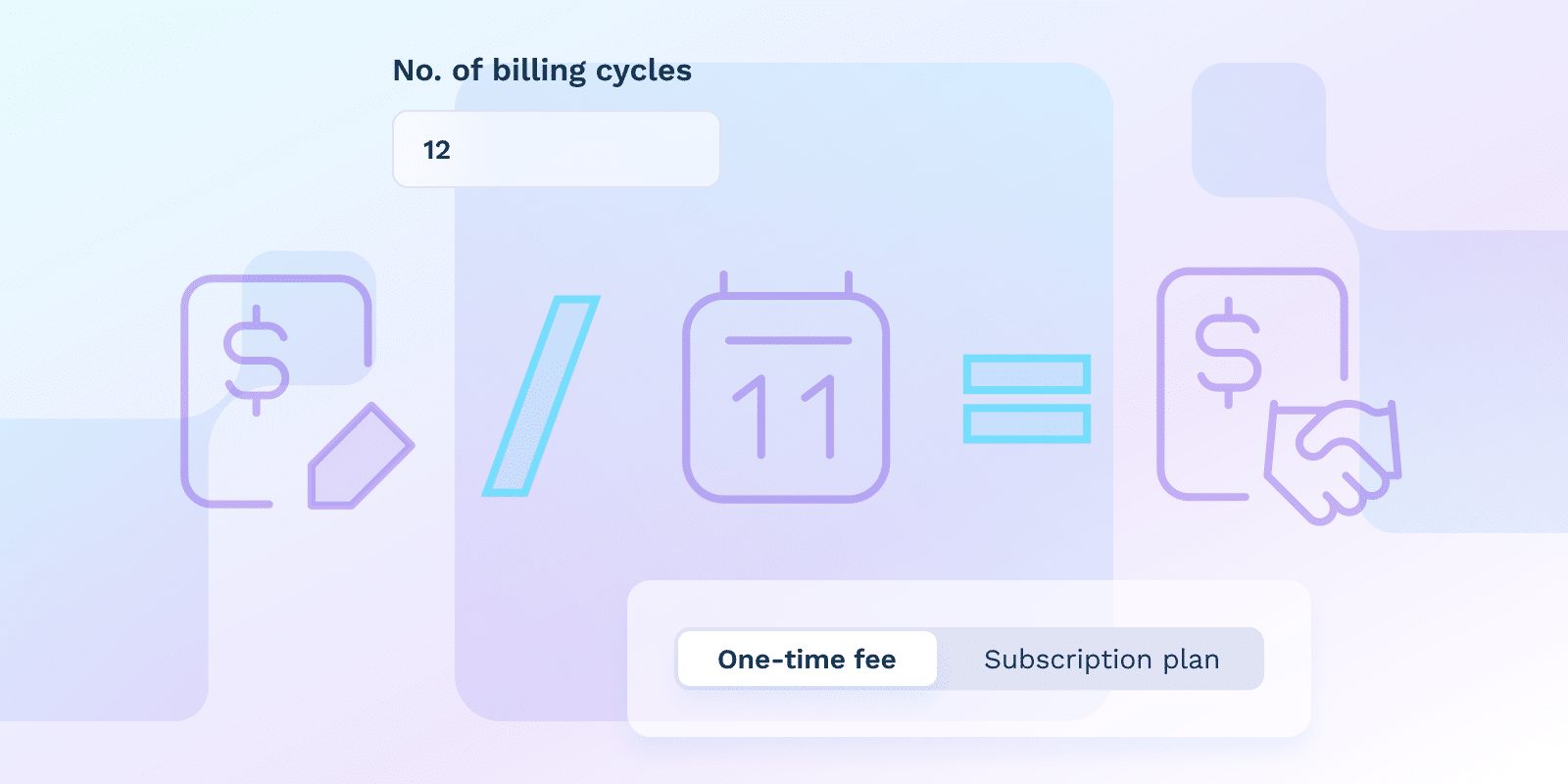
ACV for single contracts is calculated by dividing the whole contract value by the total number of contract years. The formula is ACV = (total contract value − one-time fees, such as setup or onboarding) ÷ contract years. This will measure the ACV for each contract if you have numerous contracts.
To get the final ACV, add the individual ACVs for each contract and divide the total by the number of contracts. An agreement worth $12,000 spread over three years, for instance, would have an ACV of $4,000.
Remember that the techniques used to calculate ACV may vary depending on the business model or contract.
What is the difference between the ACV and various pricing models?
ACV or Annual Contract Value, relies on the pricing strategy used by SaaS companies.
Tiered plans, value-based pricing, and usage-based pricing all focus on a product that is of maximum value in terms of customer resources and, therefore, affects the ACV. These figures might also be important in the active management of ACV, particularly for SaaS businesses, whose pricing models may be purposefully based on customer segments and service tiers.
Due to the nature of pricing models such as incorporating additional features and inclusion of some variable pricing factors such as discounts and deductions, you need to explore in depth to avoid miscalculating the ACV.
What’s the difference between ACV and ARR?
ACV and ARR are both key performance indicators for SaaS companies and subscription-based businesses. However, the two revenue numbers measure different things. ACV value is the total revenue one can expect to earn from one customer over one year. The use of ACV is ideal for specific contract-level analysis as is the case with multi-year B2B SaaS contracts.
In contrast, ARR is beneficial for evaluating the business income for economic activities dominated by subscriptions.
Knowing the dissimilarities enables an organization to select appropriate options regarding pricing, income predictions, and business expansion directions.
| Feature | ACV | ARR |
|---|---|---|
| Definition | ||
| Basic Meaning | Total revenue from one customer over one year | Recurring business income from subscriptions |
| Best Used For | Specific contract-level analysis | Evaluating overall business income |
| Analytical Characteristics | ||
| Focus | Individual customer contract value | Entire subscription-based business income |
| Calculation Complexity | Depends on specific contract terms | More standardized calculation |
| Business Insights | ||
| Strategic Use | Pricing and contract-specific decisions | Overall business performance evaluation |
| Typical Industry | B2B SaaS and contract-based services | Subscription-based businesses |
What are the challenges of ACV?
ACV is the average contract value over the years of the customer relationship. It’s a useful way to determine revenue but it comes with some disadvantages that need to be kept in mind when using ACV as a decision-making point.
- ACV, by its nature as an average, masks the variation in individual contract amounts.
- ACV relies on average values, neglecting individual contract specifics within an organization. While large contracts can be advantageous, they can also create complexities that make accurate prediction more challenging.
- ACV is not a standard metric, and each person may have a unique way of determining it, leading to issues with comparisons and making benchmarks. SaaS Capital reports a median ACV of $24,266 for private SaaS companies. Just make sure you’re comparing figures calculated using the same methodology.
What is the relationship between ACV and customer churn?
ACV and customer churn move in opposite directions: higher-ACV companies usually retain more revenue. According to SaaS Capital, companies with net revenue retention of 120% or higher have a median ACV of $61,802, compared to $26,269 for those below that threshold.
This correlation stems primarily from the greater costs and the high value of the contracts. Companies characterized by high ACVs have lower structural churn, especially in comparison to lower ACVs and higher churn rates in the case of SMBs. This warrants ensuring that the focus isn’t only on ACV but rather uses it to cut down on churn and also increases the chances of more contracts being rolled over or expanded.
How is ACV optimal in enhancing SaaS pricing?
ACV allows SaaS companies to examine the relationship between pricing tiers and profitability, and they can also adjust pricing to generate additional gains.
If you compare CAC with ACV, you can calculate the payback time. A $6,000 acquisition cost on a $4,000 contract value takes 18 months of revenue to break even.
Companies analyze ACV to identify important customers and consider potential revenue adjustments based on their needs, including discounts and incentives. This approach can impact customer retention and potentially influence revenue growth, although success may vary. ACV then becomes a tool for management decisions, including the strategy menu and correctness of revenue forecasting in business.
However, looking at ACV insights will, like other forms of analysis, need to be supplemented with other relevant data and market research in making pricing decisions.
Conclusion
ACV is a metric used to determine a customer subscription’s annual value, help set pricing strategies, and build growth. ACV is important for revenue streams and increasing overall profitability. It’s essential to leverage this metric for business strategies, forecasting, and attaining growth in the ever-evolving subscription economy.
Ready to get started?


 English
 Español
 Português
 Português do Brasil
 Français
 Italiano
 Deutsch
 Nederlands
 Polski
 Română
 Українська
 简体中文
 日本語
 한국어