
estrategias de crecimiento
¿Qué es un Upgrade de SaaS?
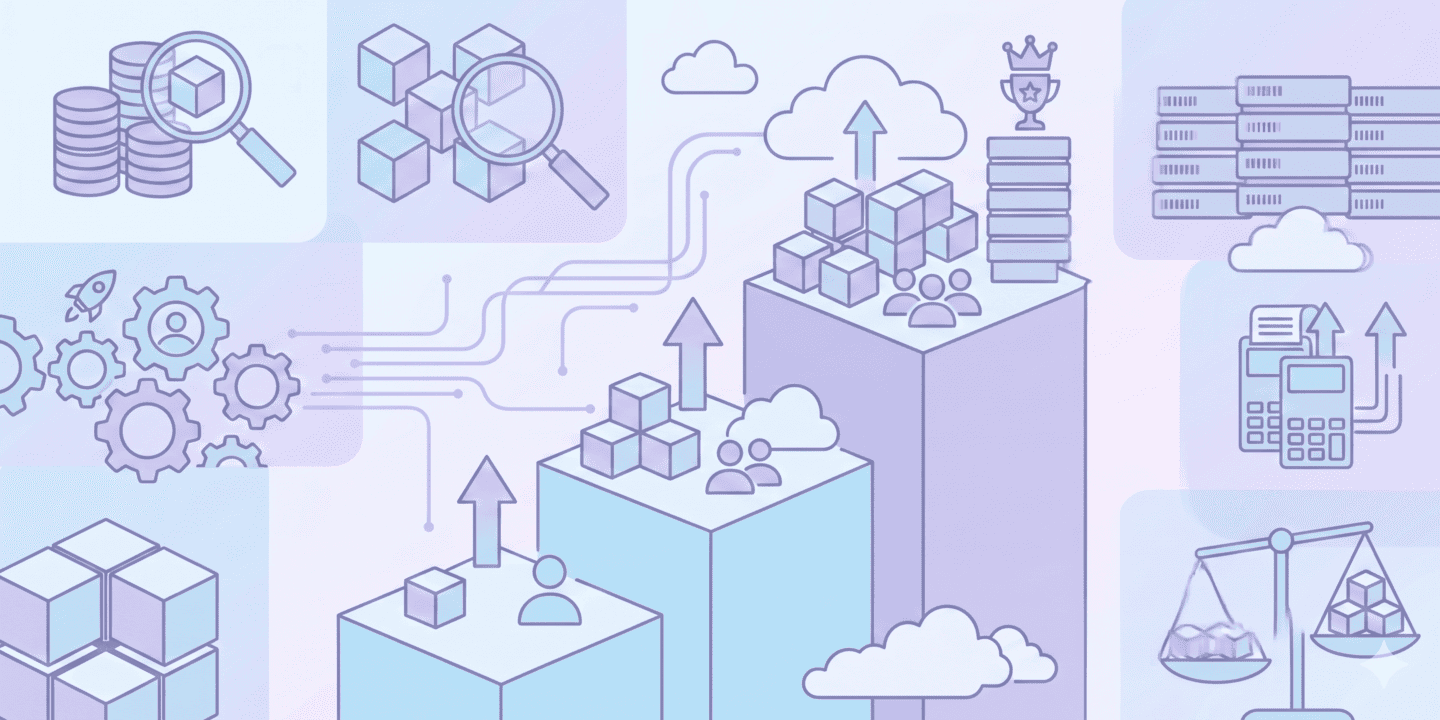
¿Qué es un Upgrade de SaaS?
Generalmente, una actualización SaaS significa que un cliente cambia a un plan de nivel superior o amplía el alcance de su suscripción existente. Estas transiciones suelen implicar ajustes en los pagos recurrentes y pueden estar asociadas con cambios en el valor, la capacidad o la funcionalidad.
Para las empresas SaaS, las actualizaciones pueden indicar la familiaridad de un usuario con el producto y el potencial de un mayor compromiso. Las adaptaciones del producto a las preferencias cambiantes de los clientes revelan más evidencia cuando estos cambios se entienden bien
¿Cuáles son las características de un Upgrade de SaaS?
Algunas características SaaS cruciales impulsan la actualización del cliente. Los siguientes elementos presentan varios factores que pueden influir en la fluidez del proceso de actualización:
- La infraestructura escalable se adapta a los aumentos en el volumen de datos y el número de usuarios, lo que podría afectar la velocidad de procesamiento.
- La disponibilidad de funcionalidades, conocida como Feature Gating, se segmenta en niveles: “Standard,” “Pro” y “Enterprise.”
- El aprovisionamiento de autoservicio permite a los usuarios iniciar actualizaciones a través de paneles de control, lo que puede afectar la participación de terceros.
- Las ofertas de actualización de SaaS se envían a los usuarios después de un monitoreo automatizado de la métrica de consumo.
¿Cuál es la diferencia entre una mejora de SaaS y una actualización de SaaS?
La diferencia entre una mejora de SaaS (un cambio comercial) y una actualización de SaaS (un lanzamiento técnico) es crucial. Las actualizaciones se refieren a la implementación de correcciones de errores, parches de seguridad o cambios en la interfaz de usuario para todos los usuarios, mientras que las mejoras implican que los clientes soliciten un cambio a nivel de cuenta para aumentar su nivel de servicio.
Según los estándares de la industria, las actualizaciones son costos de mantenimiento, mientras que las mejoras son los principales contribuyentes a la Retención Neta de Ingresos (NRR). Las actualizaciones principalmente apoyan la estabilidad del software, pero las mejoras pueden afectar la experiencia individual del usuario.
¿Qué tipos de Upgrades de SaaS existen (nivel de plan, número de puestos, desbloqueo de características, complemento, aceleración)?
Pasar a un plan de nivel superior, añadir más usuarios, adquirir funciones específicas, comprar complementos o escalar a través de un contrato con aumentos de volumen o funciones son diferentes rutas de actualización que los modelos de suscripción utilizan para capturar valor en diversos segmentos. A continuación se describen cada una de estas rutas:
- Opciones de actualización de nivel: Evalúe si la actualización de niveles, como de “Básico” a “Profesional”, se alinearía con las funciones requeridas.
- Desbloqueo de funciones: Adquirir herramientas específicas de alto nivel (como informes de IA) incluso dentro del plan actual.
- Complementos: Obtener servicios adicionales como soporte premium o módulos de seguridad adicionales.
- Contratos de crecimiento gradual: Acuerdos empresariales a largo plazo con aumentos de volumen/funciones incorporados a lo largo del tiempo.
¿Cómo se diseña un flujo de Upgrade de SaaS?
Minimizar la fricción en el momento de la compra es el enfoque principal al diseñar un flujo de actualización de SaaS. Una característica típica de los flujos funcionales es el uso de activadores dentro de la aplicación: antes de que el usuario seleccione una función bloqueada, se muestran de inmediato una tabla comparativa y el botón ‘Confirmar Actualización’.
- Aproveche las “sugerencias contextuales” cuando un usuario se acerque a su límite actual, sugiriendo una actualización.
- Una prueba por tiempo limitado de un nivel superior puede influir significativamente en las decisiones del usuario, ya que les permite evaluar los beneficios potenciales antes de comprometerse.
- Mitigue cualquier confusión de facturación a mitad de mes asegurando que el prorrateo de la transición de facturación se realice sin problemas.
- Alineación con el Éxito del Cliente: Considere si la actualización se alinea con las necesidades del usuario o si podría permanecer sin usar?
- Psicología de precios: ¿Están los saltos de precio entre los niveles en línea con el valor añadido y, por lo tanto, son razonables y justificables?
- Preparación técnica: ¿Es su backend capaz de otorgar nuevas funciones tras el pago?
¿Por qué las actualizaciones de SaaS son críticas para los ingresos y la retención?
Las actualizaciones se relacionan con el concepto de ‘Churn Negativo’, donde las ganancias de ingresos de los clientes existentes superan las pérdidas de ingresos por cancelaciones. Las actualizaciones impactan Ingresos promedio por usuario (ARPU) y la situación financiera del proveedor. Las actualizaciones pueden correlacionarse con un aumento de Retención de Clientes, ya que un mayor uso de las funciones puede llevar a una mayor integración con el software y, potencialmente, a costos de cambio más altos.
|
+ |
– |
|
Costo de Adquisición (CAC) a menudo se observa que es menor que el de los nuevos prospectos. |
Un conjunto de funciones más amplio a veces puede afectar el nivel de dificultad experimentado por los usuarios finales. |
|
Puede afectar al Cliente Valor del ciclo de vida del cliente (LTV). |
Los niveles de fatiga por notificaciones parecen mostrar cierta correlación con la frecuencia de las indicaciones. |
|
Evalúa ajuste producto-mercado para funciones avanzadas. |
Existe una asociación observada entre la lógica de facturación compleja y el volumen de tickets de soporte. |
¿Qué métricas debería seguir en las actualizaciones SaaS (tasa de actualización, tiempo hasta la actualización, valor medio de actualización)?
Para ver qué tan bien está funcionando un plan de expansión, los gerentes deben analizar las siguientes métricas:
- Tasa de Actualización: La proporción de la base total de usuarios que actualiza durante un período de tiempo determinado.
- Tiempo hasta la Actualización: La duración promedio desde el registro inicial hasta el primer evento de expansión.
- Valor promedio de la actualización (AUV): El aumento promedio en Ingresos recurrentes mensuales (MRR) por actualización.
Conclusión
Una actualización de SaaS es simplemente un cliente que obtiene acceso a una nueva función o que se traslada a un nuevo nivel de servicio de acuerdo con sus requisitos. Un enfoque en los flujos de actualización y la comunicación de la propuesta de valor puede estar relacionado con el crecimiento de los ingresos y las tendencias de lealtad del cliente dentro de las empresas. El conocimiento de las métricas y las clasificaciones de actualización influye en la probabilidad de una experiencia de expansión satisfactoria tanto para el proveedor como para el cliente.
¿Listo para comenzar?


 Español
  English
  Português
  Português do Brasil
  Français
  Italiano
  Deutsch
  Nederlands
  Polski
  Română
  Українська
  简体中文
简体中文  日本語
日本語  한국어
한국어