
Groeistrategieën
Wat is een SaaS-upgrade?
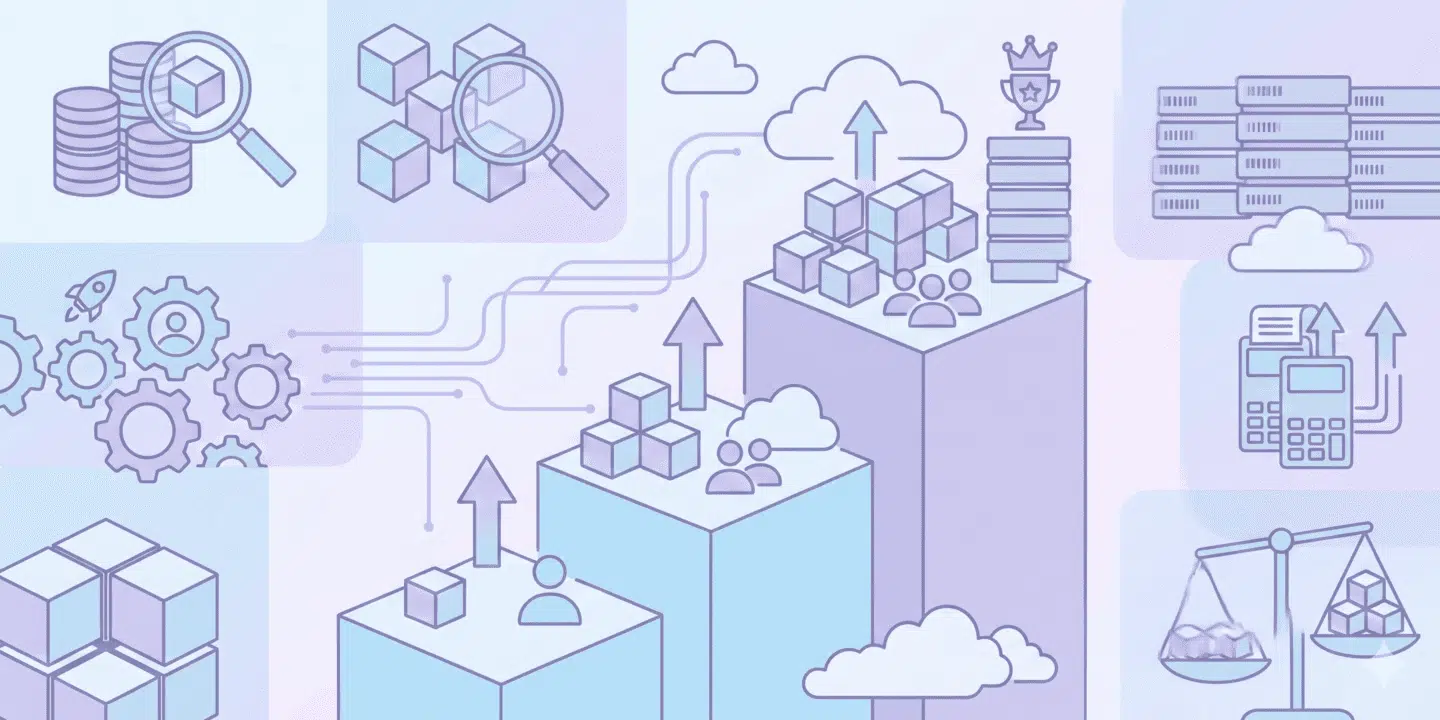
Wat is een SaaS-upgrade?
A SaaS upgrade is a change in which a customer switches to a higher-tier plan or increases the scope of their existing subscription. These transitions often include adjustments to recurring payments and may be associated with changes in value, capacity, or functionality.
For SaaS companies, upgrades can indicate a user’s familiarity with the product and likelihood of enhanced commitment.
Wat zijn de kenmerken van een SaaS-upgrade?
Some crucial SaaS features drive the customer upgrade. The following items present several factors that can influence the fluidity of the upgrade process:
- Schaalbare infrastructuur kan een toename in datavolume en het aantal gebruikers aan, wat potentieel de verwerkingssnelheid kan beïnvloeden.
- Functionality availability, referred to as Feature Gating, is segmented into levels, zoals “Standard,” “Pro,” and “Enterprise.”
- Self-Service Provisioning lets users initiate upgrades through dashboards on their own, which may modestly reduce the need for sales or support involvement.
- SaaS upgrade offers can be sent to users after automated monitoring of the consumption metric.
Wat is het verschil tussen een SaaS-upgrade en een SaaS-update?
Het verschil tussen een SaaS-upgrade (een commerciële wijziging) en een SaaS-update (een technische release) is cruciaal. Updates hebben betrekking op het uitrollen van bugfixes, beveiligingspatches of UI-wijzigingen naar alle gebruikers, terwijl upgrades inhouden dat klanten een wijziging op accountniveau aanvragen om hun serviceniveau te verhogen.
Updates are maintenance costs, whereas upgrades add expansion revenue, which counts toward Net Revenue Retention (NRR). Updates primarily support software stability, but upgrades can affect the user’s individual experience.
Welke soorten SaaS-upgrades bestaan er (abonnementsniveau, aantal gebruikers, functievrijgave, add-on, opschalen)?
Upgrading to a higher-level plan, adding more users, subscribing to certain features, buying additional services, or upgrading via a contract through volume or feature additions are some other forms of value realization via subscriptions. The following are the descriptions of each of the above-mentioned upgrades:
- Tier Upgrade Options: Consider if upgrading tiers, like from “Basic” to “Professional,” is in line with features offered.
- Feature Unlocks: The ability to purchase and unlock high-level features, like AI Reporting, in the current plan.
- Add-ons: The ability to buy additional services, such as support or security components, as add-ons.
- Ramp-up Contracts: Long-term business contracts that have built-in capabilities for increasing volume.
Hoe ontwerp je een SaaS-upgradeproces?
The minimization of friction at the time of transaction is the key objective of SaaS upgrade flow design. One of the features of a functional flow is the use of triggers within the app: when the user clicks on a locked feature, the comparison table and “Confirm Upgrade” button appear.
- Take advantage of “contextual nudges” when a user is getting close to the current limit by suggesting an upgrade.
- A higher-tier limited-time trial kan influence user decisions, as it allows them to assess waarschijnlijk benefits before committing.
- Mitigate any billing confusion mid-month by ensuring that the pro-rating of the billing transition is carried out smoothly.
- Customer Success Alignment: Consider if the upgrade aligns with the user’s needs or if it might remain unused.
- Prijspsychologie: Zijn de prijsstappen tussen de niveaus in lijn met de toegevoegde waarde en daarom redelijk en gerechtvaardigd?
- Technische Paraatheid: Is uw backend in staat om nieuwe functies toe te kennen na betaling?
Waarom zijn SaaS-upgrades cruciaal voor omzet en retentie?
Upgrades relate to the concept of ‘Negative Churn,’ where revenue gains from existing customers surpass revenue losses from cancellations. Upgrades impact Gemiddelde omzet per gebruiker (ARPU) and the provider’s financial situation. Upgrades can correlate with increased Klantbehoud, aangezien uitgebreid functiegebruik kan leiden tot een grotere integratie met de software en potentieel hogere overstapkosten.
| + | – |
| Expanding an existing customer can cost less than new-customer Acquisitiekosten (CAC). | Een bredere functionaliteit kan soms van invloed zijn op de ervaren moeilijkheidsgraad voor eindgebruikers. |
| Kan van invloed zijn op de klant Lifetime Value (LTV). | Frequent upgrade prompts can cause notification fatigue. |
| Beoordeelt product-marktcombinatie voor geavanceerde functies. | Complex billing logic can increase support tickets. |
Welke statistieken moet u bijhouden met betrekking tot SaaS-upgrades (upgraderatio, tijd tot upgrade, gemiddelde upgradewaarde)?
Om te zien hoe goed een uitbreidingsplan presteert, moeten managers de volgende statistieken bekijken:
- Upgraderatio: Het percentage van de totale gebruikersbasis dat binnen een bepaalde tijdsperiode een upgrade uitvoert.
- Tijd tot upgrade: De gemiddelde tijdsduur vanaf de initiële aanmelding tot het eerste uitbreidingsevenement.
- Gemiddelde Upgrade Waarde (AUV): De gemiddelde toename in Maandelijkse terugkerende omzet (MRR) per upgrade.
Conclusie
A SaaS upgrade occurs when a customer accesses a new feature or moves to a different tier. Understanding upgrade flows may be linked to revenue growth and customer loyalty. The ability to recognize and interpret metrics affecting upgrades may impact the provider’s and customer’s ability to experience a satisfactory expansion. Knowledge of upgrade classifications is likely to impact the ability to upgrade.
Klaar om te beginnen?


 Nederlands
 English
 Español
 Português
 Português do Brasil
 Français
 Italiano
 Deutsch
 Polski
 Română
 Українська
 简体中文
 日本語
 한국어