
SaaS決済
What are White Label Payments?
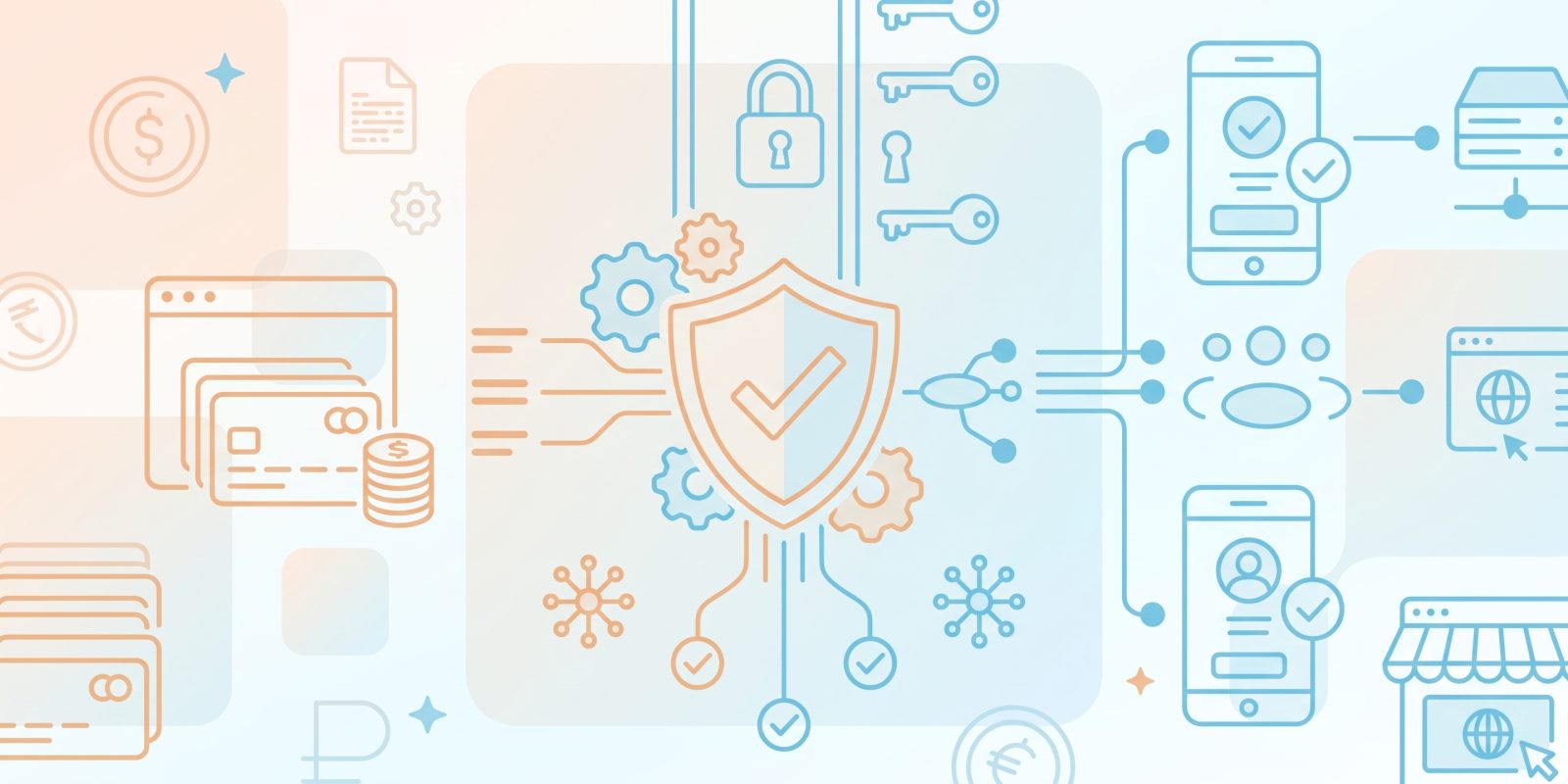
What are White Label Payments?
White-label payments refer to the payment infrastructure setup where a SaaS platform or marketplace adds its own brand and user interface over an underlying licensed gateway, PayFac, or acquirer. The platform utilizes a licensed payment network and customizes it with its branding and design.
What are the 3 tiers of a White-Label Payment Stack?
The white-label model is not one company fulfilling all the roles but rather three layers that handle different aspects of the transaction:
- Sponsor Bank/Acquirer – provides card-network sponsorship and retains ultimate liability;
- 決済ファシリテーター(PayFac) – the second layer, mainly technical processing, holds the master merchant ID and underwrites sub-merchants beneath it.
- White-label brand – the topmost layer only to your customers: your SaaS product displays your logo in checkout, receipts, and dashboards.
How is White Label Payments different from a Merchant of Record (MoR)?
| White Label | マーチャント・オブ・レコード(MoR) | |
| Brand at checkout | Your SaaS | MoR |
| Compliance liability | Yours to build and maintain | Held by the MoR |
| Fraud/chargeback liability | Yours (unless contracted otherwise) | Held by the MoR |
| のための | Platforms that want full brand control and can absorb compliance overhead | Platforms that want zero payment compliance burden |
選択する MoR if you’d rather carry zero payment compliance burden.
How much volume do you need for White-Label Payments to make sense?
There is no universal threshold. Full PayFac registration generally needs processing volume in the tens of millions annually before the fixed compliance and risk costs are covered — white-label arrangements exist precisely so platforms below that can offer branded payments without carrying those costs. The platform’s sales revenue aligns with its infrastructure and maintenance expenditures, or is lower.
The system’s fixed costs include those associated with regulatory compliance, the sponsorship-bank contract, and subsequent operations, regardless of platform volume. Obviously, fixed costs must be covered by a sufficient number of transactions, which is why small platforms choose, for example, between MoR and the traditional 決済ゲートウェイ, which are less complicated models.
What are the biggest risks with White Label Payments?
A company’s liability and duty to meet compliance requirements extend beyond the underlying 決済処理業者 to the platform the company owns, since the platform is not just involved in payment processing on the surface; it is part of the payment stack.
· Identification of sub-merchant fraud within your PayFac scope generally correlates with accountability for the associated chargeback.
· When sub-merchants share a single Merchant ID, the status of one sub-merchant is connected to the status of others.
· New state money-transmitter requirements and PayFac regulations by card networks can impact a platform’s compliance standing, depending on active monitoring and updated compliance measures.
結論
While using white-label payments means that a company can display its brand at all payment interaction points with customers and meanwhile get their share of the margin that would normally go to the third-party payment processor by means of the volume processed through them, it is only possible when they reach the required level of volume, compliance readiness, and risk profile.
準備はよろしいですか?


 日本語
日本語  English
  Español
  Português
  Português do Brasil
  Français
  Italiano
  Deutsch
  Nederlands
  Polski
  Română
  Українська
  简体中文
简体中文  한국어
한국어