
SaaS決済
What is a Payment Aggregator vs. Payment Facilitator?
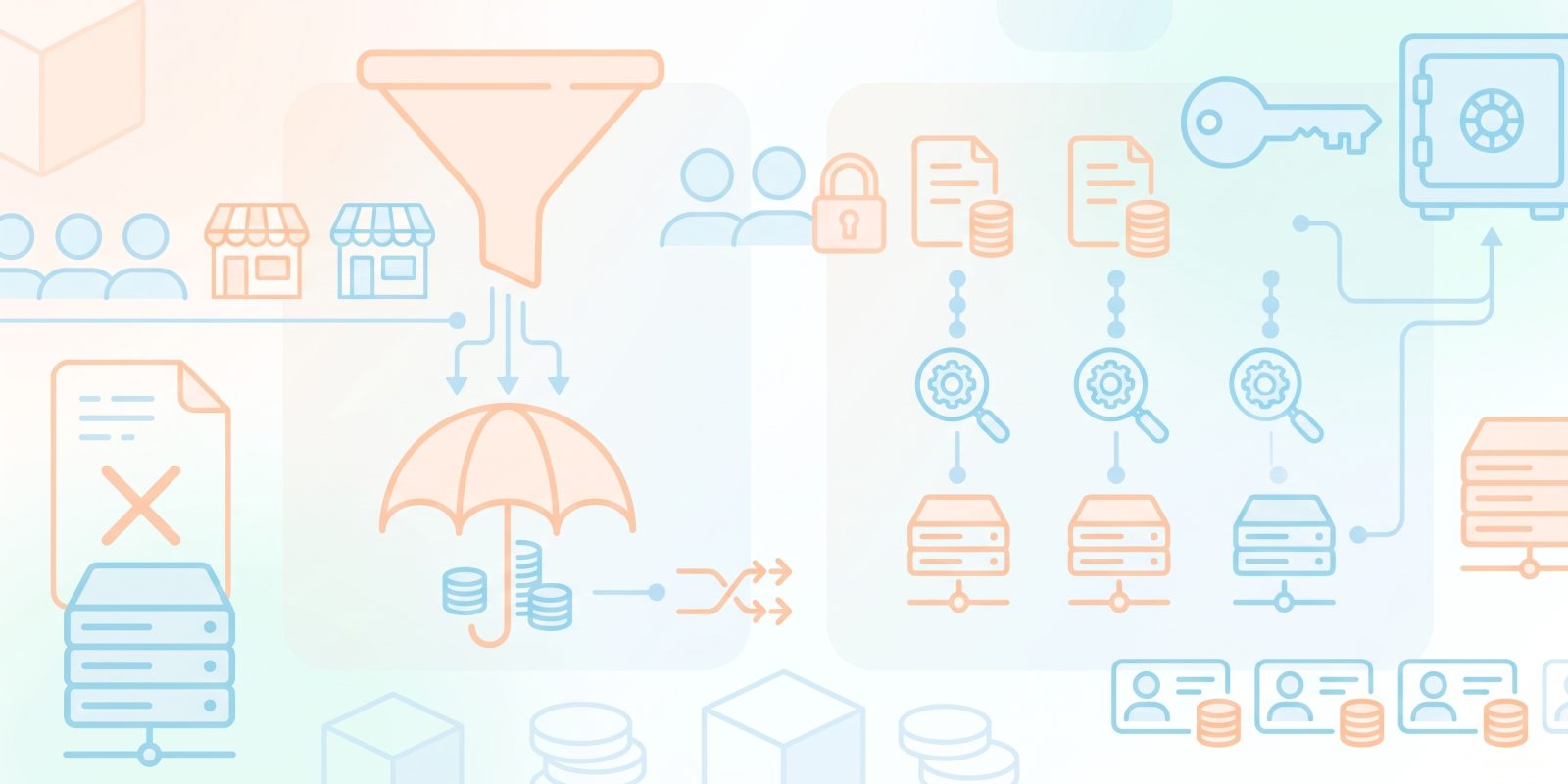
What is a Payment Aggregator vs. Payment Facilitator?
Payment aggregators and facilitators are services that enable a business to receive online payments without opening a traditional merchant bank account. However, they differ in how they set up merchant accounts, liability, and control. It also affects the cost, flexibility, and risk involved in your decision-making process.
What do Payment Aggregator and Payment Facilitator mean?
A payment aggregator is a third-party service where a single master merchant account processes payments for many merchants at once. This model indicates that businesses are not required to open their own accounts. Alternatively, a payment facilitator (a payfac) lets a business start a payment stream quickly, but it is also more complex. A payfac registers a merchant as a sub-account while letting that merchant operate as independently as a business in its own building.
What is the difference between a Payment Aggregator and a Payment Facilitator?
| 機能 | ペイメントアグリゲーター | Payment Facilitator |
| Merchant account | Shared master account for all merchants | Distinct sub-account per merchant |
| オンボーディング | The process involves quick execution, few impediments, and a restricted installation phase | Thorough underwriting and risk assessment |
| 取引手数料 | Flat or percentage-based per transaction | Volume-based or tiered pricing |
| チャージバック | Managed centrally; costs passed to merchant | Handled directly by the merchant |
| Checkout customization | 限定的 | Editable, branded payment pages |
| 決済 | Variable schedule (weekly, monthly) | Daily or weekly after fees are deducted |
| コンプライアンス | Aggregator-managed | Merchant must meet AML, KYC, PCI DSS obligations |
- Aggregator: A good way to understand how an aggregator works is by comparing it to renting a ready-to-move apartment. In such a scenario, you get a home quickly with minimal effort, but you can barely change things to suit your liking.
- Facilitator: On the other hand, a facilitating service is more like having your own unit in a managed apartment building: you can get a personalized environment, but you do have to go through more formalities and documentation.
What's the real trade-off between a Payment Aggregator and a Payment Facilitator?
The main disadvantage when comparing these two payment models is the trade-off between having the freedom to run a business yourself and the comfort and support of a payment solution that handles everything for you.
| ペイメントアグリゲーター | Payment Facilitator | |
| Speed vs. control | Expedited initiation can correspond to a lower degree of control | A longer setup period may correspond to an increased level of control |
| Risk exposure | Potential for fund holds | This arrangement is characterized by increased predictability, with the merchant bearing the associated risk |
| のための | Convenience-first businesses | Control-first businesses |
Do I need a Payment Aggregator or a Payment Facilitator?
自問してみてください。
・ What is my timeframe for setting up a payment system?
・ Do I want my checkout to be thoroughly branded?
・ Is my current or anticipated transaction volume so high that a different kind of business analysis (underwriting) will be necessary?
Decision factors to consider:
• Size of the business and resource availability for setup
• Tolerance for account holds or terminations
• Level of checkout personalization required
• Compliance capacity (AML, KYC, PCI DSS)
• Plan of growth and entry into new markets
結論
Both payment models incorporate online payment acceptance, fraud detection and mitigation, and a range of 支払い方法; their applicability varies across business development stages. If going overseas were to be one consideration, then the マーチャント・オブ・レコード (MOR) model, a similar but slightly different alternative, should be researched.
準備はよろしいですか?


 日本語
日本語  English
  Español
  Português
  Português do Brasil
  Français
  Italiano
  Deutsch
  Nederlands
  Polski
  Română
  Українська
  简体中文
简体中文  한국어
한국어