
Juridisch en Compliance
Wat is een DPA Overeenkomst in SaaS?
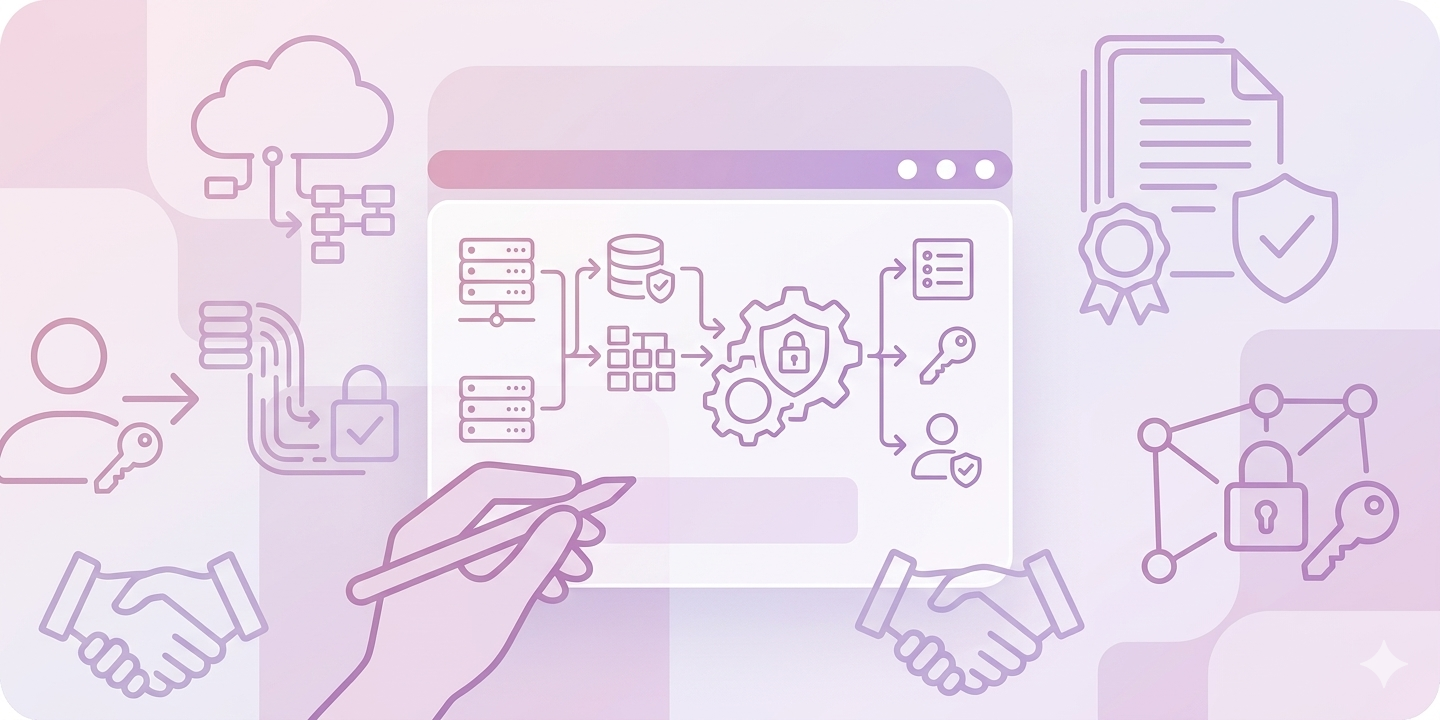
Wat is een DPA Overeenkomst in SaaS?
A SaaS Data Processing Agreement (DPA) is a legally binding contract between a software provider and a customer that governs the handling of personal information. It serves as a required compliance document for privacy laws such as the GDPR, indicating that data processing aligns with security protocols, ethical standards, and customer specifications.
Why do businesses need a DPA?
To comply with the “Privacy by Design” principle, businesses need a DPA as a legal framework for data outsourcing considerations. The presence or absence of a signed agreement regarding a company’s data sharing practices with a third-party cloud provider may be linked with legal inquiries, regulatory reviews, or data release events.
The implementation of a DPA may have associations with several outcomes:
- Legitimate compliance through this contract is the main factor for GDPR Article 28 and other international regulations.
- Risk reduction and defined liability for data leaks are established.
- Security enhancements result from requiring the vendor to implement technical measures, such as encryption and multi-factor authentication, that exceed regulatory requirements.
- Transparency in protection measures can influence customer confidence.
When is a Data Processing Agreement legally required?
It’s a legal requirement to draw up a DPA when a Data Controller (the party that originally gathers the data) decides to contract a Data Processor (i.e., a SaaS vendor) for personal data management. For instance, if your digital tool handles email, IP, name, or health records of users residing in protected jurisdictions, a data processing agreement forms a key legal basis for your contractual relationship.
You don’t need a DPA when:
- You are processing completely anonymized data, which cannot be traced back to any individual.
- It is strictly business data with no personal data element.
- Both entities are acting as independent controllers, not a controller-processor framework.
What are the key roles and responsibilities?
The DPA is a description of the contractual power balance between two distinct parties, aiming at pinpointing responsibilities.
- Data Controller (Customer): Holds the position of the data owner. They initiate the process and play a major role in the “responsibility chain” of user consent acquisition.
- Data Processor (SaaS Vendor): Has limited rights to the data solely on the controller’s behalf. Their duties encompass the implementation of appropriate security measures, timely breach notifications, and support in users’ “right to be forgotten.”
What are the minimum required terms for a DPA?
Under modern privacy regulations, for a DPA (Data Processing Agreement) to be deemed legally valid, it must contain a defined set of clauses. These clauses represent the “rules of engagement” throughout the software subscription period.
|
Required Term |
Legal Description |
|
Processing Scope |
Defines exactly what data is being handled and for what purpose. |
|
Sub-processor Rules |
The vendor must list any third parties (like AWS or Google Cloud) used to store data. |
|
Audit Rights |
The agreement permits the customer to review the vendor’s security procedures on a yearly basis. |
|
Data Deletion |
The contract stipulates that the vendor is required to delete all data upon its termination. |
|
Breach Protocol |
Sets a strict timeline (often 48-72 hours) for reporting a security incident. |
Is a DPA required for SaaS?
Yes, a DPA is a direct requirement for SaaS as the cloud model fundamentally entails the vendor “processing” the data the customer uploads. A common misconception is that a DPA is the same as cookie management, but they address separate issues.
Whereas a Cookie Consent Banner is meant to obtain a website visitor’s permission to track them, a DPA works after that permission has been given; it manages the security of data collected via cookies once the data is stored on a SaaS provider’s servers.
Conclusie
A SaaS Data Processing Agreement (DPA) is a critical legal document that ensures software providers handle personal data responsibly. SaaS vendors often process personal data; this document outlines roles, responsibilities, and terms (scope of processing, right to audit, breaches).
Klaar om te beginnen?


 Nederlands
  English
  Español
  Português
  Português do Brasil
  Français
  Italiano
  Deutsch
  Polski
  Română
  Українська
  简体中文
简体中文  日本語
日本語  한국어
한국어