
Desenvolvimento de produtos SaaS
O que é Dívida Técnica em SaaS?
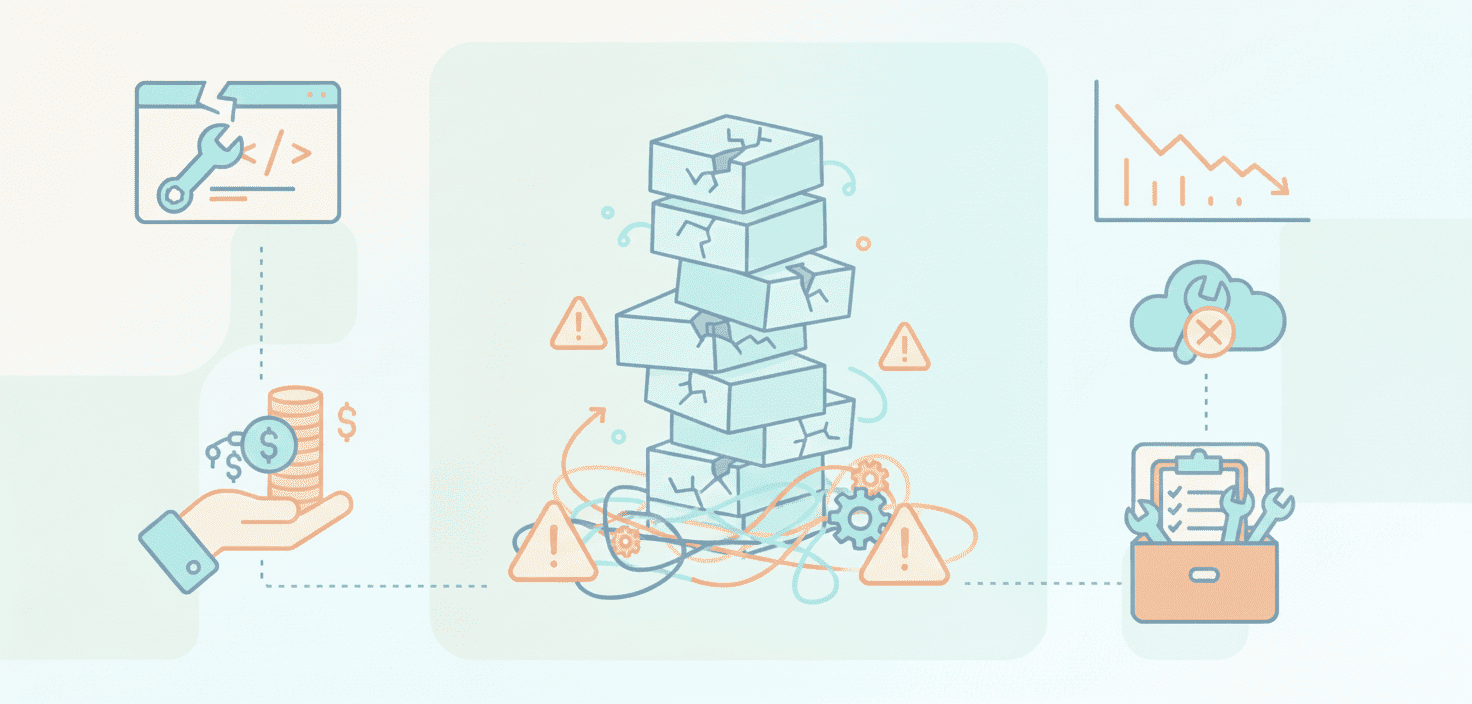
O que é dívida técnica no desenvolvimento SaaS?
A dívida técnica em SaaS reflete um dilema entre implementar uma solução rápida e potencialmente incorrer em custos futuros de retrabalho, em comparação com investir numa abordagem mais completa.
Esta abordagem pode enfatizar a velocidade, potencialmente influenciando a eficácia.
Em startups, alguma dívida técnica pode ser um compromisso estratégico eficaz nos estágios iniciais de desenvolvimento de produto para testar a sua viabilidade. No entanto, se não for gerenciada, a dívida técnica cresce ao longo do tempo e consome um grande número de recursos de desenvolvimento, limitando a inovação futura.
Quais são os diferentes tipos de dívida técnica em SaaS?
A dívida técnica em SaaS inclui três tipos principais:
- Dívida intencional: assumida de propósito
- Dívida não intencional: resulta de erros ou escolhas equivocadas
- Dívida ambiental: acumulada devido a fatores externos, como mudança tecnológica.
Dentro desses grupos, existem subcategorias como:
- dívida de código
- dívida de arquitetura
- dívida de testes
- dívida de dados.
É importante compreender a diferença entre esses tipos de dívida e aplicar estratégias de gestão apropriadas para evitar a obstrução do desenvolvimento futuro.
Como a dívida técnica se manifesta em produtos SaaS?
A dívida técnica em aplicações SaaS inclui muitos atalhos tomados durante o desenvolvimento, o que mais tarde dificulta a capacidade de lançar novas funcionalidades e aprimorar produtos existentes.
Isso pode influenciar a inovação, pois o tempo de desenvolvimento é direcionado para a correção de bugs, adaptação de estruturas existentes, gerenciamento de potenciais preocupações de segurança dentro do código, e os recursos e tempo investidos no desenvolvimento de novas funcionalidades.
Se um produto é desenvolvido às pressas e nenhum teste de segurança é feito, isso pode levar a violações de dados, ou se a documentação for deficiente, novos desenvolvedores gastarão mais tempo e dinheiro para entender o sistema e, portanto, não conseguirão escalá-lo.
Concentre-se na qualidade do código, testes e documentação clara para evitar o acúmulo de dívida técnica.
A dívida técnica é sempre ruim para empresas SaaS?
A dívida técnica pode ter impactos positivos e negativos no crescimento das empresas SaaS. No entanto, monitorizá-la cuidadosamente para garantir que não atinja um nível crítico é crucial.
Dívida técnica:
- Oferece um método para validação de ideias, o que pode influenciar como as equipas SaaS se adaptam em resposta ao feedback do utilizador.
- pode ser percebida como um risco calculado, garantindo uma vantagem competitiva numa indústria de ritmo acelerado.
Ainda assim, a dívida técnica pode:
- levar a um aumento dos custos de desenvolvimento se mal gerida.
- resultar em um serviço de menor qualidade, expondo os usuários a vários bugs, instabilidade do sistema e problemas de desempenho.
- abrir a porta para problemas de segurança e exposição a violações de dados.
- afetar o potencial de escalabilidade, dificultando o crescimento do SaaS.
Como a dívida técnica afeta a escalabilidade e o tempo de lançamento no mercado de um produto SaaS?
O desenvolvimento de produtos SaaS e os lançamentos de novas funcionalidades podem ser influenciados por considerações de dívida técnica.
Desafios podem surgir na manutenção e atualização de ferramentas, potencialmente correlacionados com a capacidade de uma empresa SaaS de acompanhar as demandas do mercado. Com a dívida técnica, os desenvolvedores dedicam uma quantidade significativa de tempo a corrigir bugs e erros de sistema em vez de inovar.
Por exemplo, adicionar uma nova funcionalidade pode se tornar exponencialmente mais caro devido a um código complexo ou exigir uma refatoração extensa, impactando diretamente o valor do projeto e potencialmente levando a explosões de custos.
Considerando a implementação de gestão de dívida técnica e abordagens estratégicas para evitar o desperdício de tempo e recursos em projetos que não trarão valor suficiente.
Quais estratégias as empresas SaaS podem usar para gerenciar eficazmente a dívida técnica?
Aqui está um processo passo a passo através do qual uma empresa SaaS pode gerenciar a dívida técnica:
- Crie um sistema de monitoramento e gerenciamento de dívida técnica.
- Integre testes automatizados e contínuo sistemas de integração/implantação (CI/CD). Essas ferramentas ajudarão a identificar e corrigir problemas logo no início do processo de desenvolvimento.
- Garanta a melhoria contínua com um processo regular de revisão e refatoração de código, aplicando arquitetura nativa da nuvem, e incorporando a observabilidade nos processos DevOps.
A Netflix adota uma abordagem de ‘engenharia do caos’ onde vários aspectos do sistema são intencionalmente quebrados para identificar e corrigir fraquezas. Isso ajuda a evitar que pequenos problemas se transformem em grandes incidentes que podem interromper todo o sistema.
Ter um plano de melhores práticas implementado é importante para controlar a dívida técnica.
Conclusão
A dívida técnica no desenvolvimento de aplicações SaaS inclui o custo de usar atalhos. Embora possa dificultar a capacidade de ser inovador e de escalar o produto SaaS, a dívida técnica estratégica pode ajudar a acelerar o desenvolvimento e a validação do produto nas suas fases iniciais. No entanto, quando acumulada excessivamente, pode aumentar os custos, reduzir a qualidade do serviço e aumentar o número de vulnerabilidades de segurança. Estes aspetos podem ser evitados implementando sistemas de monitorização, métodos de teste e melhoria contínua.
Pronto para começar?


 Português
  English
  Español
  Português do Brasil
  Français
  Italiano
  Deutsch
  Nederlands
  Polski
  Română
  Українська
  简体中文
简体中文  日本語
日本語  한국어
한국어