
SaaS Payments
What is SaaS Split Payment?
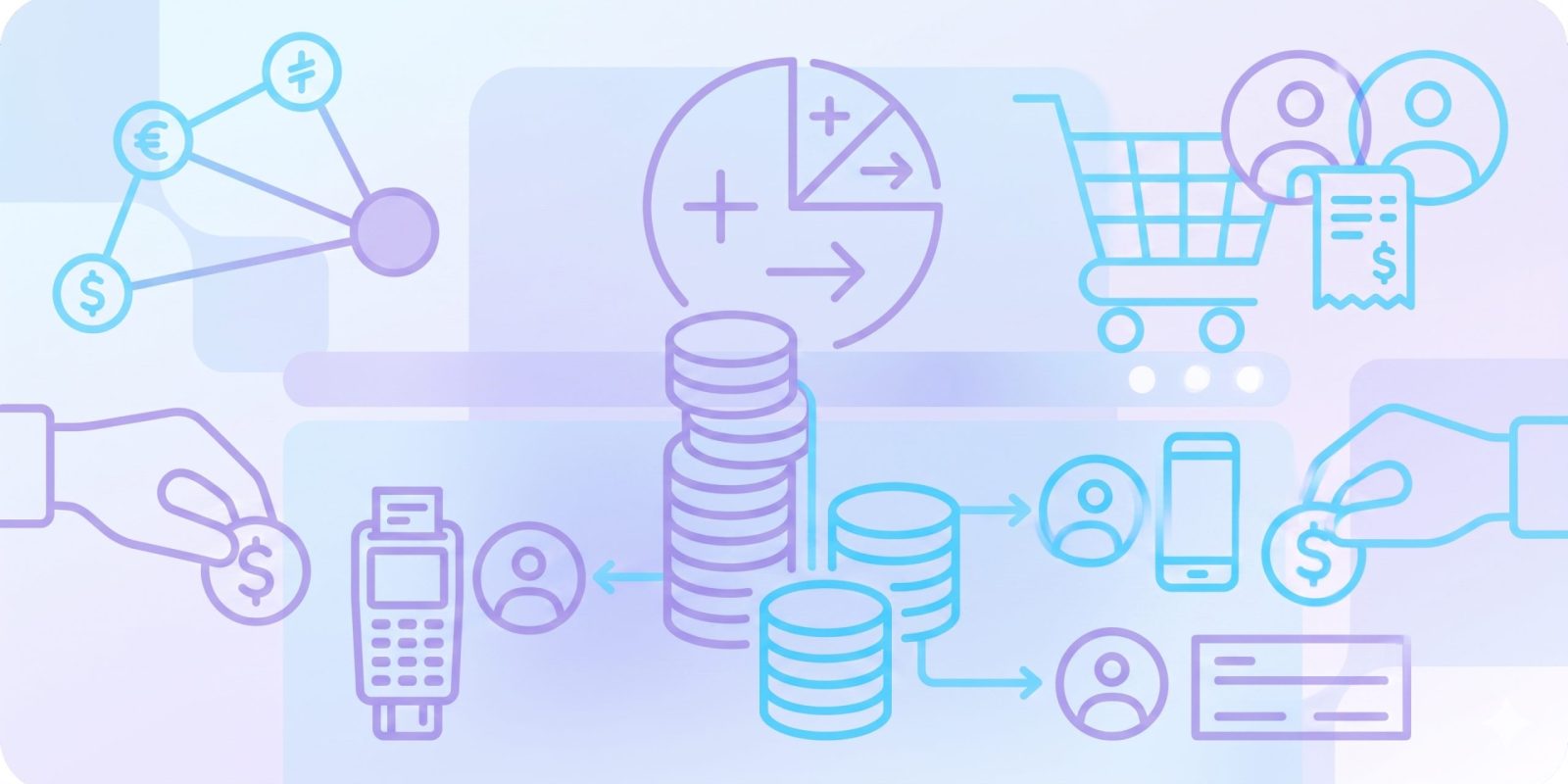
What is SaaS Split Payment?
In a SaaS marketplace or platform scenario, a split payment means a single customer checkout transaction is divided into several segments, routed to different parties. Rather than accumulating the total sum in a single merchant’s account for subsequent manual distribution, the payment gateway facilitates multi-party split-funding routing directly during the transaction.
This automatic billing mechanism is the backbone of operational logic behind today’s B2B and B2C digital networks. The pay software is designed to separate platform operation fees from vendor income in the marketplace before the final settlement.
Why does Split Payment matter for SaaS marketplaces and platforms?
Contemporary subscription and multi-vendor platforms are highly dependent on split-funding routing for scaling their operations. Platforms can utilize routers, which may influence the platform’s administrative workload. This setup calculates platform fees and draws them. This action has the potential to affect both gross profit margins and the volume of accounting tasks.
This financial architecture is associated with the software company’s level of regulatory risk. Upon adopting a direct multi-party routing model, the main SaaS platform is not involved in touching or holding third-party funds.
How do Split Payments work in a SaaS business?
The operational principles of multi-party routing are based on automated APIs initiated once a customer checks out. The end-user, when carrying out a transaction, is served by the integrated engine, which handles the payment information through several processing layers in sequence:
- Multi-Party Routing: The main transaction gateway looks at purchase metadata to identify vendors and the platform host instantaneously.
- Fee Distribution: The program calculates the exact platform commission, crediting the platform account with the fee and simultaneously transferring the rest to the external supplier.
- Refund Handling: If a user wants a refund, the system applies the opposite logic of allocation by deducting the respective amounts from both the vendor’s balance and the platform’s treasury.
What are the drawbacks and challenges of Split Payments?
Multi-party billing is an extremely effective approach; however, there are definite challenges encountered from an engineering and financial perspective. Conducting a multitude of multi-party payments calls for a high level of technical capability to ward off operational breakdowns.
|
Challenge |
Impact on SaaS Platform |
|
Fees |
Separate interchange or fixed costs from payment processors on each split leg may correlate with changes in microtransaction margins. |
|
Refunds |
Clawbacks trigger modifications to financial accounts, which may correlate with vendor balances and their status concerning a zero balance. |
|
Technical Overhead |
Building and testing robust API exceptions, handling partial failures, and maintaining accurate ledgers demands deep engineering hours. |
How do you implement a Split Payment System?
- Opt for enterprise-grade, proven APIs to reduce the need for custom security measures.
- Make webhook formats uniform so that atomic, multi-leg transaction states can be monitored at all endpoints in real time.
- Reserve a separate account to afford chargebacks as the main way to avoid negative merchant balances.
- As part of the first vendor onboarding, an automated KYC verification must be enforced to prevent network fraud.
Making the decision: Do I need a Split Payment infrastructure?
The following are critical analytical questions that can help you identify whether your enterprise needs multi-party routing infrastructure:
- Can our software environment support direct transactions between third-party vendors and end customers?
- Are internal resources currently allocated to manually processing payouts and reconciling ledgers every month?
Conclusion
Split payment integration in digital platforms facilitates complex financial transactions involving several parties. The use of programmatic routing engines by software platforms can impact manual accounting processes and compliance with international payment laws.
Ready to get started?


 English
  Español
  Português
  Português do Brasil
  Français
  Italiano
  Deutsch
  Nederlands
  Polski
  Română
  Українська
  简体中文
简体中文  日本語
日本語  한국어
한국어