
Financial Management
What are SaaS Net Payment Terms?
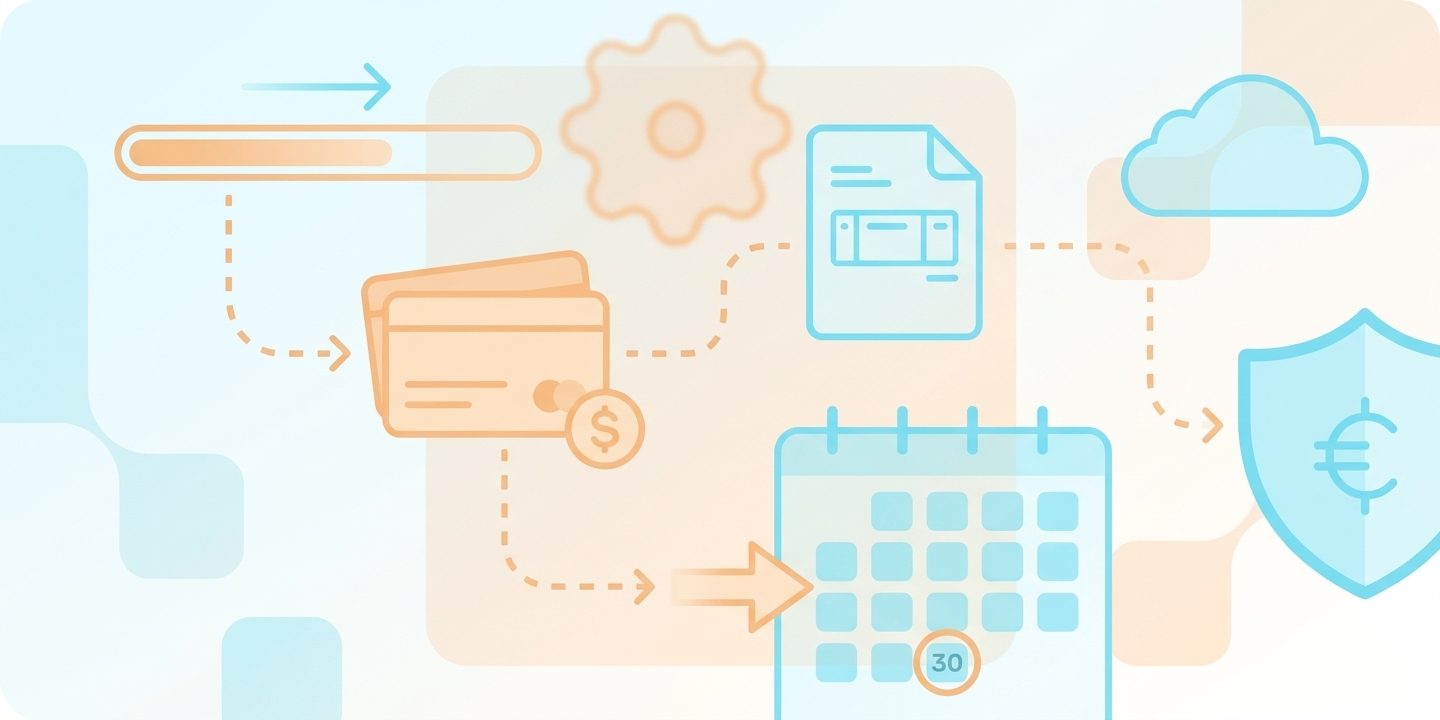
What are SaaS Net Payment Terms?
Due to various reasons, capital exchange timing has become a factor of equal importance as the software itself in the B2B software field. Net payment terms provide a mechanism for companies to handle internal approvals and manage their cash reserves ahead of payment.
This facility is relevant for B2B transactions as it mirrors the traditional procurement cycle. SaaS providers, by offering a “time frame” for payments, offer an entry point to corporate clients with strict monthly or quarterly accounting schedules.
How do Net Payment Terms differ from immediate "Due on Receipt" Billing?
The main distinguishing factor between net terms and “Due on Receipt” billing is the assumption of immediate liquidity. “Due on Receipt” is commonly observed in B2C or SaaS models with low-cost self-service, but this approach may be unfamiliar to some B2B enterprise customers.
|
Feature |
Net 30 Terms |
Due on Receipt |
|
Payment Deadline |
30 days after invoice date |
The process should begin upon delivery |
|
Cash Flow Impact |
A pattern of delayed outflow was present in the observations |
Liquidity may experience a prompt effect |
|
Administrative Workload |
Credit monitoring is a requirement |
Low; automated via credit card |
|
For |
Mid-market and Enterprise |
Freelancers and SMBs |
What are the pros and cons of using Net Payment Terms for your cash flow?
The use of net terms means making a deliberate choice between sales growth and liquidity on the spot. Although it makes your software more attractive to major players, it simultaneously reduces your working capital.
+
- Higher conversion rates may not be observed in large companies of software purchases (that require immediate credit card payments).
- In competitive RFP scenarios, flexibility in terms can be a deciding factor.
–
- Covering operational expenses may be required during the “Net” period until payments are received.
- Customer payments may occasionally extend beyond the typical 30 or 60-day payment window.
What is the specific timeline for payment when an invoice is marked as "Net 30"?
An invoice labeled “Net 30” typically indicates that the payment term calculation starts from the invoice creation date, rather than customer receipt or access. Buyers essentially have 30 calendar days to ensure the sellers receive payment.
Below is the description of the payment timeline:
- Day 0: The vendor issues the invoice, and the “Net” period officially starts.
- Day 1-29: Customers through their AP department process the payment as part of the “grace period”.
- Day 30: This is the last day for the payment.
- Charges are potentially applicable to payments finalized after day 31, contingent on the payment processing timeline.
What criteria should a merchant use when screening buyers before deciding to extend credit?
In extending net terms, the merchant acts as a lender; it is paramount to screen buyers to prevent “bad debts” or accounts receivable write-offs. Typically, merchants check a buyer’s financial status, years in business, and trade references.
Screening checklist:
- Business Longevity: For how many years has the company been operational?
- Public Credit Scores: Does the business maintain a good score?
- Trade References: Are other vendors able to confirm their record of making payments on time?
- Contract Value: Is the amount of the transaction sufficient to keep up with the risk of extended terms?
At what point should a merchant consider outsourcing their Net 30 Program?
Outsourcing of the credit program to a third-party “Buy Now, Pay Later” (BNPL) provider or a factoring company might be a suitable option for merchants when the cost of administration outweighs the benefits.
Decision factors for outsourcing:
- A manual approach to tracking a substantial monthly volume of “Net” invoices may necessitate supplementary actions.
- If the “Days Sales Outstanding” increases, organizations might explore third-party collection options.
- In situations where a business’s capacity to absorb a large default is insufficient, a third party could analyze the invoice “purchase” and potentially take on the risk.
Conclusion
SaaS net payment terms relate service delivery to collecting payments. Understanding Net 30 deadlines and buyer screening can impact the company’s ability to gain enterprise-level client trust and maintain stable cash flow.
Ready to get started?


 English
  Español
  Português
  Português do Brasil
  Français
  Italiano
  Deutsch
  Nederlands
  Polski
  Română
  Українська
  简体中文
简体中文  日本語
日本語  한국어
한국어