
Market Analysis
What is the B2B Customer Journey?
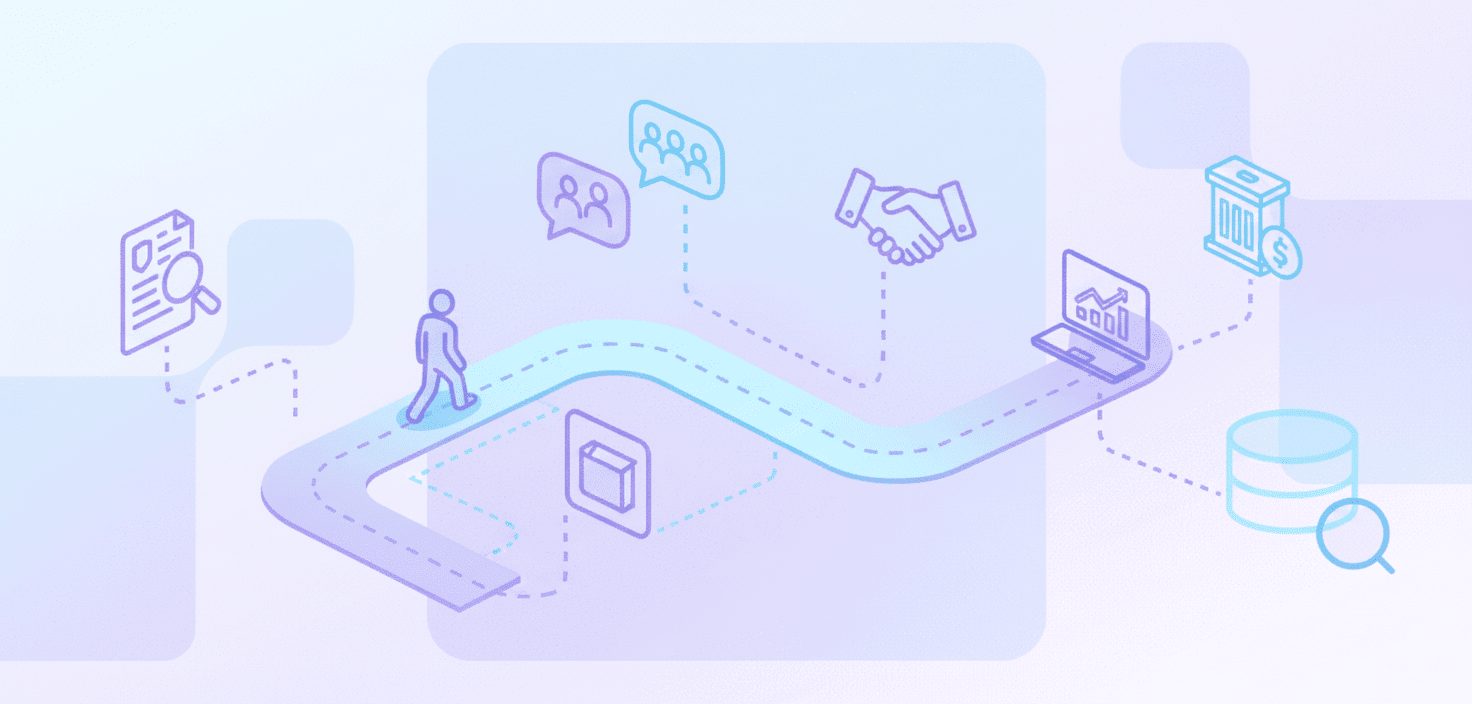
What is the B2B Customer Journey?
The B2B customer journey represents the steps that businesses go through when they are interacting with other businesses in the areas of marketing, sales, customer service, and support in the process of making a sale.
It has a number of touchpoints and decision-makers (in Forrester’s 2026 report, procurement professionals were decision-makers in 53% of business buying cycles), and it usually takes longer than the typical B2C transaction.
Understanding the B2B customer journey can influence marketing strategies and the customer experience, potentially affecting business outcomes.
What are the key stages of the B2B Customer Journey?
The B2B customer journey includes the following stages:
- Awareness
- Consideration
- Decision
- Retention
- Advocacy.
These stages represent the customer’s life cycle from the stage of being aware of the existence of the brand to becoming its advocate.
Some models incorporate Onboarding and Adoption, potentially affecting customer success.
Consider each stage individually and take into account customer emotions and pain points for personalized solutions.
What triggers the B2B customer journey?
Triggers are any actions or circumstances that motivate B2B buyers to take further steps in the purchasing process.
These triggers can be the recognition of a problem as being worthy of addressing, the start of the research for a solution to that problem, or a seller’s offer, such as a free trial.
- Understand these triggers when putting together a marketing strategy addressing the needs of the individual buyer at each stage of the journey.
- Activation points need to be defined according to the personal characteristics and preferences of the persona.
How do B2B customers evaluate solutions?
B2B customers evaluate solutions in three steps:
- B2B customers begin by considering various solutions, comparing features and assessing alignment with their specific needs.
- Next, they move into an evaluation phase involving detailed demos, pilot programs, and formal assessments involving multiple stakeholders. In Forrester’s 2026 report, more than 60% of business buyers used a trial, from paid sandboxes to usage-based trial periods, to evaluate solutions (Forrester).
- Finally, decision-makers prioritize solutions offering seamless integration with existing infrastructure, alongside strong performance and reliability.
A company buying B2B SaaS might compare vendors based on cost, features, and pricing, while involving IT to assess integration capabilities and security. Sellers should focus on aligning with buyers on problem definition and recognize that content consumed prior to initial contact can shape early evaluation stages.
How do B2B customers typically research solutions?
Customers who seek products and services available in B2B markets undergo a number of steps before making a decision to purchase. This includes the use of:
- search engines
- industry publications
- recommendations by peers
- conversations with sales representatives.
This process is put into effect to identify a specific business need, create a plan for the solution, and then compare available solutions with the plan.
How does customer experience impact B2B purchasing decisions?
Customer experience has taken center stage as a key factor in driving growth, profitability, retention, and loyalty in B2B transactions.
It appears that business buyers are starting to apply the ‘consumerization’ concept to B2B. Their engagement patterns suggest an orientation toward less complex business interactions, polite service, and streamlined purchasing processes. Organizations that implement customer experience strategies often consider potential effects on operational costs, revenue streams, and customer satisfaction levels. Customers expressing satisfaction often continue with purchases, thereby bypassing an assessment of alternative choices.
What are common pain points in the B2B customer journey?
Factors that influence the B2B customer journey include the amount of information from various vendors, the process of identifying dependable resources, the occasional absence of a well-defined business case, and the involvement of multiple stakeholders; for example, procurement professionals functioned as decision-makers in 53% of business buying cycles (Forrester).
These factors are associated with complexities that can affect customer experience quality. Journey mapping may be employed to identify and address these pain points.
If a customer’s journey contains a substantial number of negative events, it might relate to a higher customer departure rate.
How can the B2B customer journey be improved?
The B2B customer journey can be improved in four steps:
- Map the existing B2B customer journey to identify all the touchpoints and the opportunity for improvement.
- Use data analytics to gain valuable insights into customer behavior and preferences at each stage of the process.
- Considerations involve utilizing digital tools to manage elements that hinder the experience.
- Seek customer feedback and build relationships, for example, with a customer referral program.
Conclusion
The B2B customer journey is a key framework for understanding how businesses operate with one another and includes stages from awareness to advocacy. Effective operation of this journey depends on identifying triggers, addressing pain points, and using data to tailor the experience across all stages. Customer experience and continuous improvement efforts can relate to customer retention and business growth within the B2B landscape.
Ready to get started?


 English
 Español
 Português
 Português do Brasil
 Français
 Italiano
 Deutsch
 Nederlands
 Polski
 Română
 Українська
 简体中文
 日本語
 한국어