
SaaS Metrics and KPIs
What is the Loyalty Loop?
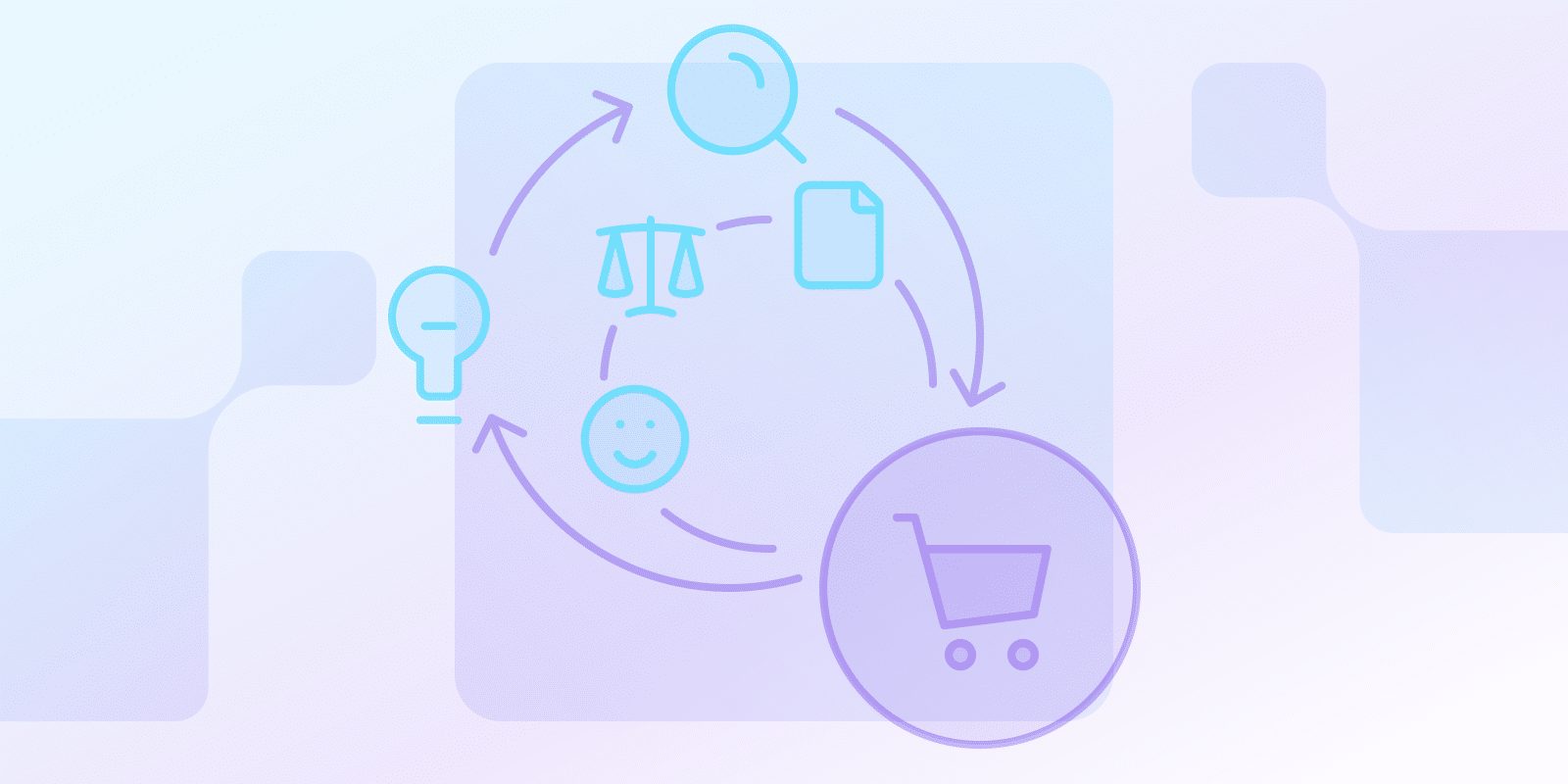
What is the Loyalty Loop?
The Loyalty Loop is the stage of a customer journey where satisfied customers make another purchase without considering other alternatives. It is done by developing and maintaining a continuous interaction with the existing customer base to create recurring business and build brand loyalty.
McKinsey made the term popular in 2009, after analyzing the purchase decisions of nearly 20,000 consumers.
The loop seeks to simplify the experience of returning customers and promote ongoing engagement with the business by offering a smooth path. To maintain continued consumer happiness and engagement, maintaining the loyalty loop necessitates constant work and modification.
How does the Loyalty Loop work?
The Loyalty Loop works by making the post-purchase experience the beginning of a follow up purchase:
- Start the process in the ‘consider’ phase, when a customer first expresses an interest.
- Move the customer through evaluation and purchase to the post-purchase experience.
- To solidify customer attachment and encourage repeat business, develop personalized experiences in the post-purchase phase that fit with individual customer interests and preferences.
- On the next purchase, a satisfied customer can then skip the evaluation process and makes another purchase which creates a loop.
One way to keep customers interested after they make a purchase, is to provide them with exclusive access to new items and events, personalized content, and loyalty points or discounts.
The Loyalty Loop is meant to build an emotional bond with your customers; encourage advocacy and loyalty by consistently exceeding their expectations and providing value.
How can businesses use the Loyalty Loop to understand customers better?
Customizing the Loyalty Loop will give businesses information on customer behavior and help them decide how to ensure they are satisfied users.
By mapping the customer journey, businesses can collect data from customers about their expectations and behavior, which give feedback on the customer experience and how to improve it which are important when making business decisions. To give one example, businesses can monitor how customers respond to marketing efforts and loyalty programs and use those details to make improvements.
To find out what customers want and how organizations may better serve and engage them, this data can be studied for trends.
What are the benefits of implementing a Loyalty Loop?
Building a solid relationship with your consumers is the foundation of a loyalty loop, which has several important benefits.
Increased Customer Retention: A Loyalty Loop can decrease customer churn, saving you money on acquisition costs and strengthening your customer base by attending to their needs and making customers loyal ones.
CLV and its Relationship with Personalization: Increases both CLV and revenue, especially if continuously monitored and optimized.
Increased Customer Loyalty: Specialized activities and incentives build a relationship with your buyers, strengthening their dedication to your business and turns them into long term customers.
Reducing marketing expenses: Catching customers in the loyalty loop optimizes marketing investments, leading to lower expenses because you are focusing on retention rather than the expense of continuous customer acquisition costs.
| Aspect | Loyalty Loop Approach | Traditional Approach |
|
Customer Retention |
||
| Acquisition Costs | Lower costs due to focus on retention | Higher costs from continuous customer acquisition |
| Customer Base Strategy | Strengthening existing relationships | Primary focus on acquiring new customers |
|
Customer Lifetime Value (CLV) |
||
| Personalization Impact | Tailored experiences driving higher CLV | Generic experiences with limited CLV growth |
| Revenue Optimization | Continuous analysis and optimization | Static approach with periodic reviews |
|
Marketing Efficiency |
||
| Marketing Investment | Optimized spend focused on retention | Higher spend on acquisition campaigns |
| Customer Advocacy | Strong focus on converting customers to advocates | Limited emphasis on advocacy programs |
Why is the Loyalty Loop crucial in today's competitive environment?
Businesses must figure out how to stand out from the competition in today’s fiercely competitive market and cultivate enduring relationships with clients. These two objectives are accomplished with the use of the effective framework known as the Loyalty Loop.
The Loyalty Loop attempts to increase brand loyalty and long-term profitability by focusing on how customers engage and retaining them long term. These initiatives are important for company success in a competitive market.
In order to draw in and keep consumers, businesses must differentiate their products and provide individualized experiences. This is where the Loyalty Loop comes in.
It offers a structure for gauging client loyalty and engagement, which are critical for encouraging repeat business and preserving a competitive advantage.
How does the Loop help businesses retain customers?
The Loyalty Loop creates a high levels of customer satisfaction and value delivery to improve client retention. It gives special after-sale experiences, prompt customer service, and tailored recommendations top priority.
The implementation of loyalty programs can improve customer interaction and repeat business. Consider a consumer who gets a tailored recommendation for a good they want to buy.
After making the purchase, they are thrilled with the rewards program and post-purchase assistance. After a positive experience, they are more likely to make more purchases.
The loop draws in, engages, and keeps customers by putting a focused marketing plan into place at every stage of the customer journey. This can increase customer retention rates and lifetime value. However, not every repeat buyer is a loyal one. A study by McKinsey of nearly 20,000 consumers, as Yu-kai Chou reports, categorized active loyalists, who prefer the brand, from passive ones, who repurchase out of inertia and may switch to a competitor (Umbrex).
What are some strategies for implementing an effective Loyalty Loop?
To use the Loyalty Loop in the best way, it is necessary to determine the critical points in the customer journey so that you can customize experiences, use feedback, and offer any recommendations.
Advocacy, onboarding and purchase are examples of critical stages. By using this method, strategies and communications can be more effective which increases consumer loyalty and future engagement.
Don’t forget to measure important indicators on a regular basis to assess your success and pinpoint areas that need improvement.
Conclusion
The Loyalty Loop is an ongoing, customer-focused strategy that improves brand loyalty and retention in order to increase customer lifetime value and a competitive advantage.
Delivering personalized experiences, using feedback, and having distinct differences that are important to customers are important pieces in the loop’s potential for success because they increase customer engagement and produce profitable company results.
Ready to get started?


 English
 Español
 Português
 Português do Brasil
 Français
 Italiano
 Deutsch
 Nederlands
 Polski
 Română
 Українська
 简体中文
 日本語
 한국어