
SaaS Payments
What is a Payment Retry Window?
What is a Payment Retry Window?
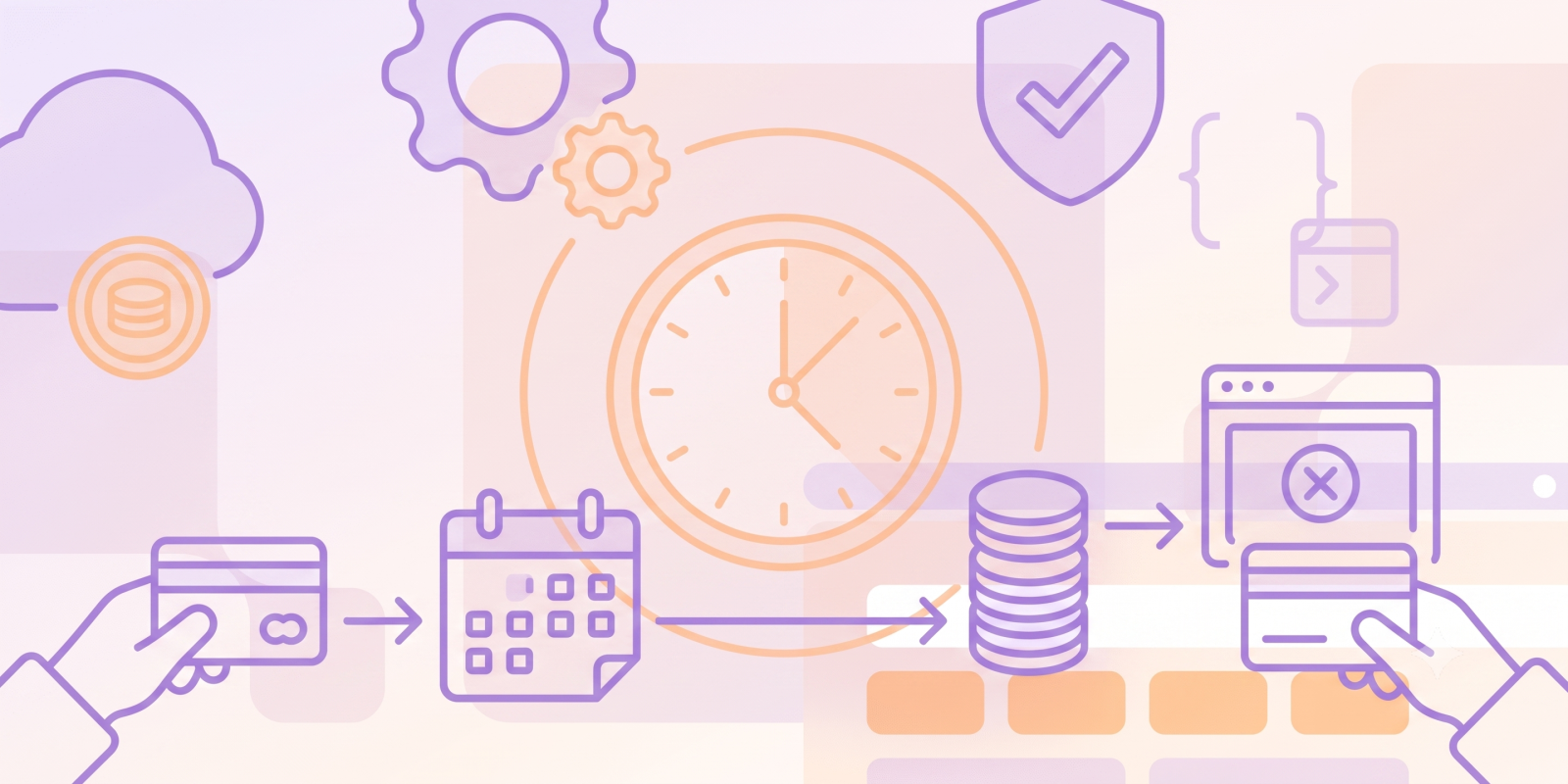
A payment retry window is a set timeframe following an unsuccessful subscription payment, during which a SaaS provider uses automated methods to attempt payment collection before the account is paused, cancelled, or written off.
In contrast to a dunning window, which involves customer notifications, the retry window strictly refers to automated charge attempts. Common setups schedule 3 to 5 collection attempts at calculated intervals to align with when payment approvals are most probable, especially in cases of soft declines, which form a notable share (up to 90%) of payment failures.
In many cases, the window covers 5 to 14 days. Collection rates tend to stabilize past 30 days, with changes in results generally less pronounced beyond that point.
Why are payment retries crucial for SaaS?
Payment retries are meant to fix instances where subscription payments do not process successfully for reasons such as billing verification issues or temporary insufficient funds, rather than lack of customer intent, meaning those retries directly face involuntary churn. This approach deals with recurring revenue loss by recovering funds that payment failures would otherwise leave unrecovered.
Industry data suggests that billing-related churn comprises approximately 20-40% of all SaaS churn and approximately 9% of monthly recurring revenue loss.
A payment retry process that includes 3-5 attempts over 10-14 days, supported by a 3-7 day grace period, and scheduled notifications, can reduce this type of churn.
How do payment retries work?
Retries are attempted when a payment does not go through due to a soft decline – an expired card, low account balance, or an issuer’s system response. The billing system can either follow a scheduled approach or use data to decide when the next attempt should occur.
Typically, the process includes several steps:
- Classify the decline (soft vs. hard).
- Try the transaction again or request the customer to provide updated payment information.
- Set off dunning messages or alerts within the app.
- Collect the overdue payment before suspending the account.
More advanced billing systems consider the information from the decline code, type of card used, and the issuing bank to select appropriate retry attempts. In certain instances, the payment may succeed in one of the following attempts after the initial attempt.
In the case where the decline occurs due to insufficient funds in the account, retries will be scheduled for the following days, which may include the 3rd, 7th, and 14th days, while other problems have a different timeframe.
Never exceed the maximum limit on the number of retries set by the network – Visa allows 15 tries on each of the eligible transactions within 30 days, while Mastercard has a more stringent policy (approximately 10) through Merchant Advice Codes.
What factors influence payment retry effectiveness?
Several elements contribute to how effective payment retries are:
- Decline type: a soft decline is generally more likely to result in a successful retry than a hard decline.
- The choice of timing: scheduling retries around common pay periods, such as the beginning or middle of the month in the US or the final working day in parts of Europe, is shown to correspond with higher approval rates.
- The alignment with regular customer payment cycles, issuer behavior, and geographic region.
- The kind of payment card involved and the methods employed to sequence retry attempts.
A practical approach is to postpone retries for payments declined due to “insufficient funds”, though it is helpful to select retry intervals that stay within network guidelines and minimize possible friction with issuers.
What are the best practices for configuring payment retries?
Configuring payment retries usually involves sorting payment declines by type and selecting retry attempts based on data rather than a one-size-fits-all schedule. This seeks maximum recovery while mitigating negative effects on customer relationships. Key practices to consider:
- For soft declines, use a defined limit on retries; for hard declines, avoid any retry attempts.
- Apply grace periods before applying account cancellation.
- Implement a one-click path for customer payment-detail updates.
- Share updates using clear and factual messaging.
- Adjust the timing and format of retries and related messages according to different segments of the customer base.
How do payment retries integrate with dunning?
Retries address payment failures by making new collection attempts, while dunning manages communication with customers to update billing details. In practice, companies may schedule these notifications alongside retry attempts, so that the customer receives information related to ongoing account recovery.
Effective dunning can include supporitve messages through multiple channels such as in-app notices, links for updating payment information, or standard outreach methods for high-value accounts.
What is the impact of optimized retries on retention and revenue?
Optimized retries work by initiating additional attempts to process payments after a failed transaction. These methods may be associated with lower involuntary churn and less recurring revenue loss, without requiring new customer acquisition. The cost involved in retrying payments is generally lower than the expense of reacquiring, and even minor adjustments in retry approaches can cause incremental shifts in total revenue.
What are the key metrics for payment retry evaluation?
Analyzing specific measurements helps clarify how effective a recovery process is and where further review could be helpful.
|
Metric |
Why it matters |
|
Recovery rate |
This indicates the share of previously unsuccessful transactions that are eventually processed (how much failed revenue you actually collect back). |
|
Retry success rate by attempt |
This shows outcomes for each attempt, providing information about the effectiveness of retries. |
|
Involuntary churn rate |
This measurement refers to the share of customer accounts that become inactive because of unpaid invoices, without an explicit cancellation request from the customer. |
|
Decline rate by reason code |
Identifies the causes of failures and those suitable for retrying. |
|
Time to recovery |
This measures the length of time it takes to close the gap, reflecting potential impact on cash flow and churn risk. |
|
Grace-period conversion |
This identifies the number of at-risk accounts that are resolved after additional intervention periods. |
|
Revenue recovered per segment |
Reviewing this data suggests if particular customer groups see more success following payment retry efforts. |
Individual metrics can also be segmented by attributes such as card type, customer tenure, issuer, or location, and can be further refined through scheduled tests to help inform operational decisions.
First attempts recover the largest share of soft declines, and effectiveness drops off after the third attempt, so efficient early interventions matter most.
Conclusion
Payment retries refer to a process where failed charges are attempted again, aiming to reduce involuntary churn and maintain steady recurring revenue. Organizing retries by sorting decline types, planning timing, and coordinating with customer notifications may affect payment recovery and retention rates. This approach typically requires fewer resources compared to customer acquisition strategies.
Ready to get started?


 English
  Español
  Português
  Português do Brasil
  Français
  Italiano
  Deutsch
  Nederlands
  Polski
  Română
  Українська
  简体中文
简体中文  日本語
日本語  한국어
한국어