
Legal and Compliance
What is SaaS Merchant Liability?
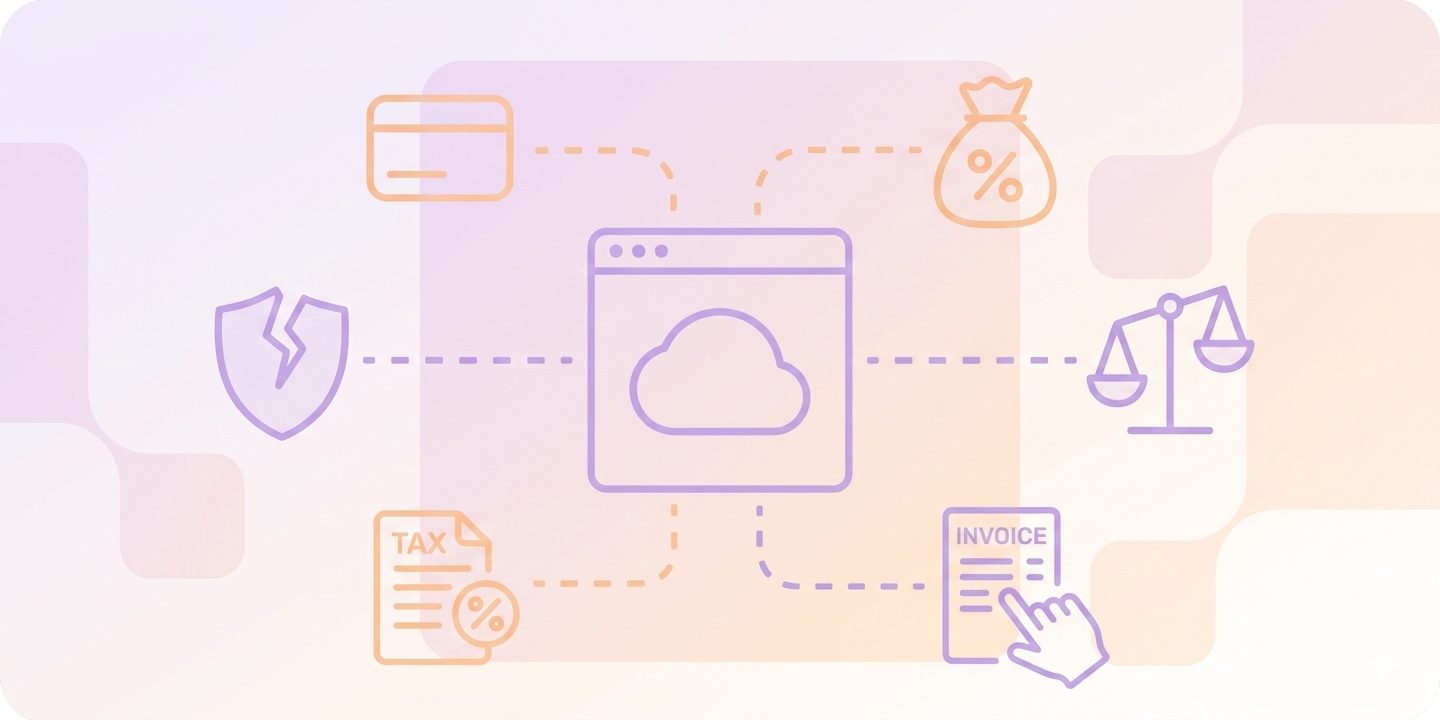
What is SaaS Merchant Liability?
SaaS merchant accountability outlines the financial, contractual, and regulatory responsibilities a software company manages when acting as the merchant of record or processing payments.
This liability includes potential chargebacks, fraud-related losses, compliance failures, and disputes arising from subscription billing practices.
Because recurring billing is common in SaaS, companies often manage account updates, renewal timing, and cancellation handling as part of their payment operations. Furthermore, SaaS businesses are expected to comply with PCI DSS standards for cardholder data and track card-network dispute thresholds.
When is taking on full SaaS merchant liability appropriate?
SaaS providers assume full liability when they serve as the merchant of record or contractually agree to manage chargebacks.
This approach may be used to:
- refine checkout procedures
- allow transactions from international customers
- administer customer billing directly
The decision to take on full liability should take into account:
- Profit margins.
- Risk tolerance.
- Operational capacity for dispute handling
How does payment setup impact both conversion rates and liability for SaaS merchants?
A payment setup can influence transaction processing and risk controls in different ways.
- Security Tools: Using methods such as 3D Secure, AVS, and CVV adds verification steps during checkout that may require customer participation and affect the checkout process.
- Clarity: Clear, specific descriptors (e.g., COMPANYNAME-PRODUCT-888-555-0000) are now mandatory by most card networks to reduce “friendly fraud” disputes.
Balance checkout steps and completion rates; use authentication methods that fit the transaction context without adding unnecessary verification across all payments.
Which payment methods minimize SaaS merchant liability?
Payment methods with lower dispute rates can reduce your liability:
|
Payment Method |
Liability Benefit |
|
Bank Debits (ACH/SEPA) |
Structurally lower risk due to very limited chargeback mechanisms compared to cards. |
|
Digital Wallets (Apple/Google Pay) |
While they use biometrics, liability only shifts to the issuer if the transaction is processed via 3D Secure (3DS) or specific network tokenization. Some wallet transactions (like “Merchant-Initiated Transactions” for recurring billing) may still carry merchant liability. |
|
Local Methods |
Using payment methods that align with customer location and market preferences can affect transaction handling compared with standard credit cards. |
How can SaaS companies mitigate merchant Liability?
SaaS companies address merchant liability through several administrative practices.
- Compliance: Following PCI DSS v4.0.1 requirements.
- Communication: Setting refund terms and presenting billing information in a standard format.
- Operations: Maintaining chargeback processes and transaction records for “representment” (dispute processing).
- Monitoring: Reviewing cancellation steps and billing descriptors regularly to ensure usability and user-friendliness.
How can SaaS Companies prevent fraud and manage liability?
SaaS companies use layered fraud prevention strategies to address fraud risk and liability.
- Layered Strategy: Combining identity checks, transaction scoring, and account security controls.
- Specific Monitoring: Reviewing activity related to subscription misuse, card use issues, and account takeovers (ATO).
Fraud levels can affect account review requirements or monitoring arrangements, so regular prevention measures remain relevant.
How Do Liability Caps Differ in SaaS Merchant Agreements?
Liability caps are negotiated amounts that define a SaaS merchant’s financial responsibility limit. These caps are largely determined by the transaction risk associated with the SaaS business.
SaaS models with elevated risk profiles, such as those with a history of chargebacks or operating in regulated industries, often have lower liability caps or more specific terms.
Payment processors use these caps as operational measures to manage their exposure to potential losses from SaaS merchants, taking into account factors beyond legal clauses.
What are the data breach notification requirements and liability considerations for SaaS merchants?
SaaS companies handling cardholder data or personal information are subject to data breach notification requirements.
- Mandatory Notifications: Companies must notify affected individuals and regulators within specific timeframes following a breach.
- Non-Compliance Risks: These requirements are linked to civil penalties, litigation, and reputational factors.
- Response Planning: Companies should have a plan that includes:
- Legal counsel.
- Incident investigators.
- Customer communication strategies.
- Coordination with cyber insurance providers.
Conclusion
SaaS merchant liability is a complex blend of financial, contractual, and regulatory components that SaaS firms must diagnose and address when accepting payments. Managing risk in merchant liability involves choosing payment options that reduce liability, implementing fraud controls, certifying PCI compliance, and being transparent with customers. SaaS companies that address these areas will deal with merchant liability, account for financial effects, and manage customer relationships as they navigate the complexities of the digital economy.
Ready to get started?


 English
  Español
  Português
  Português do Brasil
  Français
  Italiano
  Deutsch
  Nederlands
  Polski
  Română
  Українська
  简体中文
简体中文  日本語
日本語  한국어
한국어