
SaaS Payments
What is SaaS Payment Unmatched?
What is SaaS Payment Unmatched?
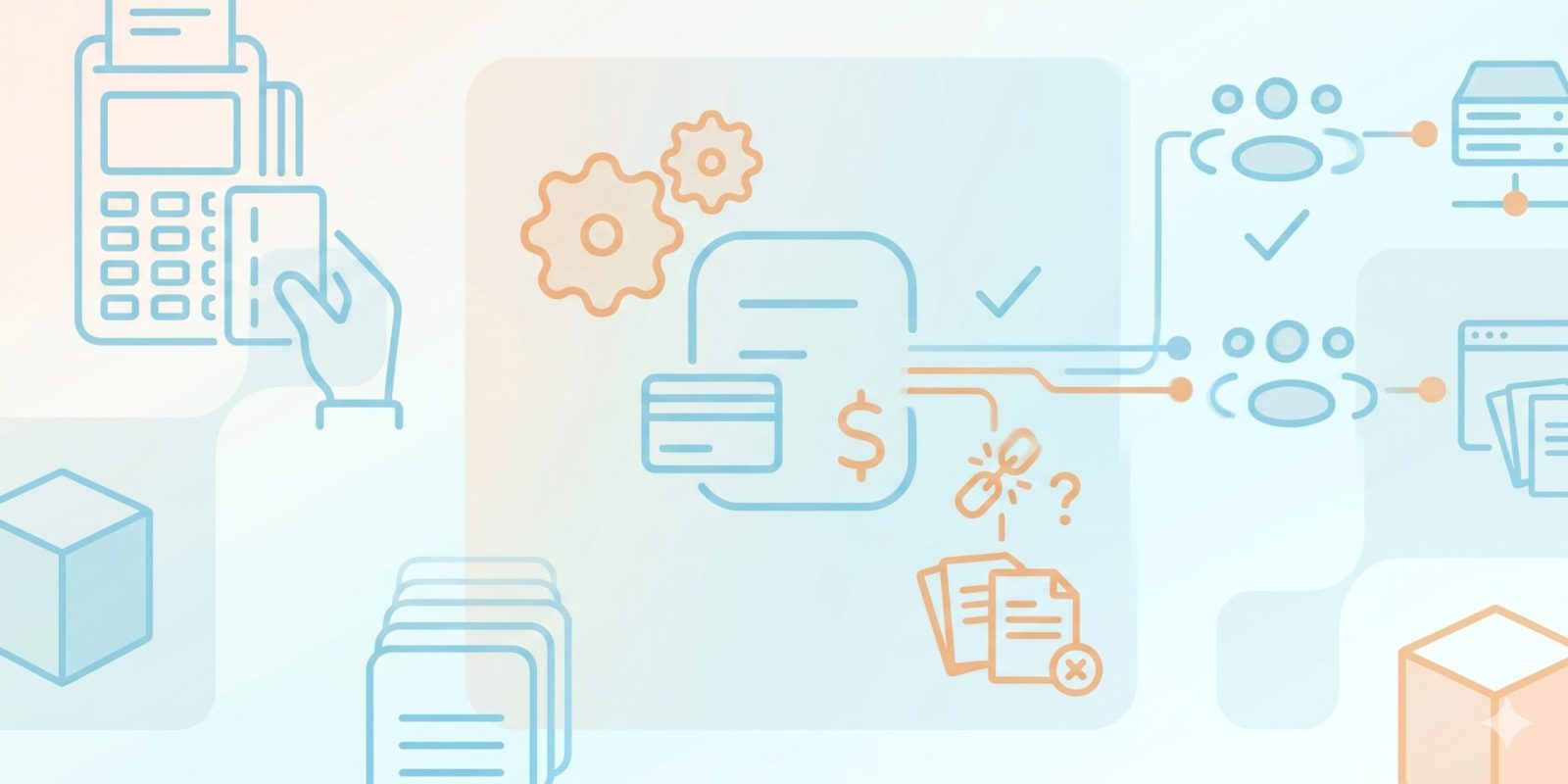
For a SaaS company, “payment unmatched” is classified as a reconciliation exception. The specified condition applies to a payment that maintains no automated linkage with its related invoice, subscription, customer, or settlement record across the billing system, payment processor, and bank statements. Payments that do not have an automatic match are resolved using manual processes.
Proper SaaS payment reconciliation systematically compares these records to account for:
- Regularly scheduled payments
- SaaS upgrades/downgrades
- SaaS refunds
- Foreign exchange (FX) fees
- Taxes
Core comparison: Subscription management vs. invoicing
To identify unmatched payments, you will often need to look at both the sales and the finance side of the business because of how the customer lifecycle is split:
|
Feature |
Subscription Management |
Invoicing & Billing |
|
Focus |
Commercial lifecycle |
Financial lifecycle |
|
Key Functions |
Quoting, contracts, amendments, and renewals |
Invoicing, payment collection, revenue recognition, and dunning |
Why are Unmatched Payments so difficult to resolve?
Unmatched payments can indicate certain conditions, but do not inherently identify the underlying cause without additional inquiry. Handling these matters often entails specific considerations, especially in SaaS billing environments based on usage-based pricing, prorations, refunds, chargebacks, and data integration across various systems.
The characteristics of financial records, including their consistency, may be influenced by manual data entry and operational differences across systems in recurring charges, usage tracking, invoicing, payment processing, and revenue recognition.
Unresolved unmatched items are relevant to the timeline of financial period closures and may bear on the consistency of revenue reporting.
What are the hidden technical causes of SaaS Unmatched Payments?
Observations indicate frequent system-level separations, where a significant part of payment processing variances is linked to three specific technical conditions between payment gateways and banks:
- Gross and Net Payout Discrepancies: After a payment is made, the payment processor generally subtracts their processing fees, and only the net amount gets into your bank account. A difference observed between a $100 invoice payment and a $97.10 bank deposit can be a factor in automated transaction matching, especially when a standardized method for handling gateway fees is not established.
- The “Weekend” Timing Gap: It is the period between the batching of payment gateway transactions and their deposit into your bank account. A subscription renewal processed on a Friday night may become visible in your banking ledger on Monday or Tuesday. Where a time discrepancy exists, an unmatched state is typically present, relevant to real-time reporting.
- The “Silent” Enterprise Wire: Going up in scale from credit card to ACH or bank wires is the practice of most SaaS companies as they grow into the enterprise tier. The sending of a single wire by corporate finance for multiple invoices, sometimes without specific reference numbers in the memo, typically requires manual tracking by finance teams to ascertain origins.
How does SaaS Payment Unmatched help in SaaS decision-making?
Analyzing unmatched payments functions as a diagnostic tool. This provides visibility into cash flow, revenue leakage, billing errors, and customer friction, informing operational and strategic decisions for finance and product.
Additionally, there are further considerations:
- Operational efficiency is typically associated with a reduction in manual tasks in departments such as Finance, Accounting, RevOps, and Support, and it can affect the speed of customer billing issue resolution.
- An increased volume of bills is related to automation’s capacity to facilitate more frequent reconciliation, which can involve a shift from monthly to daily processes (in an effort to maintain financial overview).
- Regular reconciliation addresses data completeness, providing management and investors with a basis for forecasts, SaaS statistics (MRR, Churn, LTV), and compliance information.
What factors to consider when selecting a SaaS payment solution?
If you have complex subscription logic, use your great billing software first, then add in the payment methods that fit your needs. Do a check of your business operations scale by going through the following when considering a SaaS payment solution:
- Billing Complexity: Being able to handle subscription models, keep track of usage, and produce automated prorations.
- International Reach: The scope of global operations involves language options, functional links to regional tax providers, and multiple currencies.
- Automation Needs: Having automated payment retries (dunning), features for revenue recognition, and automated matching workflows.
- Reporting: It involves pre-configured dashboards for metrics such as MRR, churn, and LTV.
Conclusion
A correlation is noted between payment discrepancies and the functioning of separate systems. The expansion of SaaS companies and the evolution of billing procedures relate to manual reconciliation processes. The automation of matching workflows and the integration of billing with payment gateways can affect the occurrence of revenue leakage and accidental churn. It establishes a framework for financial reporting.
Ready to get started?


 English
  Español
  Português
  Português do Brasil
  Français
  Italiano
  Deutsch
  Nederlands
  Polski
  Română
  Українська
  简体中文
简体中文  日本語
日本語  한국어
한국어