
Revenue Models
What is SaaS Revenue Diversification?
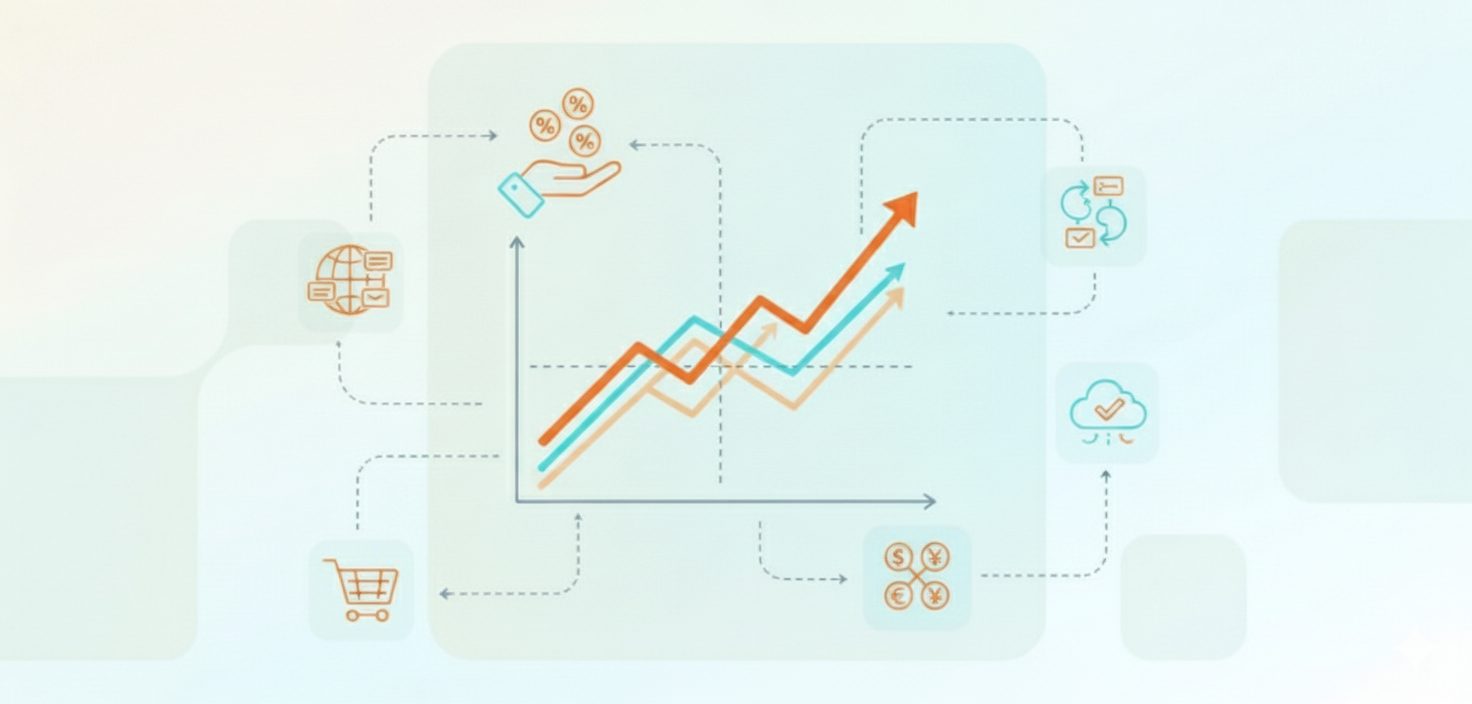
What is SaaS revenue diversification?
SaaS revenue diversification is the practice of using more than one source of income. This includes:
- subscriptions
- advertising
- direct and channel sales
- selling API access to different user groups
The inclusion of multiple income streams can affect a SaaS company’s reliance on individual sources.
SaaS companies must carefully consider which revenue streams to pursue and address the challenges associated with managing multiple models effectively.
What are key SaaS revenue diversification strategies?
SaaS revenue diversification strategies include:
- customer retention: it is linked to the generation of recurring revenue
- upselling and cross-selling: encourage additional purchases, boosting overall revenue
- attribution modeling: helps in allocating resources effectively by knowing what works and where to invest it
- geographic expansion: it may enable access to new markets and is observed to correlate with revenue levels
How does growth strategy impact revenue diversification for SaaS companies?
Growth strategies can shape revenue diversification by directing attention from new user acquisition to the enhancement of revenue from existing ones.
This involves strategies like:
- revising pricing models
- reducing churn
- expanding product offerings
SaaS companies can check whether their growth strategies balance growth with profitability using key performance indicators like the Rule of 40, which weighs growth rate against profit for SaaS companies at scale (Brad Feld, 2015).
What user needs drive SaaS revenue diversification opportunities?
The drive for SaaS revenue diversification is dependent on users’ unmet or changing needs. These needs can be classified into three categories:
- functional, which includes ease of use, features, and satisfaction;
- emotional, which include confidence and status;
- social, which includes peers’ opinions and belonging to a group.
HubSpot’s Service Hub represents a product line expansion, intended to address requirements for integrated customer support.
Surveys and feedback collection can provide data pertaining to these needs, which may then influence expansion strategies.
How does diversification differentiate a SaaS company?
Diversification has implications for how a SaaS company positions itself, concerning the availability of varied value propositions, the scope of its product line, and its engagement with different markets.
Differentiation in SaaS:
- Goes beyond just having a unique product; it’s about demonstrating value in a way that resonates with the audience’s specific needs and pain points.
- It may influence a SaaS company’s visibility in a competitive market, potentially affecting brand loyalty and contributing to diverse revenue streams.
Exploring specific examples of SaaS companies that have successfully used diversification to differentiate themselves can provide valuable insights and lessons for other companies looking to implement similar strategies.
What advertising partnerships are suitable for SaaS companies looking to diversify revenue?
Suitable advertising partnerships for SaaS include:
- lead generation
- sales and marketing collaboration
- referral or affiliate program
- marketplaces
- embedded integrations with other software providers.
These partnerships can help a SaaS company increase its customer base, brand awareness, and revenue through different channels.
Carefully consider the criteria for selecting the right partners and structure partnerships to ensure mutual benefits and alignment with your business goals for optimal success.
Conclusion
SaaS revenue diversification, entailing income streams beyond subscriptions, may influence financial stability and overall scope. Key strategies involve customer retention, upselling, geographic expansion, and strategic advertising partnerships, informed by awareness of user needs. Diversification might affect a SaaS company’s position in a competitive market and its capacity for resilience and opportunity exploration.
Ready to get started?


 English
 Español
 Português
 Português do Brasil
 Français
 Italiano
 Deutsch
 Nederlands
 Polski
 Română
 Українська
 简体中文
 日本語
 한국어