
Modele przychodów
Czym jest Zintegrowany Handel SaaS?
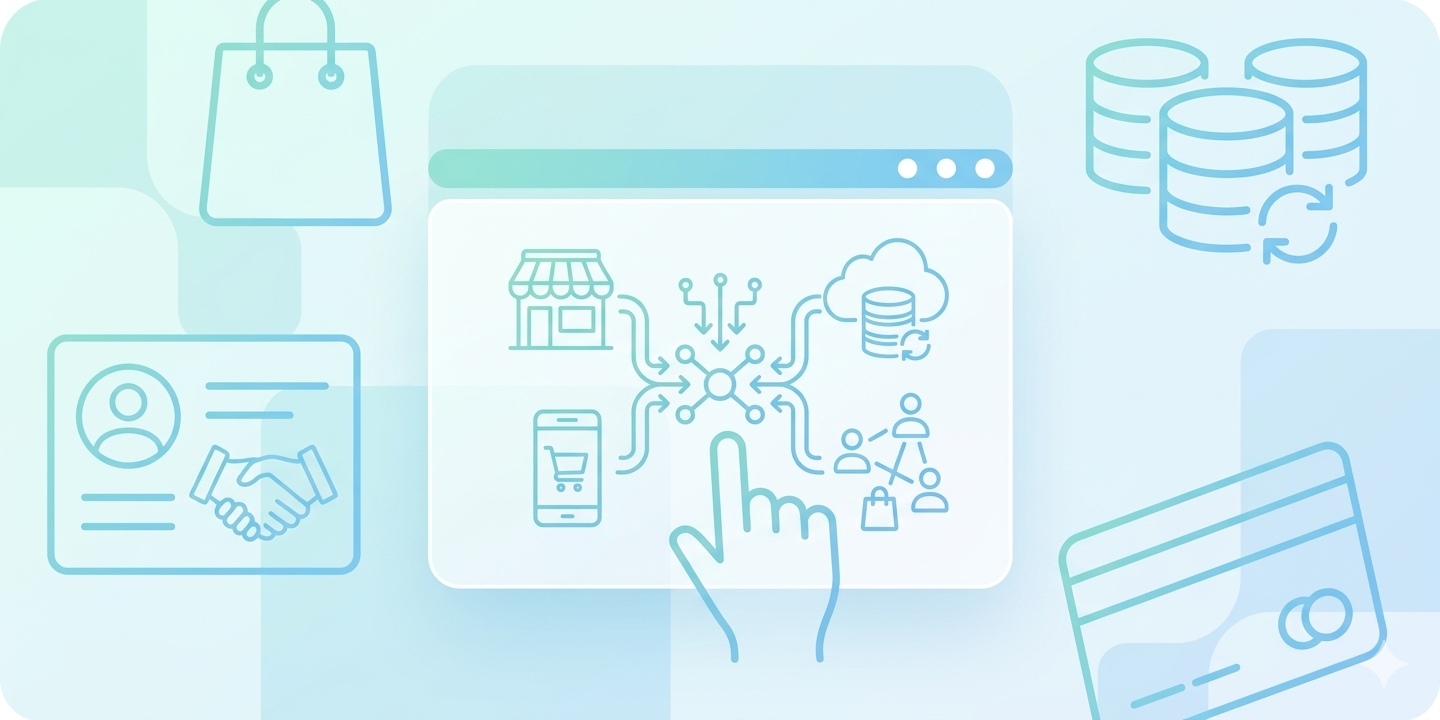
Czym jest Zintegrowany Handel SaaS?
SaaS Unified Commerce is a software delivery model in which a single native cloud platform acts as the only source of information for all backend and frontend operations. Updating physical store inventory after mobile app sales may be relevant for retail brands seeking to address evolving consumer habits.
Transitioning a business’s tech stack to the cloud influences growth and integration rates, with implications for the technical and financial aspects of managing various software tools.
What are the main elements of SaaS Unified Commerce?
SaaS Unified Commerce includes:
- Interactions: Tracking and analyzing customer contact points such as support chats, email clicks, or loyalty rewards to gather a full 360-degree customer profile.
- Channels: Connecting multiple sales channels, including mobile apps, web stores, social marketplaces, and physical boutiques, within a unified network.
- Systems: Merging three business software systems (ERP, CRM, and POS) into a single working framework.
- Produkty: Utilizing the central catalog to standardize the prices, descriptions, and availability of products across locations and platforms.
Unified Commerce and Omnichannel: What is the difference?
Here is a side-by-side comparison between the two concepts:
|
Funkcja |
Traditional Omnichannel |
SaaS Unified Commerce |
|
Data Architecture |
Disconnected systems synced via API |
A unified platform hosted in the cloud |
|
Inventory Status |
Almost immediate (there might be a short delay) |
The precision was observed in real time |
|
Customer View |
Different user profiles in several tools |
A complete, cross-channel user profile |
|
Konserwacja systemu |
Manual modifications are needed on an application-by-application basis |
Updating automatically |
What specific technologies are essential for enabling SaaS Unified Commerce?
Modern unified commerce relies on Handel bezgłowy architecture. Separating the frontend (user interface) from the backend (commerce engine) with this technology could facilitate the introduction of new mobile applications or web features by brands, while potentially limiting the influence on the stability of core inventory and payment systems.
How can a business implement a SaaS Unified Commerce strategy?
Implementation is a gradual change over time rather than a sudden, complete change. The following points should be kept in mind:
- Use an inventory management system to audit and standardize product SKUs and customer lists. Then, migrate your data to a cloud environment where your “source of truth” will be kept.
- Ensure your backend architecture can handle the high-speed API requests modern mobile-first shopping requires.
- Make sure in-store associates know how to use the unified dashboard to help customers with “endless aisle” browsing, for example.
- Think about assessing performance with combined online and in-store sales numbers rather than looking at each channel separately. Measure “Total Company Revenue” as a whole.
Wniosek
SaaS Unified Commerce aggregates operating data into a centralized cloud-based environment, which may influence complexity management in contemporary retail settings. Companies may discover that the issue of integrating digital and physical store channels is mainly related to customer experience and perceived value.
Gotowy do rozpoczęcia?


 Polski
  English
  Español
  Português
  Português do Brasil
  Français
  Italiano
  Deutsch
  Nederlands
  Română
  Українська
  简体中文
简体中文  日本語
日本語  한국어
한국어