
Pricing Strategies
What is a SaaS Pricing Sheet?
What is a SaaS Pricing Sheet?
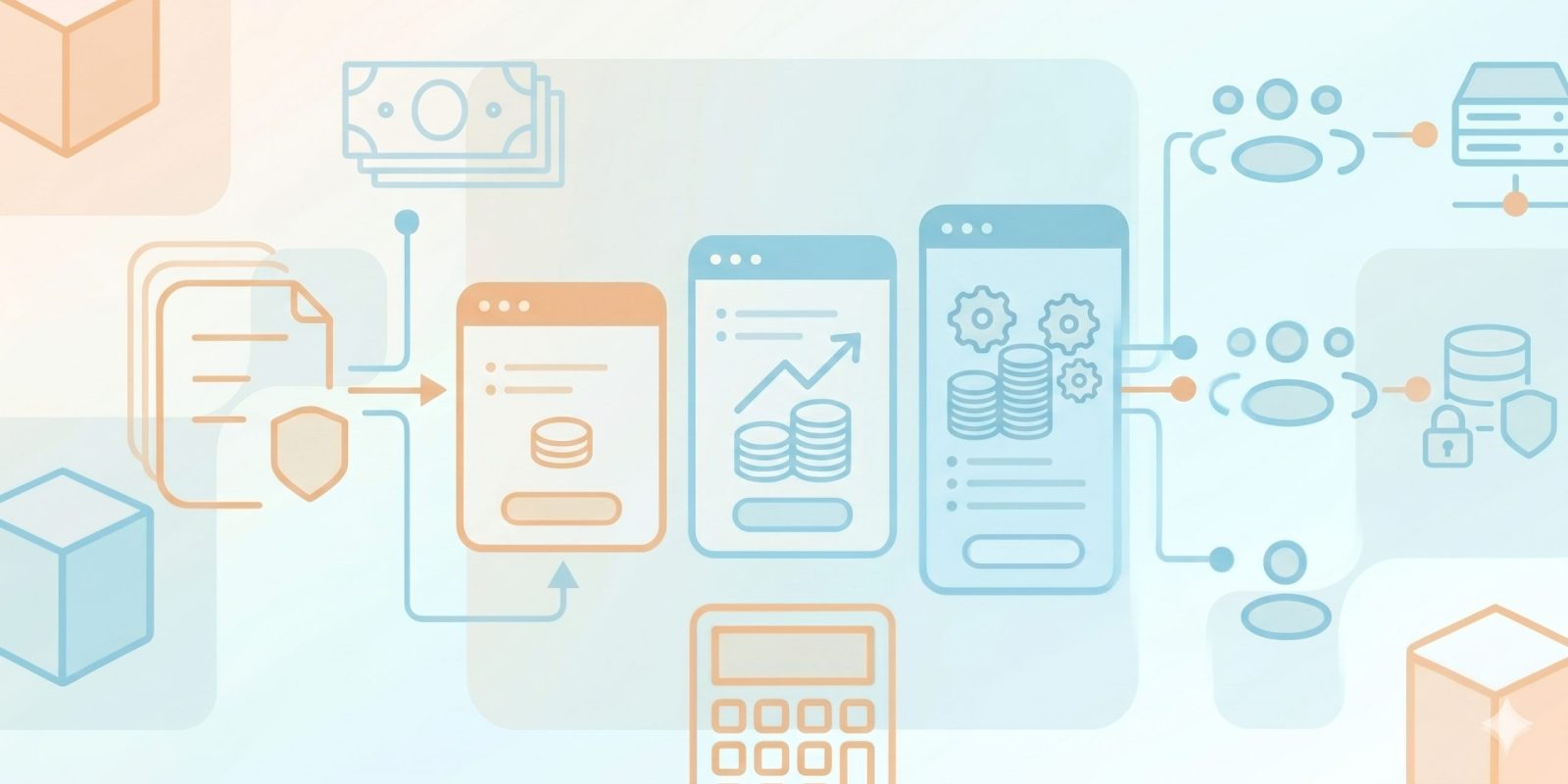
A SaaS pricing sheet is a business document that shows standardized costs, tiers, licensing terms, and billing frequencies of a cloud software product. Sales teams currently utilize this document as a reference for quotations or as a means of communication to maintain consistency among stakeholders. This document aims to standardize sales practices, maintain profit margin, and facilitate the calculation of Customer Acquisition Cost (CAC) ratios.
What are the key components of a SaaS Pricing Sheet?
Cloud subscription cost sheets present businesses with a resource containing key deal information that customers consult when placing orders. To get these data points automatically, corporate operations teams depend on them to automate workflows. A SaaS pricing sheet should always contain these elements:
- Product Description and Tiering: This explains in detail what each subscription package includes, sets of features, SLAs, and the maximum number of users.
- Base Pricing and Metric Units: These are the default prices related to billing units, such as price per user, per node, or usage-based API volume metrics.
- Taxes and Localized Levies: These include compliance variables, VAT calculation, and sales tax assumptions across different geographic locations.
- Contractual Terms and Conditions: They specify the contract length, the conditions of automatic renewal, the cancellation penalties, and how often true-ups occur, among other things.
How does a SaaS Pricing Sheet differ from a Marketing Pricing Page?
Although public pricing pages attract interested visitors at the beginning of the sales funnel, internal SaaS pricing sheets are the ones dealing with closing sales. Public website pages are designed more for users’ sake, displaying simplified and static pricing structures along with general feature matrices. On the other hand, internal pricing sheets record behind-the-scenes technical mechanisms, volume tier configurations, line-item dependencies, and very strict configuration boundaries.
|
Operational Dimension |
Public SaaS Pricing Page |
Internal SaaS Pricing Sheet |
|
Primary Target Audience |
Prospective leads, web visitors, and market researchers. |
Internal account executives, solutions architects, and buyers. |
|
Data Complexity Depth |
The design incorporates high-level summaries, limited text, and a simplified user interface. |
Granular line items, volume discount tables, and tax formulas. |
|
Negotiation Flexibility |
Fixed tiers with a call-to-action for custom quotes. |
Dynamic, indicating pre-approved ranges applicable to custom deal structures. |
How do you create a SaaS Pricing Sheet step-by-step?
When planning a licensing document that can withstand the needs of time and can be scaled, one should keep in mind that it is an architectural plan. The following is a list of some actionable items that may be used in the development of a corporate pricing tool:
- Define Subscription Variables: Align your product features with customer segments by selecting whether you bill per seat, by usage, or give a flat rate.
- Establish Financial Baselines: Based on your cost and profit goals, compute appropriate pricing floors and ceilings for each tier.
- Build Discount and Escalation Matrices: Employ formulas in your spreadsheet to offer volume discounts and protect price increases.
- Incorporate Regional and Tax Variables: Create lookups to manage adjustments in different currencies and the software’s local tax requirements.
- Test Edge-Case Scenarios: Check if the formulas hold up after extremely large transactions have been made.
How does a SaaS Pricing Sheet integrate with CRM, CPQ, and ERP systems?
A cloud software rate card is more than just a standalone document; it acts as the core data component for other digital systems. Modern application programming interfaces (APIs) enable factors within a price sheet to be connected to Customer Relationship Management (CRM) software such as Salesforce, facilitating pipeline analysis. Besides that, these data also drive Configure, Price, Quote (CPQ) systems to develop real-time quotes that consider rule dependencies and approvals.
Moreover, Enterprise Resource Planning (ERP) systems refer to these pricing models. This link facilitates the generation of billing plans, adherence to accounting protocols, and reconciliation of revenue numbers with signed customer agreements.
What are the operational benefits of a SaaS Pricing Sheet?
The presence of a software licensing sheet in a B2B sales company’s operations may have some bearing on its operational capabilities and subsequent business outcomes. They include the following:
- Total quote alignment aims to standardize the formulas and validations used by sales agents when calculating mid-market and large-scale deals.
- Financial transparency with traceability provides legal, finance, and procurement teams with data related to contract custom value derivation, potentially relevant during negotiation.
- Negotiation steps for managing discount approvals may be affected by this approach.
Conclusion
SaaS pricing sheets can be used to connect a company’s financial parameters and its market communications strategy. Presenting subscription complexity in a structured and understandable manner can affect operational transparency and sales velocity.
Ready to get started?


 English
  Español
  Português
  Português do Brasil
  Français
  Italiano
  Deutsch
  Nederlands
  Polski
  Română
  Українська
  简体中文
简体中文  日本語
日本語  한국어
한국어