
Paiements SaaS
Qu'est-ce qu'une pré-autorisation de carte de crédit SaaS ?
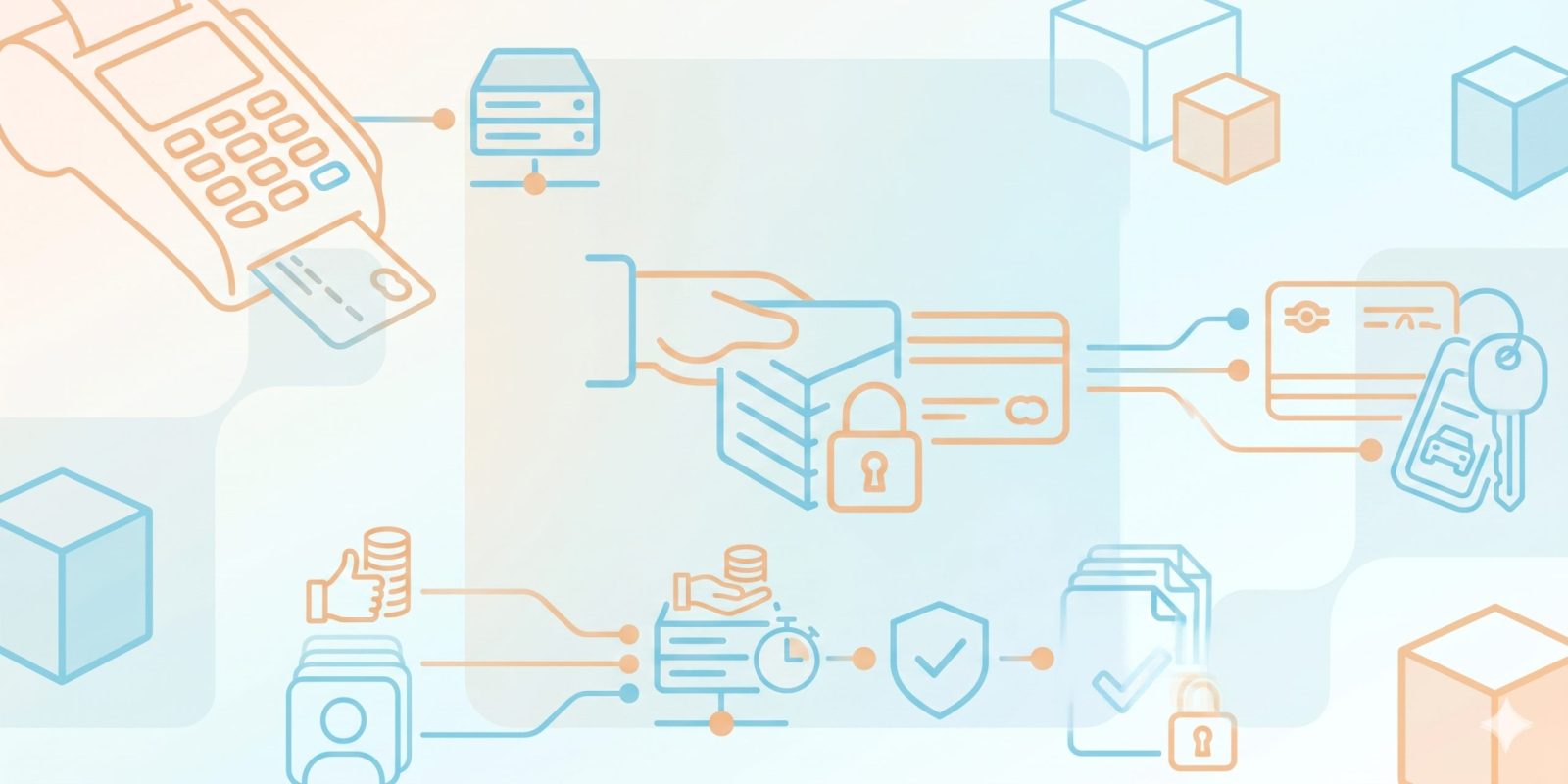
Qu'est-ce qu'une pré-autorisation de carte de crédit SaaS ?
La préautorisation de carte de crédit applique un blocage temporaire sur les comptes de carte de crédit ou de débit des clients. Ce blocage vérifie la validité tout en réservant certains fonds. L'activation du service intervient ensuite. Les abonnements SaaS, conjointement avec les périodes d'essai, proposent une méthode pour examiner l'activité de paiement et bloquer un montant nominal pendant cette phase.
Plutôt que d'effectuer un débit immédiat, le système contacte simplement la banque du titulaire de la carte. Il vérifie si le compte est ouvert, actif et dispose d'une ligne de crédit suffisante pour la facturation à venir. Le système de facturation enregistre ce détail lors de l'inscription. Les utilisateurs passent ensuite de la période d'essai à un abonnement payant.
Pourquoi les entreprises SaaS devraient-elles utiliser la préautorisation pour les essais gratuits et les abonnements récurrents ?
Dans le contexte du SaaS, la pré-autorisation est parfois utilisée pour confirmer la disponibilité des méthodes de paiement avant de démarrer un essai gratuit ou d'initier des paiements récurrents.
Tout au long d'un essai, les schémas d'inscription des utilisateurs et diverses conditions de carte de paiement peuvent être observés dans la manière dont les comptes interagissent avec la plateforme.
L'application d'une autorisation de carte permet d'enregistrer si les fonctions de paiement sont configurées normalement à mesure que les deux parties parcourent les étapes d'intégration.
Basée sur les références de sécurité des cartes de crédit, cette méthode est observée dans le cadre de la validation de paiement de routine, y compris pour les cartes qui pourraient ne plus être actives à des étapes ultérieures. Dans l'ensemble, ces étapes de vérification sont couramment utilisées pour gérer les transitions procédurales des essais initiaux aux cycles de paiement réguliers.
Comment fonctionnent les préautorisations de carte de crédit étape par étape (initier, bloquer les fonds, débiter le montant final, libérer le solde inutilisé) ?
Sequence utilise la messagerie API en temps réel : elle se produit entre votre application principale, la passerelle de paiement, les réseaux de cartes et la banque émettrice. Le cycle de vie architectural comprend quatre étapes.
- Initialiser : Le formulaire d'inscription de l'utilisateur fournit les informations de paiement. La passerelle de paiement envoie la demande d'autorisation. La banque émettrice vérifie la validité du compte et la disponibilité des fonds.
- Retenue : La banque émettrice examine les identifiants et retient temporairement un montant désigné, réduisant le plafond de crédit disponible du titulaire de carte. Au cours de cette phase, le système répertorie et réserve les fonds du compte sans finaliser un blocage de transaction commerciale.
- Enregistrement du Montant Final : La période d'essai se termine ou le service commence. La plateforme SaaS soumet alors le montant final à débiter pour régler la transaction et convertir la retenue temporaire en prélèvement réel.
- Déblocage de l'inutilisé : Si une période d'essai est annulée ou si le montant affiché est inférieur au niveau de la retenue initiale, le système bancaire libère automatiquement tous les fonds inutilisés vers le solde de l'utilisateur.
Comment implémenter la préautorisation pour les essais gratuits et l'intégration des abonnements ?
La gestion des retenues de paiement fait l'objet d'un examen qui couvre les facteurs de risque. Parallèlement, les détails côté consommateur entrent en jeu. Les informations d'identification de la carte doivent être traitées conformément aux normes des réseaux de paiement.
- La configuration s'applique à la passerelle de paiement. La configuration génère une demande d'autorisation d'API à paiement sans être liée à une action de capture à ce moment-là.
- La durée de la retenue est alignée sur les données de la période d'essai. Cela maintient l'enregistrement de la retenue actif pour la validation.
- Divulguer clairement les éventuelles retenues bancaires temporaires sur les formulaires de saisie de paiement, car cela renforce la transparence et met en évidence l'aspect bancaire en termes simples.
- Utiliser les webhooks dans le cadre des passerelle de paiement fonctions. Cela automatise la libération des fonds liée aux événements d'annulation d'essai qui surviennent avant l'achèvement prévu.
Quels sont les avantages de la pré-autorisation pour les marchands SaaS (réduction de la fraude, moins de rejets de débit, des frais d'interchange réduits, pas de frais de remboursement, une meilleure trésorerie)?
Les entreprises SaaS qui ajoutent une étape de retenue d'autorisation à la configuration de leurs abonnements acquièrent une couche défensive pour leurs modèles économiques d'abonnement. Les principaux points commerciaux comprennent :
- Réduction de la fraude : Le système effectue un filtrage des cartes lors de l'inscription – cela signale les cartes invalides ou volées et applique des limites aux essai inscriptions sans valide données de paiement.
- Moins de Rétrofacturations SaaS: La vérification du compte a lieu à la première étape. Cette étape enregistre les détails de base du compte. Elle enregistre ensuite un lien vers le volume de litiges de paiement provenant de mauvais acteurs.
- Plus bas Frais d'interchange & Sans frais de remboursement : Les retenues passent à un état de déblocage plutôt que d'être traitées comme une facturation finalisée, et la suite l'annulation de cette facturation. Les frais d'interchange, ainsi que les frais associés remboursement les frais de traitement pour cette séquence, restent distincts de la transaction.
- Flux de trésorerie: Le workflow définit l'ordre de la séquence d'inscription. Il minimise Attrition en raison de échecs de paiement et gère également les ressources allouées aux comptes restant en statut impayé.
Conclusion
La pré-autorisation de carte de crédit SaaS désigne une procédure qui vérifie les détails de paiement. Des retenues de fonds sont effectuées avant l'activation du service. La procédure passe par une retenue temporaire, puis comptabilise le montant final, suivie de la libération de toute portion inutilisée. Les entreprises SaaS l'appliquent dans des contextes de fraude et de rétrofacturations. Les montants des frais et les schémas de flux de trésorerie reçoivent également de l'attention. La mise en œuvre de la pré-autorisation est liée à certaines opérations commerciales. Elle est également connectée aux comptes clients dans le cadre du processus d'abonnement.
Prêt à commencer ?


 Français
  English
  Español
  Português
  Português do Brasil
  Italiano
  Deutsch
  Nederlands
  Polski
  Română
  Українська
  简体中文
简体中文  日本語
日本語  한국어
한국어