
Paiements SaaS
What are SaaS Payment Solutions?
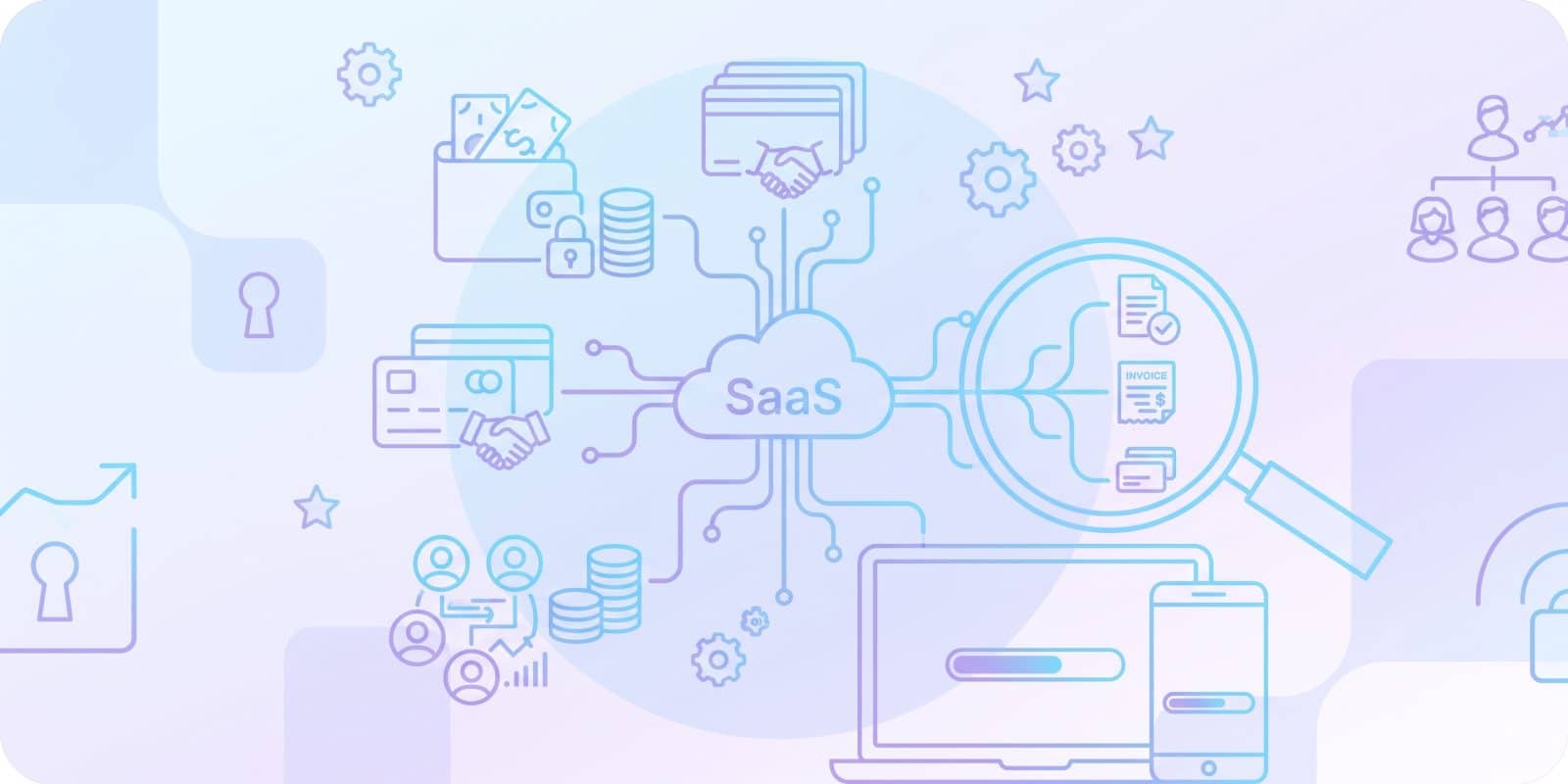
What are SaaS Payment Solutions?
SaaS payment solutions are tools and services that let a software company take payments, set up recurring charges, and address essential tax and regulatory tasks that are part of running subscription businesses. In contrast to one-time e-commerce transactions, SaaS billing regularly encounters ongoing activities – things like handling renewals, making adjustments for customers who upgrade or downgrade their plans, retrying cards that don’t go through, and if you’re operating globally, managing both local payment preferences and necessary registrations for taxes across various countries.
Given the range of details to manage, it’s pretty typical for SaaS firms to avoid building the entire payment infrastructure from scratch. Instead, the usual move is to integrate one or more external services, each bringing coverage for specific areas of the billing process.
What are the main types of SaaS payment solutions?
There is no one-size-fits-all solution to the pricing models in the SaaS industry; generally, there are only five common models that separate their tasks uniquely. These include the following:
| Type | What it handles | What you still own |
|---|---|---|
| Passerelle de paiement | Card processing and authorization | Billing logic, tax, compliance, subscription management |
| Payment Service Provider (PSP) | Payment processing and merchant onboarding, tied to one account. | Billing logic, tax, compliance, subscription management |
| Subscription billing platform | Recurring billing, invoicing, dunning | Payment processing (often via a separate gateway or PSP), tax, compliance |
| PayFac / embedded payments | Payment processing + onboarding sub-merchants under your brand | Compliance, fraud liability, sponsor-bank relationship |
| Merchant of Record (MoR) | Payments, tax, compliance, and fraud/chargeback liability | Product and customer relationship |
As you move along the list, the amount of work retained by your company versus what’s routed through a provider varies. The specific allocation depends on how a company decides to structure its approach.
What's the difference between a payment gateway, PSP, billing platform, and MoR?
These options may look similar in purpose but address different aspects of handling payments, and organizations often select several to meet specific needs.
Une passerelle de paiement, such as Stripe or Authorize.net, is focused on moving money – processing card transactions and transmitting payments. Tasks related to subscriptions, like renewals or upgrades, are not typically managed as part of the gateway features.
Une Payment Service Provider (PSP) brings together gateway access and merchant services into a shared arrangement. Using this method, payment processing is available to companies under the terms set by the provider. PSPs focus on transaction handling, while tasks such as billing logic, tax, and compliance usually require separate arrangements.
Une plateforme de facturation par abonnement (Chargebee, Recurly, Maxio, or Zuora) works alongside gateways or PSPs. These platforms generate invoices, retry failed payments, make adjustments to subscription plans, and display subscription metrics. Most SaaS companies running this model end up stitching a gateway or PSP and a billing platform together themselves, and are responsible for reconciling the two.
Une Merchant of Record (MoR) goes a step further than all three – it doesn’t just process payments or manage billing; it becomes the legal seller on each transaction, taking on tax, compliance, and fraud/chargeback liability alongside the payment and billing functions.
Each model in the comparison table above has its own trade-offs worth exploring in more depth:
What payment solution do SMB SaaS companies need?
Choosing a payment solution tends to follow the company’s development stage, with needs changing from speed-focused at the beginning to efficiency and larger-scale coordination later on.
- Startups try to find a solution to make payments in various markets at an early stage, but they prefer platforms that do not force them to create new businesses or establish a compliance team from the start. There may be cases where companies go for a platform that deals with payments, taxes, and compliance issues just to meet their basic needs.
- Pour SMBs, built-in automation can address subscription handling, invoices, taxes, and issues with payments, while having multiple separate vendors occasionally aligns less with limited resource availability, making unified solutions an alternative to consider.
- At the enterprise level, firms may handle higher transaction volumes and more complex requirements, such as adhering to various regional tax standards, applying different fraud controls, and ensuring processes work with internal systems. Some businesses choose to work with fewer external providers for consistency, but specific approaches depend on business circumstances.
A Merchant of Record can fit all three stages, not just early ones. Rather than being limited to a particular phase, a MoR arrangement can be incorporated into both relatively simple and complex operations. It may act as an initial solution for startups, function as a method to streamline automation for PME, or serve as a way for SaaS d’entreprise to centralize processes and contract management when needed.
What should you look for in a SaaS payment solution?
The right answer depends less on which platform has the most features, and more on how much operational and compliance work you’re willing to take on:
- Consider your preferred level of involvement you want with regard to international tax compliance needs; selling into different geographical areas requires understanding and complying with registration and collection of taxes per country, particularly in scenarios where payment technology is built internally.
- Look at the party in charge of oversight with regard to activities related to fees and refunds made inappropriately; in many gateway and billing cases, it will be your team that will be responsible for these aspects, but Merchant of Record arrangements will take care of those.
- Think about the payment methods that are preferred by your customers. Card payments often operate smoothly in certain geographic areas, while in other parts of the world, the favored payment options might be completely different, and their availability depends on the platform that you use.
- Decide how much control you want to have over direct relationships with customers; if you bill through a gateway, you typically retain that relationship, but in the case of MoR solutions, it will change.
Instead of only considering future business plans, measure your current needs. Companies operating in a single geography with fairly simple rules will have a much different setup than a team managing subscriptions across global regions at once.
Conclusion
SaaS payment solutions span from a restricted payment setup to a full-fledged MOR (Merchant of Record) solution. MOR solutions are more concerned with your preference to offload your exposure to billing, collections, and compliance. For companies focused on product and growth rather than payments infrastructure, that trade-off is usually the deciding factor.
Prêt à commencer ?


 Français
 English
 Español
 Português
 Português do Brasil
 Italiano
 Deutsch
 Nederlands
 Polski
 Română
 Українська
 简体中文
 日本語
 한국어