
Цінові стратегії
Що таке ціновий водоспад SaaS?
Що таке ціновий водоспад SaaS?
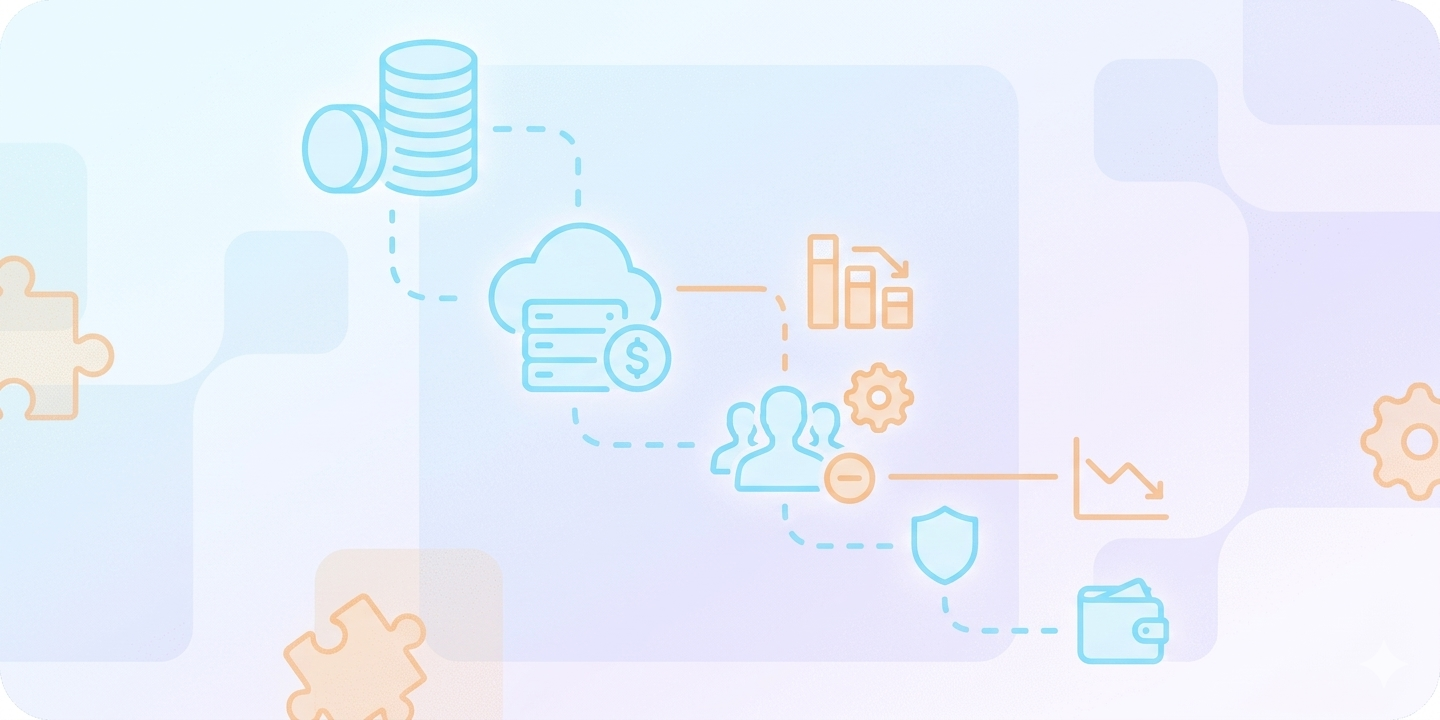
The SaaS price waterfall is a visual analytical tool that helps understand the gradual lowering of the product’s list price until the final figure or “pocket price” that the company actually receives. It identifies specific areas where revenue decreases occur due to discounts, rebates, and operational costs during the sales cycle stages.
What are the key elements of a Price Waterfall?
To effectively manage their revenue, companies must be able to classify each step of the pricing process. Although every company tends to have some unique levers in its toolkit, a large majority of waterfalls universally follow a sequential pattern that revolves around the four main pricing points:
- List Price refers to the original, full-priced “sticker price” or MSRP that is commonly displayed to the public.
- Target Price is essentially the price at which the sales team realistically expects to close the deal, often accounting for standard regional or volume adjustments.
- Invoice Price is the sum actually charged to the customer after the application of any negotiating discounts or promotional codes.
- Net Price depicts the final revenue after post-invoice expenses such as rebates and transaction fees.
What are SaaS Waterfall metrics?
Price waterfall is essential in SaaS companies, which is tightly integrated with Monthly Recurring Revenue (MRR). As MRR affects SaaS company valuation, price waterfall leakage can correlate with changes in the company’s growth and investor interest. Metrics such as Average Selling Price (ASP) and Discount Percentage are typically the most prominent indicators of sales state.
On the other hand, Pocket Margin stands as the paramount metric within a waterfall because it depicts the true cash left for the product team to invest after deducting hidden costs, such as implementation credits or API overage waivers, which are the least obvious.
Variations in “Net Price” calculations might relate to deviations between reported MRR figures and the revenue ultimately realized.
How does a Price Waterfall help businesses optimize pricing?
Utilizing a price waterfall enables companies to use their data, which can influence their perspective on profit margins relative to assumptions. This displays price deductions graphically and provides information about the correlation between discounts and sales, as well as their impact on profit margins.
- “Discount Heroes”: Salespeople focused on deal closure can be associated with instances of price decreases.
- Term Standardization: The painless recognition of regions or groups that are getting unauthorized “special” credits.
- Tiers: A stable 40% margin separating List and Invoice prices could be interpreted as an indication that the List Price exceeds a viable market benchmark.
How does it differ from Cost-Plus Pricing?
Price waterfall analysis is a value-based tool for diagnosing the situation, while cost-plus pricing is a traditional method of pricing that is often inflexible. Waterfall analysis works on the assumption that the value has been “figured out already” and highlights the part of the value that the company can keep.
|
Функція |
Price Waterfall Analysis |
ціноутворення за принципом "витрати плюс" |
|
Основна мета |
Identify revenue leakage and optimize capture. |
Ensure a fixed profit margin over costs. |
|
Фокус ринку |
Focuses on perceived value and transaction flow. |
Focuses on internal production expenses. |
|
Адаптивність |
This approach can be adjusted based on different discounting behaviors. |
The low price is associated with cost fluctuations. |
|
SaaS Field |
The model relates to software offerings that typically generate higher margins. |
Usage is uncommon in modern SaaS environments. |
What are the main challenges associated with managing Price Waterfalls?
Price waterfall management, along with potentially segmented functional departments, may be associated with data fragmentation, as list prices are often reported to Marketing, discounts managed within Sales, and rebate data tracked by Finance.
- Data accuracy: Variations in data between CRM and billing systems may correlate with changes in price waterfall analysis results.
- Over-Complexity: Decision-makers’ views on the company’s revenue position may be connected to the practice of tracking numerous minor discount types.
- Internal Friction: Modifications to the price waterfall and the sales team’s compensation structure may relate to shifts in the perception of potential advantages.
Висновок
The SaaS price waterfall is a tool that subscription companies can use to track and understand their margins. Examining the price journey, from list price to net pocket price, provides companies with an opportunity to identify unauthorized discounting and its potential effects on long-term MRR.
Готові розпочати?


 Українська
  English
  Español
  Português
  Português do Brasil
  Français
  Italiano
  Deutsch
  Nederlands
  Polski
  Română
  简体中文
简体中文  日本語
日本語  한국어
한국어