
SaaS Payments
What is a SaaS Card on File (CoF) Transaction?
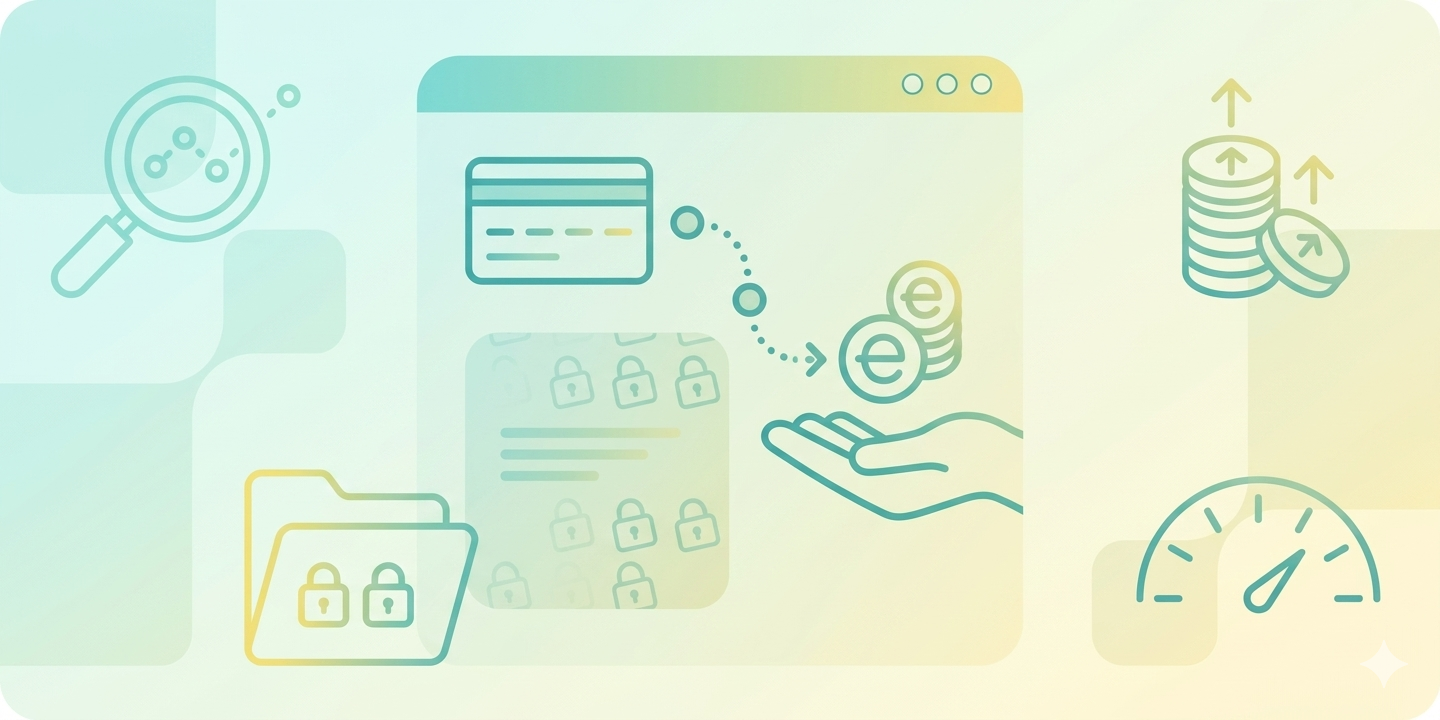
What is a SaaS Card on File (CoF) Transaction?
A SaaS card-on-file (CoF) transaction is a payment process where a software provider securely stores a customer’s credit or debit card details to be reused for future purchases or recurring billing.
How Exactly Do Card-on-File Transactions Work?
CoF transactions start in a Consumer-Initiated Transaction (CIT) with the payment gateway tokenizing a customer’s card data – when a user enters their credit or debit card details for the first time, they get replaced with a non-sensitive version (tokens).
CoF Workflow:
- Initial Authorization: The customer enters their card details and grants “standing authority” for future transactions.
- Tokenization: The merchant’s system stores a secure token, while the actual card numbers remain in a highly secure, PCI-compliant vault.
- Automated Billing: For each billing cycle, the merchant sends the token to the payment processor to request the funds.
- Credential Updates: Modern systems use “Account Updaters” to automatically refresh the token if the user’s physical card expires or is replaced.
How are card-on-file transactions initiated by the merchant or the customer?
The merchant initiates the transactions depending on who triggers the payment event: the merchant or the customer.
- Customer-Initiated Transactions (CIT): Occur when the user is actively present in the checkout flow, for example, a user is purchasing a one-time “add-on“ feature, or in a dashboard, the user is manually upgrading their plan.
- Merchant-Initiated Transactions (MIT): Happen in the background, without the user being at the point of sale. This is standard with subscription services that renew on a monthly or annual basis.
It is not legal for a merchant to initiate a transaction unless they have an agreement with the customer; this is handled in the initial sign-up flow to comply with the EU’s Strong Customer Authentication (SCA) regulation.
What are the primary advantages and benefits of card-on-file payments?
Card-on-file arrangements are convenient, but storing payment data requires regular assessments that businesses must manage.
- Retention: Stored payment details are used for subscription charges in subsequent billing periods, impacting friction for customers by reducing manual “informational updates” steps.
- Faster Checkouts: In systems with marketplaces or tiered add-ons, stored payment details are used for additional purchases.
- Cash Flow: Automated billing channels route revenue to the business bank account on a regular schedule.
- Enhanced Security: Replacing direct card numbers with tokens is required to comply with applicable security measures and protect customers from data breaches.
What are the potential disadvantages associated with card-on-file transactions?
While convenient, card-on-file arrangements require regular assessments and administrative practices for storing payment data.
|
Specific Disadvantage |
Description |
Potential Impact |
|
PCI DSS Liability |
Storing payment tokens (basically, card details) requires strict adherence to global security standards and annual audits. |
Security compliance and vulnerability scans expand operational expenses. |
|
The presence of billing profiles and tokens may be relevant for cybercriminal activity |
Administrative, legal, or regulatory procedures may apply based on the event and business context. |
|
|
In recurring billing, some customers route a transaction inquiry through their bank rather than through the merchant. |
The transaction may be processed through the chargeback framework, with an administrative fee that is often in the $15–$50 range. |
|
|
Higher Processing Fees |
Card-on-file transactions are generally categorized as card-not-present payments, which are often associated with higher interchange rates. |
Profit margins may differ from one-time transactions or those completed with a physical card |
|
Automated payment can be denied depending on the current card status, lost cards, or bank issuer security limitations |
Continued billing requires manual account updates or other additional steps necessary for completion of the operation |
|
|
Token Desynchronization |
Token-based payments rely on data mapping between the database and the payment gateway vault. |
Recurring billing can function only when the API connection is valid |
|
Some users may not immediately recognize or remember that they have an active subscription when billing occurs automatically. |
This can correspond with account status changes or customer comments on review platforms such as G2 or Trustpilot. |
|
|
Support Overhead |
Advance billing notice can shape how customers interpret merchant-initiated charges. |
This may correspond to changes in support contact volume and refund-handling activity. |
What are the most common business use cases for card-on-file payments?
Card-on-file systems are implemented in SaaS billing frameworks to support steady cash flow:
- Tiered Subscriptions: Monthly or yearly billing for basic CRM or project management software tools.
- Usage-Based Billing: Billing for use, like a fee for cloud storage or for API calls.
- Freemium Conversions: For trial services, providers may automatically move a user from a free tier to a paid tier after the free period ends.
Conclusion
Saas card-on-file transactions make recurring billing processes straightforward by applying various practices such as tokenization. While this approach requires a lot of attention to security compliance, it also takes part in forming a consistent revenue, as well as reducing friction. As a result, these billing workflows support communication between software providers and users.
Ready to get started?


 English
  Español
  Português
  Português do Brasil
  Français
  Italiano
  Deutsch
  Nederlands
  Polski
  Română
  Українська
  简体中文
简体中文  日本語
日本語  한국어
한국어