
가격 전략
SaaS에서 원가 가산 가격 책정이란 무엇일까요?
원가 가산제란 무엇입니까?
SaaS의 가격 결정 전략 중 하나인 원가 가산 정가는 예상 생산 비용에 특정 비율을 추가하여 최종 가격을 결정하는 방식입니다.
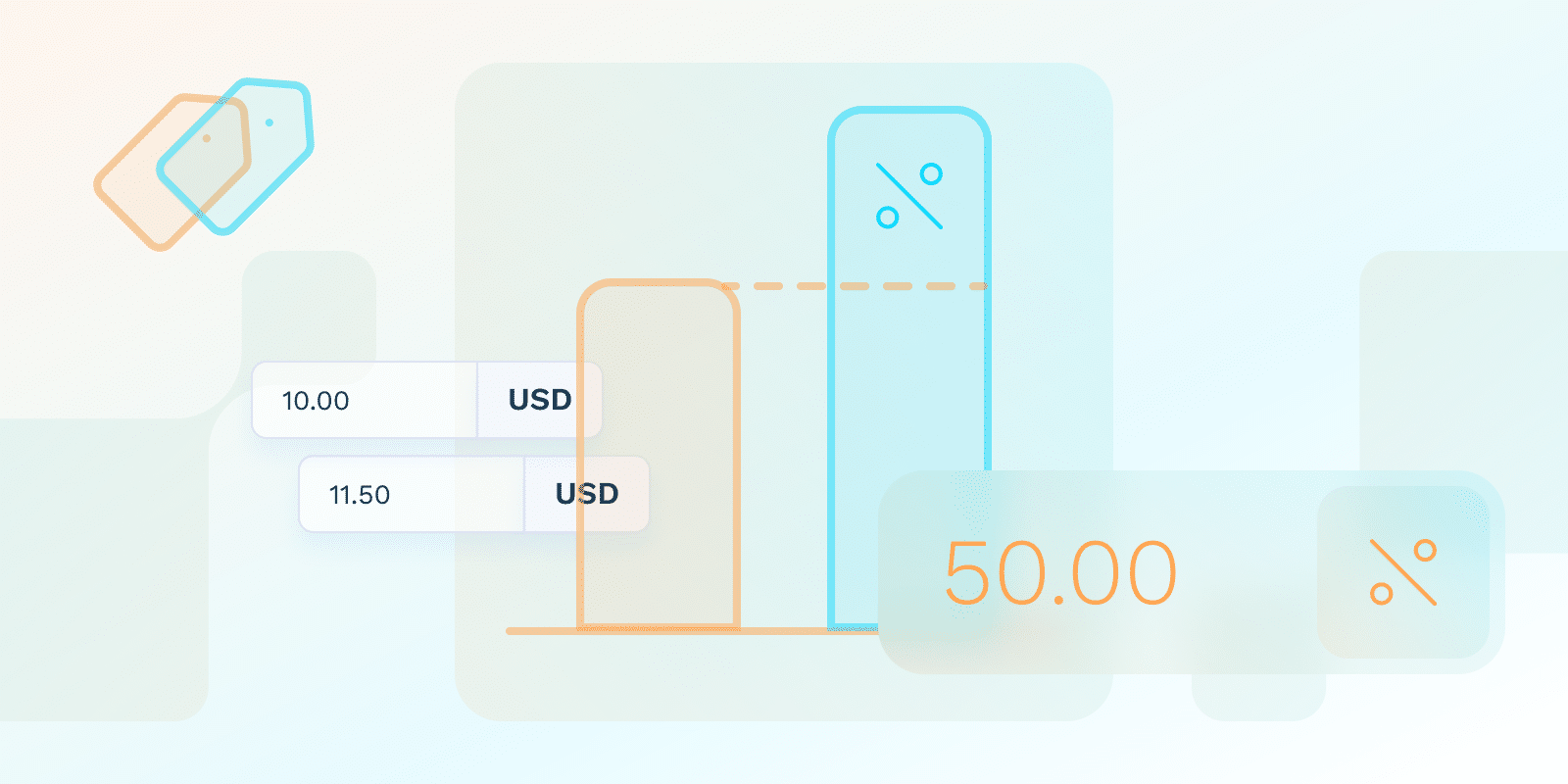
The added markup represents the desired profit – as an example, if a 15% markup is applied to a $10 cost, the total cost is $11.50
이 전략을 사용하면 SaaS 창업자는 특히 초기 단계에서 제품 가격을 너무 낮게 책정하는 것을 방지할 수 있습니다.
Cost-plus strategy should be viewed as a starting point. Once you obtain some traction, you should perform a thorough market investigation and evaluate competitor pricing.
원가 가산제는 어떻게 계산됩니까?
This is how you configure Cost-plus pricing in three steps:
- 1단계: 먼저 SaaS 솔루션과 관련된 모든 직접 및 간접 생산 비용을 파악합니다. 여기에는 제품 개발, 유지 관리 및 마케팅 비용이 포함됩니다.
- 2단계: Determine your surcharge and set it as a percentage of the total production costs.
- 3단계: 제품 가격을 계산하려면 총 비용에 마크업을 추가합니다.
For example, assuming your SaaS solution costs $10 to develop and you want to have a 15% surcharge on each sale, you would add a markup of $1.50 to your total expenses. Thus, your SaaS would have a price tag of $11.50.
Consider using cost-plus pricing to make a profit instead of just breaking even.
SaaS에서 원가 가산제를 사용할 때의 이점과 단점은 무엇입니까?
원가 가산 가격 책정 방식에는 장점과 단점이 있습니다. 주요 내용은 다음과 같습니다.
장점
- 간편한 수익화 방식: 이러한 방식은 가격 책정 전략 가격 책정 계산 방법을 제공합니다.
- 확실한 수익 창출: By determining your product’s total ownership costs and adding a markup, each transaction can generate gains.
단점:
- 지불 의사 간과: Cost-plus monetization doesn’t consider what your shoppers will pay and what your competitors are charging.
- 제품 가치 저평가: 이 전략은 개발 비용을 우선시합니다.
원가 가산제를 사용하는 데 가장 적합한 산업 및 SaaS 비즈니스는 무엇입니까?
Cost-plus pricing is an approach employed by these type of companies and SaaS businesses:
- 고도로 커스터마이징된 소프트웨어 개발: 특정 요구 사항에 맞는 맞춤형 솔루션을 제공하는 SaaS 제품은 원가 가산 전략을 활용할 수 있습니다.
- 인프라 서비스: This monetization strategy is suitable in the case of massive tech companies that rent out their networks of data centers, servers, and storage so other businesses can run websites and software without buying their own hardware. This is influenced by things such as development and maintenance costs, coupled with potential customization demands.
- 스타트업 및 초기 단계 SaaS 비즈니스: For businesses found in the initial growth stage, cost-plus pricing is an alternative as it includes a surcharge in each sale.
| 비즈니스 유형 | 특성 | 원가 가산 가격 책정 적합성 |
|
비즈니스 모델 부문 |
||
| 고도로 맞춤화된 소프트웨어 | 특정 요구 사항에 맞춘 솔루션 | High Fit – Helps recover complex development costs |
| 인프라 서비스 | 높은 개발 및 유지 관리 비용 | Very High Fit – Ensures cost recovery for complex infrastructure |
| 스타트업 및 초기 SaaS | 제한된 리소스, 재정적 예측 가능성 필요 | Good Fit – Provides a straightforward pricing baseline |
|
가격 책정 복잡성 |
||
| 단순 제품 | 간단한 기능, 일관된 비용 | Excellent Fit – Easy to calculate, transparent pricing |
| 복잡한 다기능 제품 | 다양한 개발 및 유지 관리 비용 | Moderate Fit – Requires careful cost allocation |
|
시장 역학 |
||
| 신흥 시장 | 경쟁이 덜 치열하고 가격 표준이 개발 중 | High Fit – Provides a rational pricing approach |
| 포화 시장 | 경쟁이 치열하고 가격에 민감한 고객 | Low Fit – Requires supplementing with market research |
While cost-plus monetization is a good place to start, it is relevant to assess the competitor pricing when determining your markup.
SaaS 설립자는 원가 가산제를 사용하여 가격 전략을 어떻게 최적화할 수 있습니까?
원가 가산 가격 책정은 기준으로 사용될 수 있습니다.
생산 비용을 정리했으므로 다음으로 이동할 수 있습니다. 시장 조사 및 경쟁사 가격 평가를 진행할 수 있습니다. 이를 통해 고객의 지불 의향을 파악할 수 있습니다.
Additionally, use 가치 기반 가격 책정은 to adjust your monetization approach and increase the markup, considering the value your offering brings users. This will help you differentiate your software from others on the market.
결론
원가 가산 가격 책정은 비즈니스 수익성을 위한 접근 방식입니다. 그러나 초기 성장 단계에서는 적절한 대안이 될 수 있지만, SaaS 설립자는 가격 유연성을 확보하기 위해 다른 전략과 결합하는 것을 고려해야 합니다.
시작할 준비가 되셨나요?


 한국어
 English
 Español
 Português
 Português do Brasil
 Français
 Italiano
 Deutsch
 Nederlands
 Polski
 Română
 Українська
 简体中文
 日本語