
SaaSの種類
What is Web2App?
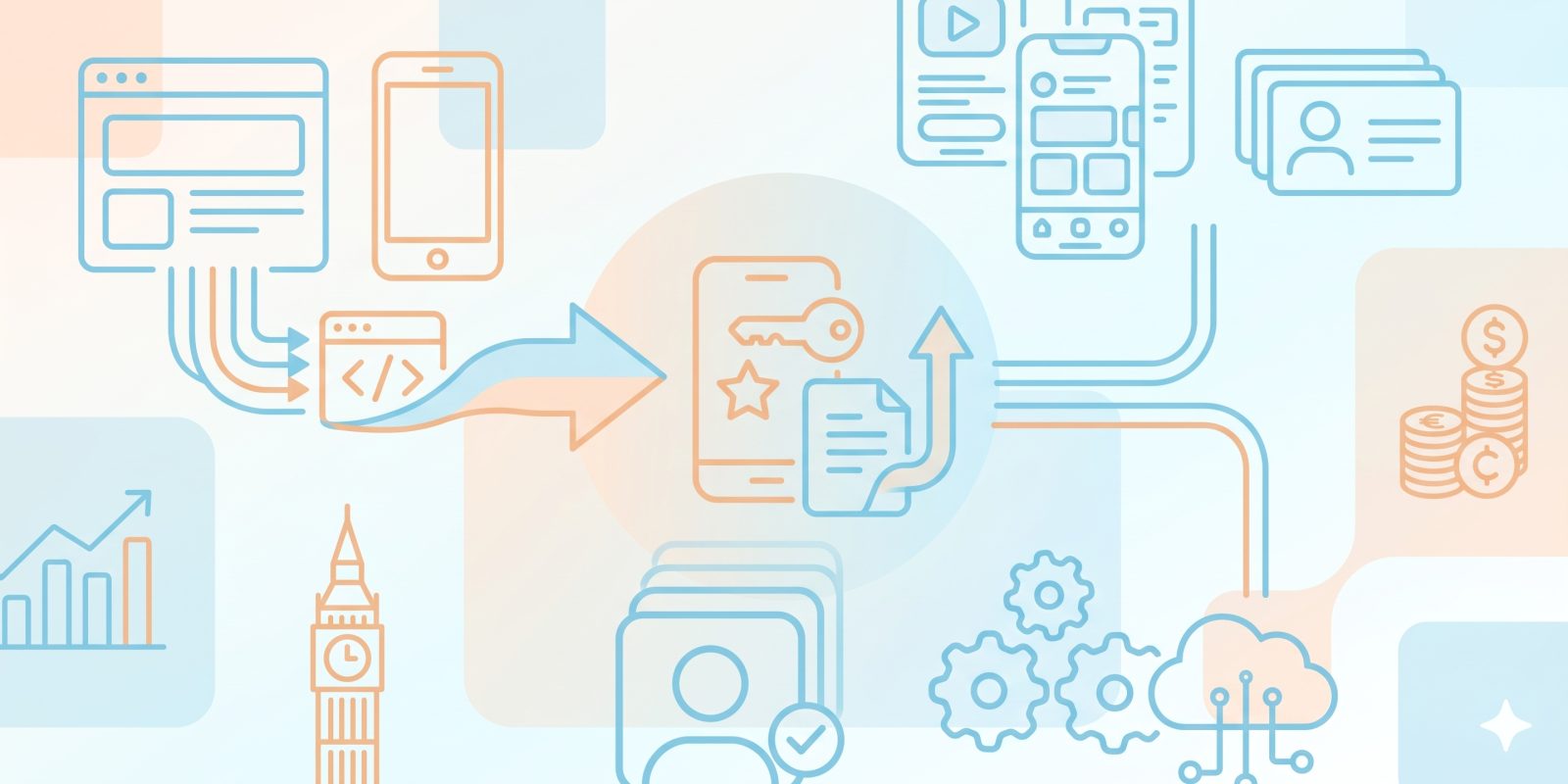
What is Web2App?
Web2App is a process where users start on the web and transition to using an app, often by showing interest, completing onboarding, or making a payment on a webpage before moving the user to the mobile app.
Teams use this method to monitor sources of user activity, introduce alternatives to app store conversion paths, and provide a single flow from ad click or web visit to app installation or subscription. When onboarding, pricing tests, or payment steps happen on the web, teams can make adjustments and observe differences in the conversion process compared with flows handled exclusively in app stores.
Web2App is considered a strategy that links web and app experiences rather than defining a particular type of product, such as a native app or progressive web app (PWA). Lower processing fees do not necessarily result in higher profit if friction and tooling costs increase.
How does Web2App work?
A typical Web2App flow begins when a user visits a web landing page, quiz, advertisement, or content page before interacting with the app. From there, users complete onboarding, signup, or checkout steps on the web.
A common flow looks like this:
- The user lands on a web page, quiz, ad, or other content piece.
- Onboarding, signup, or checkout is completed on the web.
- The process then directs the user into the app or prompts to install the app.
- The app becomes the primary platform where users interact with the product after these steps.
Some businesses collect payment on the web before granting access in the app, while others use the web for initial activities and then move users to app installation. The specific configuration depends on the business approach.
Ready-made Web2App platforms are often used to decrease launch time compared with building deep linking, analytics, and payment infrastructure in-house.
What are its key benefits and limitations?
Web2App can improve unit economics and attribution by shifting parts of the funnel to the web, but it also adds steps and operational complexity. The potential cost savings from web payment processing and data tracking can be weighed against changes in how users move through each step, as well as technical involvement and ongoing updates.
| メリット | 制限事項 |
| Web payment processing fees are typically between 5–10%, and app-store fees often range from 15–30% | Moving users from a browser to an app introduces a transfer step, which can impact conversion patterns |
| Web funnels support measurement, testing, and optimization | Teams manage responsibilities like deep links, login handoff, and analytics setup |
| Teams may configure onboarding, pricing, and testing options using web-based systems | Including payment handling in web funnels and following app-store guidelines are additional factors to consider |
A variety of integration tasks, including those related to linking, logins, analytics, and payments, often arise with payment system management. Selecting a Merchant of Record can address global tax, compliance requirements, 支払いオプション, and chargebacks for web transactions, combining these needs into a single process.
How does Web2App differ from Native Apps and PWAs?
Native apps are built for iOS and Android, with distribution managed through app stores. PWAs are web-based applications that operate in browsers and can be saved onto a user’s home screen for easy access. Web2App is different from both – it’s not a product format or app architecture, but a set of processes to help users move from a web experience to either installing a native app or completing a web-based checkout.
PWAs launch quickly, update without app-store review, and usually cost less to build than native apps, though they carry feature limitations compared with native apps.
Native app = product format. PWA = web app format. Web2App = acquisition and conversion funnel.
Who should use Web2App?
Web2App can be applied to subscription-based apps, consumer apps utilizing web channels for acquisition, and teams that wish to manage pricing, onboarding, attribution, or experimentation through web processes.
Setups may be developed in-house with custom landing pages, deep links, analytics, and payment infrastructure, or assembled with no-code and low-code funnel builders and app-growth platforms.
The selection of a particular setup method usually relies on the technical resources and size of the team; smaller teams sometimes use prebuilt systems, while larger teams may choose more specialized configuration.
結論
In Web2App, tasks such as acquisition, onboarding, and payments are moved from the app to the web even before the users enter the app. This shifts the way teams attribute and manage processes. This approach changes the level of control and measurement available and introduces additional operational considerations. Depending on the Web2App architecture, there could be impact on unit economics and funnel design.
準備はよろしいですか?


 日本語
日本語  English
  Español
  Português
  Português do Brasil
  Français
  Italiano
  Deutsch
  Nederlands
  Polski
  Română
  Українська
  简体中文
简体中文  한국어
한국어