
Video Games
What is Game Localization?
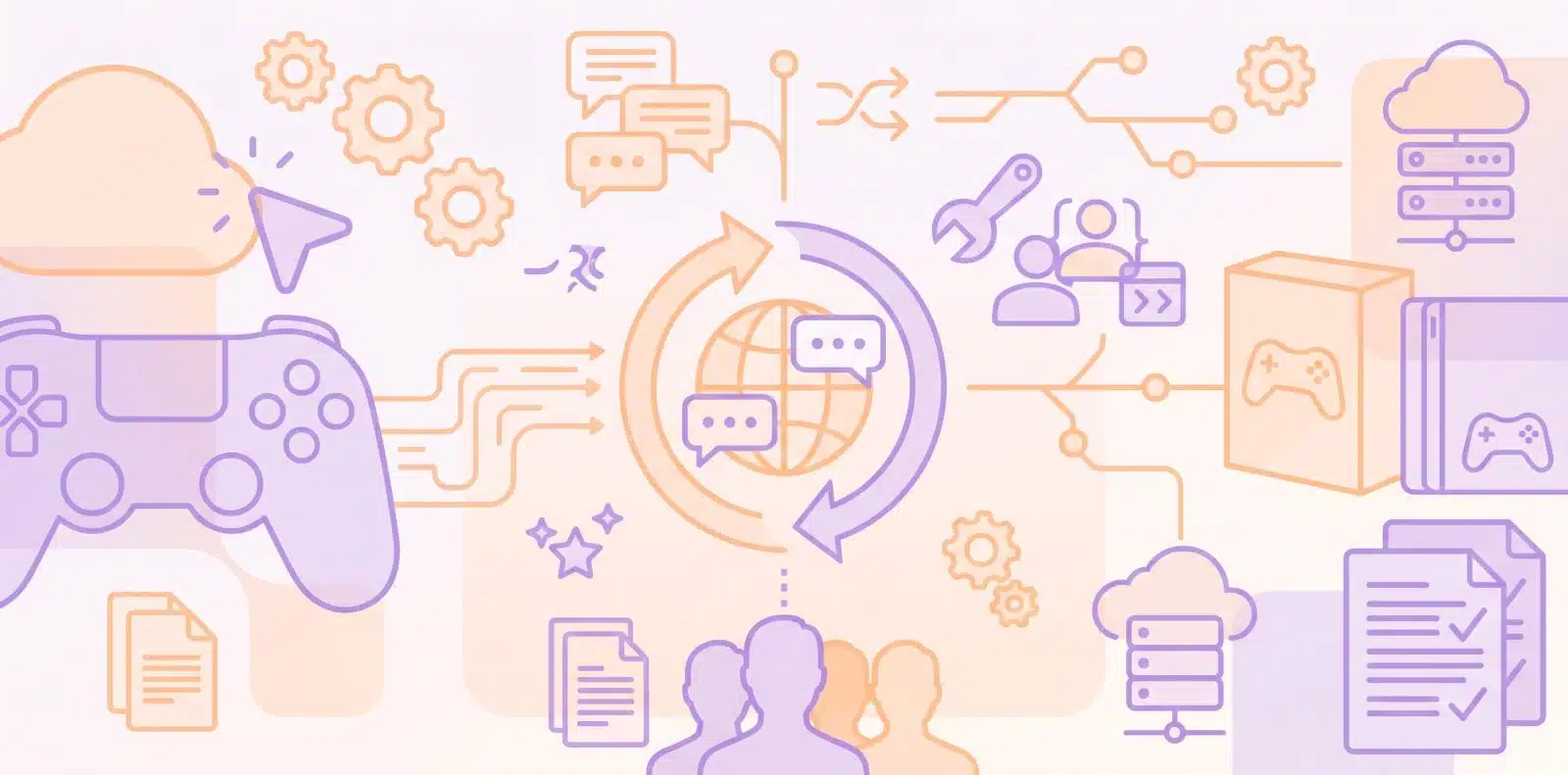
What is Game Localization?
Game localization means modifying a game by translating its text and also changing its content, interfaces, and entire game experience so that they are more appealing and suitable to players of different countries. One part involves changing dialogue and other texts of the user interface; at the same time, other elements, such as cultural references, voice acting styles, etc., are altered or adapted to fit the locals and their way of life and expectations.
What are the levels of Game Localization?
- No LOC: When no localization (No LOC) is applied, the game’s release maintains its original language, often English. This approach is suitable for games in a genre with a very limited audience or early-access games whose developers are checking market response before making further investments.
- Partial Localization: It involves store pages, marketing materials, and metadata. This approach is probably the most common among indie game releases, keeping costs low.
- Full Localization: It involves all game elements, including texts, menus, subtitles, and the user interface. The voice-overs might be included or not.
- Deep Localization: The entire game, including voice-acting, cultural references, humor, symbols, and even elements considered sensitive in certain regions (e.g., religious iconography or political symbols), is localized.
What languages should a game prioritize?
- FIGS: French, Italian, German, Spanish — The main gaming markets in Western Europe.
- EFIGS: FIGS plus English, which is the minimum for most AA and AAA Western releases.
- Top-12: EFIGS plus Brazilian Portuguese, Russian, Japanese, Korean, Simplified Chinese, Traditional Chinese, and Polish — these languages cover the largest revenue-generating gaming markets worldwide.
How does the Game Localization process work?
Studios usually finalize on a single operational model from the following four, although they tend to mix them based on the size of the project involved.
- Translation Management Systems (TMS): For example, Phrase or Crowdin, consolidate content into a single location and connect to build pipelines. This setup facilitates continuous updates independently of new build creation.
- Language Service Providers (LSPs): External companies that provide studios with translators, voice actors, and QA testers, especially those without the facility of in-house staff.
- Hybrid Models: The combination of in-house management with outsourced translation or voice talent is the most popular operational form for medium and large studios.
The most common procedure looks like this: string extraction, translation, in-context review, linguistic QA, and final integration testing.
How Do You Handle Live-Service Localization?
Games that are live services, i.e., that have features like battle passes, seasonal events, and regular content, will very likely necessitate a localization pipeline that can operate continuously rather than being restricted to a single project. The turnaround for newly available strings of time-limited events and cosmetic items is usually a matter of days and not weeks. TMS platforms feature automation for string detection and the routing of content to translators, which typically results in fewer manual handoffs.
What Are the Benefits of Game Localization?
| Feature | Impact |
| Revenue | Localized titles are often associated with elevated sales figures in newly supported regions |
| Store ranking | Localized metadata and keywords can influence app discoverability in regional app stores |
| Player loyalty | Native-language support is observed to correlate with customer retention and churn metrics |
| Review sentiment | Localized games tend to be associated with players assigning higher ratings, which can influence overall store ratings |
Conclusion
Game localization is a factor in a game’s ability to be experienced by users in multiple territories, not one. The selection of an option depends on the available budget, genre, and intended audience. For studios considering international expansion, this activity has associations with revenue, public image, and player loyalty.
Ready to get started?


 English
 Español
 Português
 Português do Brasil
 Français
 Italiano
 Deutsch
 Nederlands
 Polski
 Română
 Українська
 简体中文
 日本語
 한국어